Talat Noi Bangkok: What's Really Changing in the City's Most Authentic Neighborhood

Why Talat Noi Just Landed on Every Serious Bangkok Property Radar
Talat Noi didn't earn its global "coolest neighborhood" status in 2026 through a PR campaign. It earned it through 150-plus years of layered identity — Hokkien merchant houses, Portuguese-influenced alleyways, Chinese shrines wedged between car-parts workshops, and a creative underground that colonized those same workshops before anyone called it gentrification.
That recognition matters beyond bragging rights. When a historically overlooked district gets named among the world's best, the capital-appreciation clock starts ticking. The buyers who move before the lifestyle press fully mobilizes are the ones who buy at pre-recognition prices.
Talat Noi sits between Chinatown (Yaowarat) and the Chao Phraya riverside, placing it squarely within the broader Charoen Krung/Khlong San ultra-premium corridor that the research payload identifies as a segment with prices starting from 250,000 THB per square meter and above. That corridor is anchored by projects from developers including Raimon Land, Magnolias, and Dusit — and Talat Noi is the culturally irreplaceable, supply-constrained heart of it. You can build a glass tower; you cannot manufacture another Talat Noi.
Talat Noi Bangkok: The Anatomy of an Authentic Neighborhood
What makes Talat Noi one of Bangkok's most authentic neighborhoods?
Talat Noi's authenticity stems from its unbroken layering of Hokkien Chinese merchant culture, Portuguese-era architecture, active Chinese shrines, and decades-old trades — car parts, metal workshops, herbal medicine — that survived while surrounding districts gentrified. No single developer has been able to replicate or replace this organic texture.
The Physical Character Nobody Can Copy
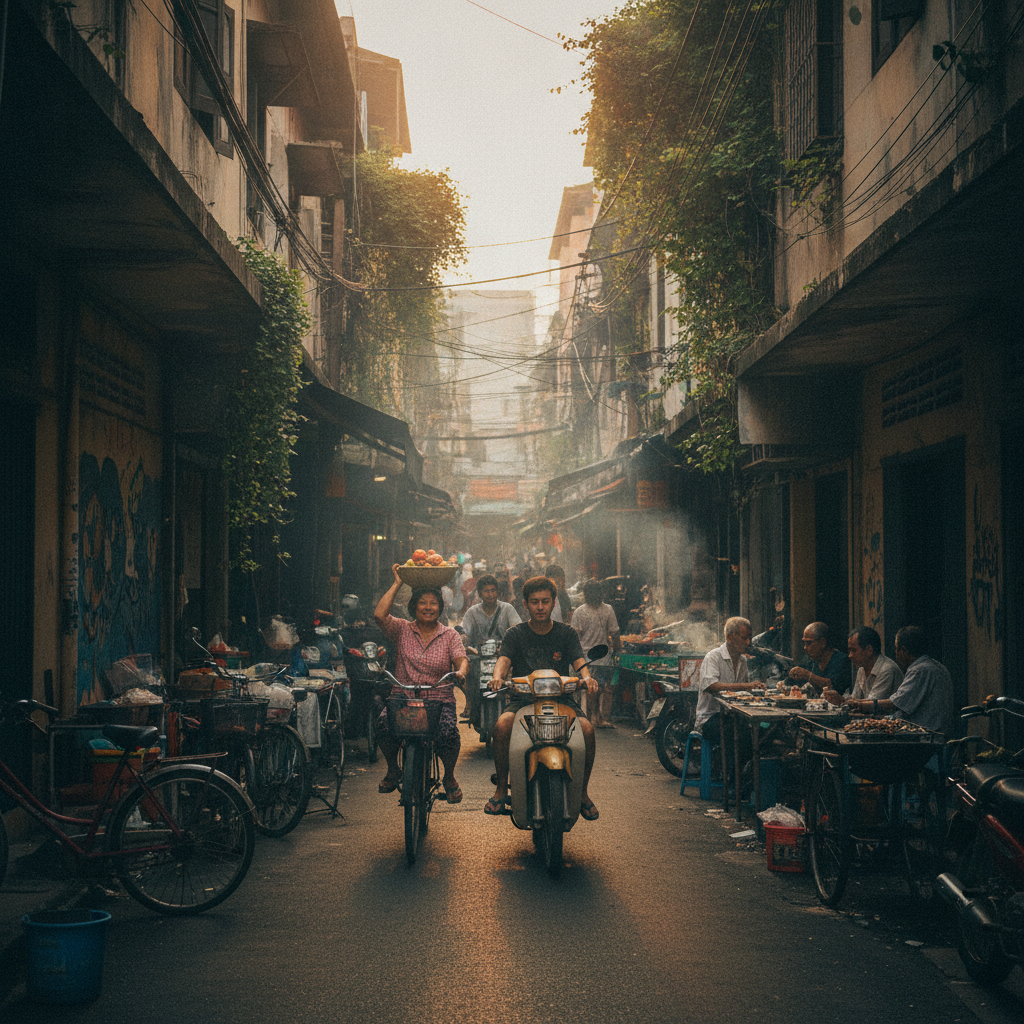
Walk into Talat Noi through its network of sub-sois and the first thing you notice is the architecture refusing to perform. Shophouses here are still used as shophouses. The Kuan Oo Shrine and Chao Pho Suea Shrine remain active community anchors, not Instagram props.
That stubborn authenticity is precisely the scarcity that drives premium valuation in mature global markets. In London it's Bermondsey; in Tokyo it's Yanaka. In Bangkok, it's Talat Noi — and unlike those comparisons, Talat Noi's pricing hasn't yet caught up with its cultural capital.
"The Charoen Krung/Khlong San riverside corridor — which Talat Noi anchors at its cultural core — is identified as Bangkok's ultra-premium segment, with prices from 250,000 THB/sqm and above. Rental yields run lower at 3.5–4.5%, but capital appreciation and long-term value stability are the story here, not short-term income."
The Creative Layer: Organic, Not Engineered
Unlike Charoenkrung's gallery row — which has faced its own gentrification pressures on small vendors (a tension explored in detail in our piece on Charoenkrung's gentrification trap for small vendors) — Talat Noi's creative scene grew from the inside out. Independent coffee shops, micro-galleries, and mural art appeared inside working mechanic yards, not in purpose-built "creative hubs."
That inside-out development is harder to displace. The community didn't move out to make room for culture; the culture moved into the community. That structural difference matters for long-term neighborhood resilience and for the quality of life a resident or property owner actually experiences day to day.
The Chao Phraya Riverfront Factor
Talat Noi's western edge touches the Chao Phraya, placing residents within reach of one of Bangkok's most significant infrastructure transformation stories. The riverfront's ongoing green space and lifestyle investments are reshaping expectations for what riverside living in Bangkok can be — a dynamic detailed fully in our coverage of Bangkok's riverfront transformation and Chao Phraya waterfront condo green space.
For Talat Noi specifically, that riverfront access means future residents and visitors get both the quiet authenticity of the inner sois and the broader lifestyle infrastructure of a world-class waterfront — a combination that virtually no other Bangkok district can offer at a comparable price point today.
Living in Talat Noi: Practical Lifestyle Anchors Right Now
Global recognition reads well in a headline. What actually matters to a resident or investor is the day-to-day quality of life infrastructure. Here is what Talat Noi and its immediate surroundings deliver concretely, grounded in what is actually happening in 2026:
- Dining within reach: The 2026 Michelin Bib Gourmand list added Jaan by Khun Jim (authentic Southern Thai and Thai-Chinese cuisine with freshly pressed coconut milk) and Kolun.h (Hainanese-style noodle house, crispy pork belly, slow-simmered broth) to Bangkok's affordable-excellence roster — both in the broader city, accessible from Talat Noi. These are not tourist-facing establishments; they are the kind of neighborhood-embedded dining that defines a genuinely livable district.
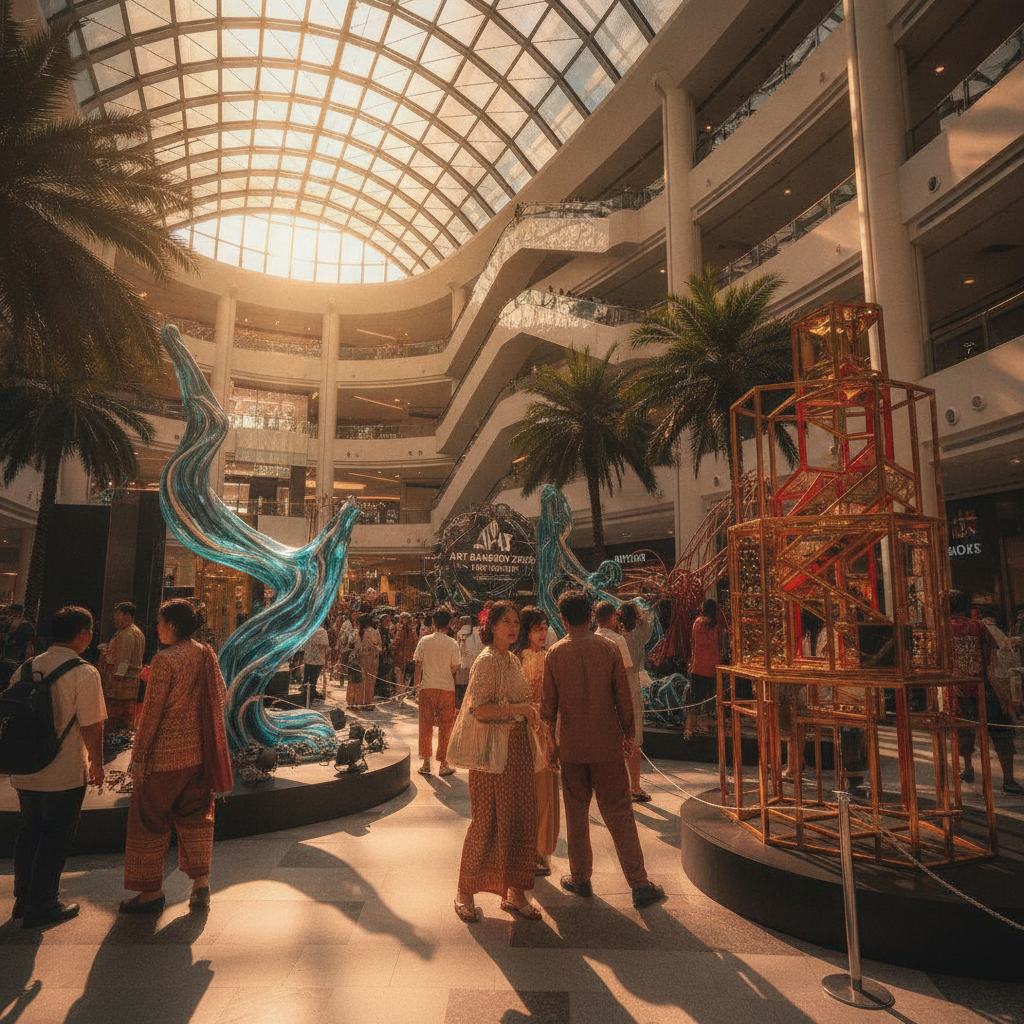
- Cultural calendar: The Bangkok Art Biennale 2026 — themed "Angels and Mara" and running October 29, 2026 through February 28, 2027 — anchors key installations at Wat Arun, Wat Pho, and Wat Prayoon, all immediately adjacent to Talat Noi. Residents are not visiting the Biennale; they are living inside it. Our full neighborhood and condo guide to Bangkok Art Biennale 2026 venues and nearby properties maps this in granular detail.
- River transport: The Chao Phraya Express Boat provides a genuinely functional commute link from the area's pier network to Sathorn, Asiatique, and Nonthaburi — a transit mode that Bangkok's BTS and MRT expansion cannot replace and that keeps Talat Noi residents insulated from road-traffic congestion.
- Performing arts access: Bangkok's 28th International Festival of Dance & Music runs from September 5 through October 17, 2026 at the Thailand Cultural Centre, featuring 12 productions from nine countries — a 40-minute MRT ride that connects Talat Noi's cultural roots to world-class international programming.
- Fitness and martial culture: Muay Thai gyms remain deeply embedded in Bangkok's urban fabric, with established camps operating across the city at twice-daily group session schedules. For residents of Talat Noi, training at one of Bangkok's traditional gyms is a genuine lifestyle option, not an aspirational one.
Talat Noi is also a practical base for families considering international school access. The broader Charoen Krung corridor's proximity to the Silom BTS line places NIST International School on Sukhumvit Soi 15 — offering a full IB curriculum (PYP, MYP, DP) and known for its diversity and service of UN families — within a workable commute for daily school runs.
The Investment Case: What Talat Noi's Recognition Actually Means for Buyers
"Coolest neighborhood" recognition is an early-warning signal in property markets, not a signal to wait. The sequence is consistent: cultural validation precedes media coverage, media coverage precedes mainstream buyer awareness, mainstream buyer awareness precedes price compression. Talat Noi is currently between step one and step two.
The Ultra-Premium Riverside Corridor Context
The Charoen Krung/Khlong San riverside segment — the macro-district that contains Talat Noi — is already trading at prices starting from 250,000 THB per square meter. Rental yields in this segment run at 3.5–4.5%, which is lower than Sukhumvit's 5.5–6% gross yield for studios, but the investment thesis here is fundamentally different: capital appreciation and long-term value stability are the primary return drivers, not rental income.
For context, Sukhumvit (Phrom Phong, Thong Lo, Ekkamai) delivered capital appreciation averaging 4.2% per year over the last five years alongside its yield. The riverside ultra-premium corridor, by contrast, offers a store-of-value proposition closer to prime real estate in Mayfair or the Marais than to a yield-optimized rental play.
Foreign Ownership: The Regulatory Landscape You Must Understand
The 2026 Thai Foreign Business Act amendments introduced a significant structural shift: a new "actual control" test by the Department of Business Development (DBD) that expands circumstances where a company is deemed foreign-controlled beyond the standard 49% shareholding threshold. Penalties for nominee arrangements have increased materially.
For foreign buyers attracted to Talat Noi's premium riverside assets, this makes structuring advice non-optional. BOI promotion remains a legitimate pathway to up to 100% foreign ownership for eligible industries — but the analysis must be done correctly before, not after, acquisition. Our comprehensive breakdown of what foreign buyers actually pay in Bangkok property costs is required reading before any transaction in this segment.
Timing: The Window That Exists Right Now
Bangkok's luxury and prime transit-connected property market recorded 3.4% year-on-year price growth in early 2026, driven significantly by international buyers who are insulated from the domestic credit headwinds hitting the mass market. Talat Noi's supply is structurally constrained by its heritage fabric — new large-scale development is practically impossible at the neighborhood core. That supply ceiling, combined with accelerating international awareness, sets the conditions for above-market appreciation for assets held over a five-to-ten-year horizon.
The extended 0.01% property transfer fee window running until June 2027 represents a real, time-limited cost advantage for buyers transacting now — the mechanics and the exact savings are detailed in our analysis of Bangkok's last window to buy below market closing costs.
Arrange a Private Briefing on Talat Noi and Riverside Bangkok
If you are evaluating a property in Talat Noi or the broader Charoen Krung/Khlong San riverside corridor, a generic listing search will not give you the full picture. The most compelling assets in this district — heritage shophouses under adaptive reuse, boutique low-rise residences on the river sois, and off-market landbanking opportunities — do not appear on public portals.
Our team conducts private property briefings tailored to your specific acquisition goals: budget, ownership structure, hold period, and lifestyle intent. We also provide floor-plan-level analysis for listed projects, so you can compare the cost-per-usable-square-meter across the corridor before you commit to a viewing schedule.
To arrange your private briefing or request a riverside Bangkok floor-plan analysis, contact our team directly. There is no obligation, no sales pressure, and no generic brochure — just a frank, data-grounded conversation about where Talat Noi sits in your portfolio and what the next 24 months are likely to look like for the neighborhood you are now seriously considering.