Bangkok's Green Building Claims Lack Teeth: Where PM2.5 Condo Bangkok Sustainability Marketing Falls Short in 2026

The Gap Between Green Marketing and Green Reality in Bangkok's 2026 Condo Market
Average condo prices across central Bangkok — Sukhumvit, Silom, and Sathorn — hit 130,000–150,000 THB per sqm in Q1 2026, matching late 2019 pre-pandemic benchmarks. Launch prices citywide climbed a further 9.4% from late 2025, reaching an average of 120,364 THB/sqm. At those numbers, buyers have every right to demand that 'sustainability' means something specific and measurable.
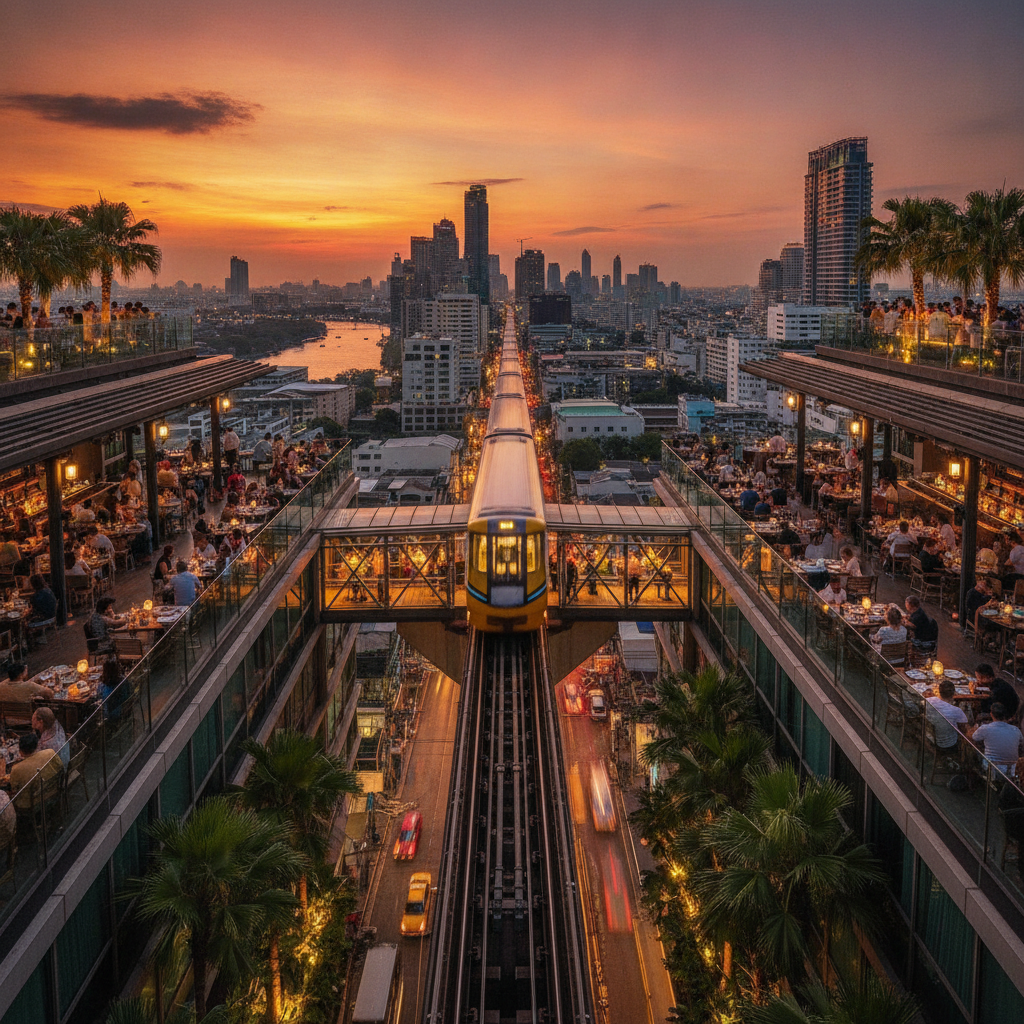
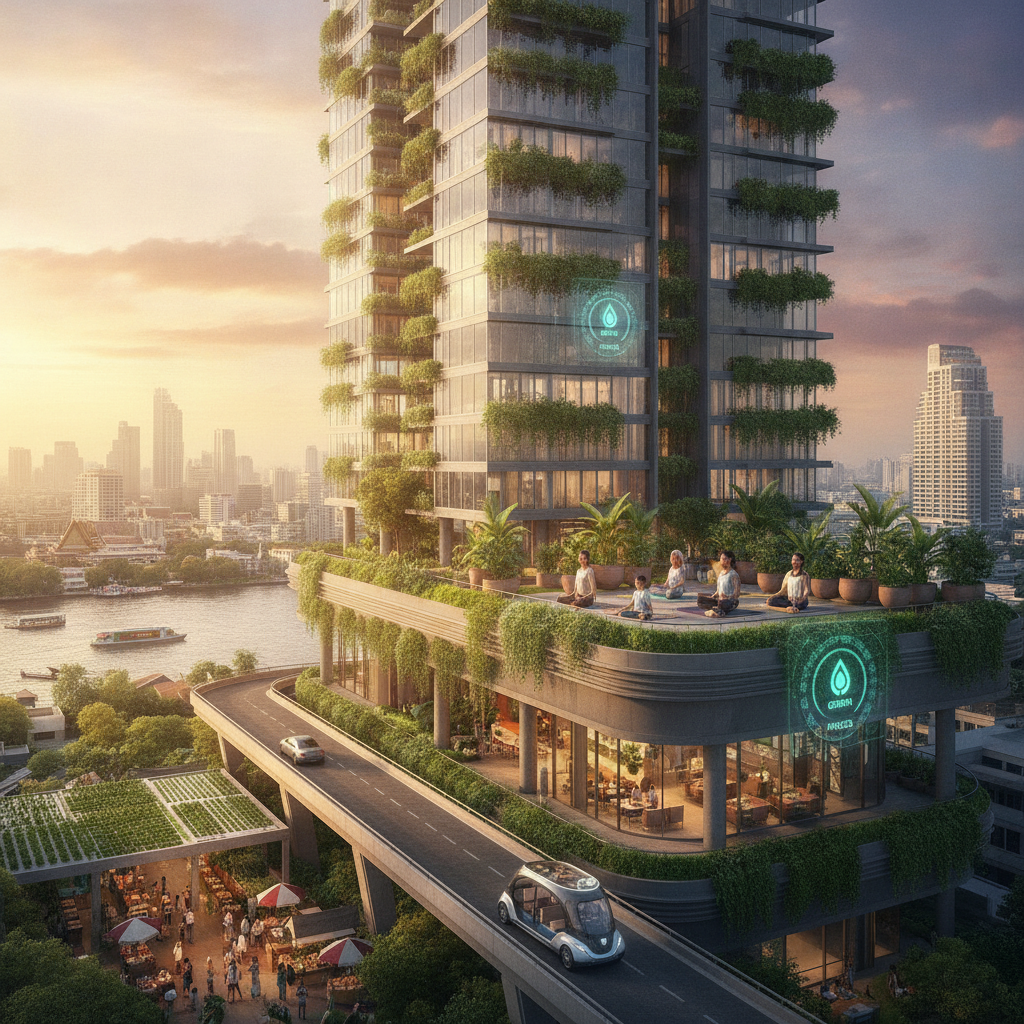
It largely doesn't — at least not yet. A review of Bangkok's most prominently marketed new launches for late 2026 reveals a consistent pattern: developments across high-density corridors like Sukhumvit and Sathorn incorporate general green gestures — rooftop gardens, energy-efficient glass, LED lighting — but breakthrough PM2.5-specific air filtration engineering is rarely the headline feature it's implied to be in sales brochures.
No major new large-scale public parks have been announced in Bangkok's core districts to support the 'green city' narrative either. The marketing vocabulary is outrunning the physical delivery of infrastructure that would genuinely protect residents from Bangkok's well-documented air quality challenges.
"Bangkok's 'green' condo narrative consistently outpaces the actual delivery of significant new public green infrastructure or highly specialized PM2.5-focused design features. Buyers paying a premium for sustainability credentials should ask developers to produce third-party certified filtration data — not render images of rooftop lawns."
This isn't an indictment of every project on the market. It is, however, a call to apply the same rigorous due diligence to environmental claims that you would apply to a floor plan or a title deed. For context on how sustainable design can be genuinely documented and verified, the Dulwich College Bangkok LEED Gold campus offers a useful benchmark — third-party certification rather than developer-authored talking points.
What PM2.5 Protection Actually Requires — and What Most Bangkok Condos Deliver
Do Bangkok luxury condos really filter PM2.5 particles?
Most Bangkok luxury condos do not filter PM2.5 particles to a clinically meaningful standard. Genuine PM2.5 filtration requires HEPA H13-grade systems or equivalent, integrated into a building's central HVAC with regular maintenance protocols — infrastructure that adds significant cost and is rarely specified in standard Bangkok condo builds, despite marketing language suggesting otherwise.
The distinction matters because PM2.5 particles — those under 2.5 micrometres in diameter — are the specific fraction linked to cardiovascular and respiratory disease with long-term exposure. A rooftop garden or double-glazed window does not address them. A centralized HEPA filtration system, with documented air-change rates and independently certified filter replacement schedules, does.
When Bangkok developers reference 'air quality systems' in brochures, they are most commonly describing standard split-unit air conditioning with basic dust filters, or building-wide fresh-air intakes without PM2.5-grade filtration media. These are not equivalent claims, but sales materials routinely treat them as such.
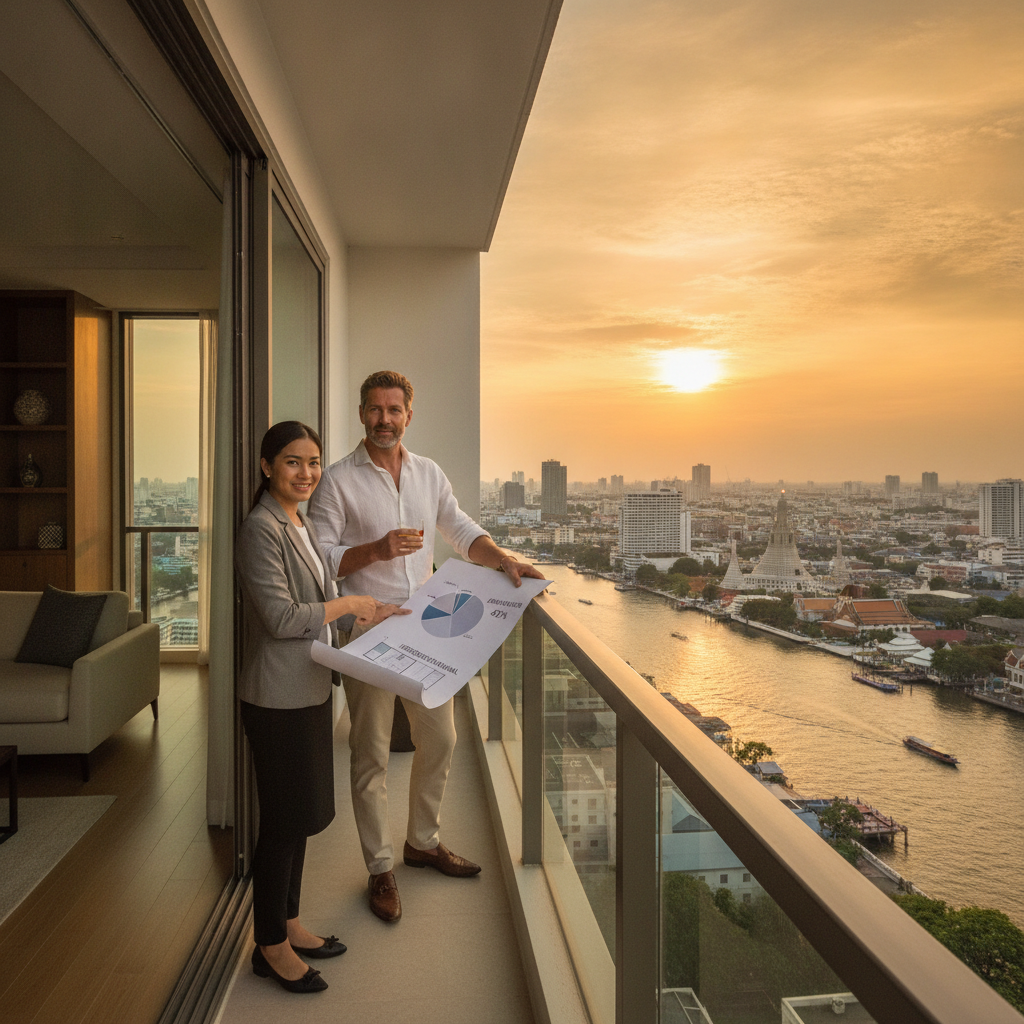
For buyers who are specifically health-motivated — particularly families with children or residents with respiratory conditions — the practical implication is straightforward: do not pay a green-label premium without requesting the building's HVAC specification sheet, filter grade certification, and maintenance contract terms from the developer or building management before signing.
Biophilic design features like forest access and natural ventilation are a different conversation, and projects that have genuinely integrated nature into their master plan deserve recognition. Mulberry Grove at The Forestias is one of the few Bangkok-area residential developments where the green credentials are anchored to a physical forest and documented design principles rather than a marketing tagline.
Life Beyond the Sales Brochure: What Bangkok's Urban Environment Actually Offers in Late 2026
Understanding the real-world urban environment around any Bangkok condo purchase matters as much as the building's internal specifications. Here's what's grounded, specific, and happening in the city right now.
- Bangkok Art Biennale 2026 — Angels & Mara (October 29, 2026 – February 28, 2027): Four months of contemporary art across Wat Arun, Wat Pho, Museum Siam, BACC, and One Bangkok. This is the most significant cultural programme the city runs, and residents in central districts can access multiple venues on foot or via BTS. Read the full Bangkok Art Biennale 2026 guide for venue-by-venue programming details.
- Yaowarat Vegetarian Festival (October 9–18, 2026): Nine days of plant-based street food along Yaowarat Road in Chinatown, with Yaowarat Road closed for the October 10 opening ceremony from 4 PM to 10 PM. Bangkok's version of the festival centres on food rather than the physical rituals associated with Phuket's observance.
- Bangkok Bar Show 2026 (October 24–25): Held at Anantara Siam Bangkok Hotel, this two-day event draws cocktail professionals and enthusiasts — a signal of Bangkok's rapidly maturing bar and hospitality scene.
- Blue Bottle Coffee at EmQuartier and Central Park (Sukhumvit): The Oakland-based specialty roaster's first two Bangkok locations have arrived — design-minimal, queue-generating, and representative of a broader trend in which Bangkok's café scene prioritises brand cachet and immersive aesthetics over purely local culinary innovation.
- Homeground Coffee Roasters at Ari: The Singapore-based coffeehouse's Bangkok debut features a Bangkok-exclusive 'Amber' blend sourced from Doi Chang mountain — one of the few genuinely local product stories in the current café wave.
- International Schools — NIST International School (Sukhumvit): Bangkok's first full IB World School, centrally located and consistently the first choice for corporate expat families seeking the complete International Baccalaureate continuum. Brighton College Bangkok's new Vibhavadi campus near Don Mueang Airport is also expanding the city's premium British curriculum options northward.
The Investment Case: What Bangkok's 2026 Market Data Says About Paying a Green Premium
Central Bangkok — Sukhumvit, Silom, Sathorn — delivers gross rental yields of 5.0–7.5% annually in 2026, with net yields after expenses in the 3.5–5.5% range. Capital appreciation in BTS/MRT-adjacent buildings has historically tracked at 3–5% per year. These are solid, defensible numbers for a major Asian gateway city.
The question for green-premium buyers is whether the sustainability surcharge — which can add 10–20% to a per-sqm price in some marketed projects — is recoverable through either higher rents or faster appreciation. There is currently no Bangkok-specific rental data demonstrating that certified green condos command a sustained rent premium over comparable non-green units in the same subdistrict. The premium is being charged at acquisition; it is not yet validated at the rental market level.
Outer districts — On Nut, Bearing, Bang Na — offer higher gross yields of 6–8%, driven by lower entry costs and stable demand from Thai professionals and younger expatriates. The upcoming MRTA Silver Line connecting Bang Na to Suvarnabhumi Airport, currently under environmental review, is expected to strengthen that corridor's investment fundamentals further when it advances.
Meanwhile, Ratchathewi and Victory Monument consistently produce 5–6% gross yields because purchase prices haven't inflated to the degree seen in more aggressively marketed prime zones. Tenant profiles there — young professionals, medical staff, university students — are stable and price-resilient.
Foreign buyers now account for over 25% of new project purchases, and freehold condominium title remains fully accessible to non-Thai nationals provided the building's foreign ownership quota does not exceed 49% of total saleable area. For a detailed breakdown of how that quota operates in practice, the foreigner freehold condo ownership Thailand guide covers every operational nuance of the 49% rule. Thai mortgage rates currently sit at 6.5–7% annually, making financing relatively expensive for local buyers and sustaining demand for well-priced units from cash-holding foreign purchasers.
The transit infrastructure story also matters here. The MRTA Orange Line eastern section — connecting central Bangkok to Min Buri — is scheduled for a 2027 launch and has already driven condo price increases of 8–12% along its route in the past 18 months. Buying ahead of operational transit lines, not behind sustainability marketing claims, is where Bangkok's documented capital appreciation has been generated.
Talk to a Specialist Before the Green Premium Costs You
If you're evaluating a Bangkok condo that's marketing PM2.5 filtration, biophilic design, or sustainability credentials as a price justification, the single most valuable 30 minutes you can spend is a direct conversation with an advisor who can pull the building's technical specification sheets and cross-reference the claims against the actual HVAC engineering documentation.
We work with a curated roster of Bangkok's most transparent developers and can arrange private viewings, floor plan analysis sessions, and direct Q&A with building management on air quality systems — with no sales pressure and no developer incentive skewing the conversation.
Reach out below to request a confidential floor plan review, a side-by-side comparison of green-certified versus standard-spec units in your target district, or a private viewing of buildings where the sustainability credentials are actually documented. The Bangkok market rewards buyers who ask the specific questions — and we know exactly which questions those are.