Foreigner Freehold Condo Ownership Thailand: Why the 49% Quota Is Your Only Secure Path

The Nominee Crackdown Is Real — And the Deadline Is December 2026
Thailand's government has handed provincial governors a hard deadline of December 2026 to identify and act on illegal foreign landholdings acquired through nominee structures. Properties found in breach risk compulsory sale — not a fine, not a warning, but forced disposal.
The enforcement is targeting the "true controlling figures" behind nominee companies, with particular heat on hotspot provinces like Phuket. Financial checks on land transactions involving Thai-foreign couples are also being escalated, closing what was once a common workaround.
This is not a theoretical risk. The Thai government's crackdown was confirmed in mid-2026, with a structured provincial reporting mechanism now in place. If you hold Thai land or a landed house through any arrangement that puts a Thai national nominally in control on your behalf, that arrangement is now under active scrutiny.
"Foreigners cannot own land directly in Thailand except through specific BOI-promoted investment routes. Every other structure — nominee companies, proxy Thai shareholders, Thai-foreign couple transfers — is now under a December 2026 enforcement deadline. Freehold condo title within the 49% quota remains the single legally clean ownership structure available to most foreign nationals."
The reinforced legal landscape makes one asset class unambiguously safer than any other: a freehold condominium unit registered within the legally mandated 49% foreign-ownership quota of any given building. This is not a new law — it is the consistent position of Thai property law — but 2026 marks the year enforcement has genuinely caught up with the rule.
For a deeper look at how Bangkok's quota mechanics play out in practice today, see our analysis on foreign condo ownership quota in Bangkok for 2026.
How the 49% Foreign Freehold Quota Actually Works
What does the 49% foreign ownership quota for condos in Thailand mean?
The 49% foreign freehold condo quota means that in any registered Thai condominium building, foreign nationals may collectively own no more than 49% of total sellable floor area as freehold title. The remaining 51% must be held by Thai nationals, giving foreign buyers secure, registerable ownership without nominee risk.
Each condominium building maintains a quota register. When you purchase a freehold unit as a foreign national, the Land Department verifies that your purchase does not push the building's foreign-owned floor area above the 49% ceiling. If the building is at quota, you cannot purchase freehold — you would need to take a 30-year leasehold instead, which is a fundamentally different and weaker legal position.
The quota is calculated by floor area, not by number of units. A building with 200 units of varying sizes will have a different quota calculation than one where all units are identical. This matters when comparing available foreign-quota units across different projects.
Funds used to purchase a freehold condo as a foreign national must be transferred into Thailand in foreign currency and converted at a Thai bank, with the Foreign Exchange Transaction (FET) form as documentary proof. This requirement is strictly enforced at the Land Department on transfer day — there are no exceptions.
The practical implication: buying within the 49% quota gives you a Chanote title deed (the highest grade of Thai land title) with your name on it, registered at the Land Department. It is fully inheritable, fully transferable, and carries no Thai partner risk whatsoever.
Bangkok's Strongest Freehold Condo Investment Zones Right Now
The 2026 market data is clear on where freehold condo fundamentals are most robust for foreign buyers. The Sukhumvit corridor from Soi 21 to Soi 39 — the Asok to Phrom Phong stretch — delivers gross rental yields of 5–6% per year, driven by consistent demand from expatriate residents and corporate tenants. Prices per square metre range from THB 120,000 to THB 200,000 in this corridor.
Silom and Sathorn, Bangkok's traditional CBD, offer gross yields of 4.5–5.5% with price per square metre running THB 100,000 to THB 180,000. The tenant base here is diverse — business professionals, long-stay tourists, and diplomatic community members — creating a more resilient occupancy profile across economic cycles.
Across the Bangkok condominium market overall, gross rental yields range from 4.0% to 7.0% per year, with net yields — after management fees, taxes, and agent costs — typically landing between 3.5% and 5.5%. Foreign buyers should model net yield, not gross, when evaluating purchase decisions.
Thailand's H1 2026 residential data recorded a 17.6% increase in ownership transfers by volume, though average transfer values declined by 6.6%. This volume-led recovery signals a competitive buyer's market for well-priced assets — but it also means that premium, legally clean freehold units in established corridors hold their position better than lower-ticket stock.
For investors comparing central versus suburban yield dynamics, our breakdown of Bangkok suburb condo rental yield in Huamark and Chatuchak offers a useful counterpoint to CBD pricing.
The government's reduced transfer fee — currently 0.01% for properties under THB 7 million for Thai buyers, extended to June 30, 2027 — applies to domestic purchasers. Foreign buyers do not benefit from this incentive directly, but it is suppressing competition in the sub-THB 7 million bracket from Thai buyers who might otherwise compete for the same units, which has an indirect effect on negotiating dynamics in mid-range developments.
Bangkok Lifestyle Infrastructure That Supports Long-Term Foreign Residency
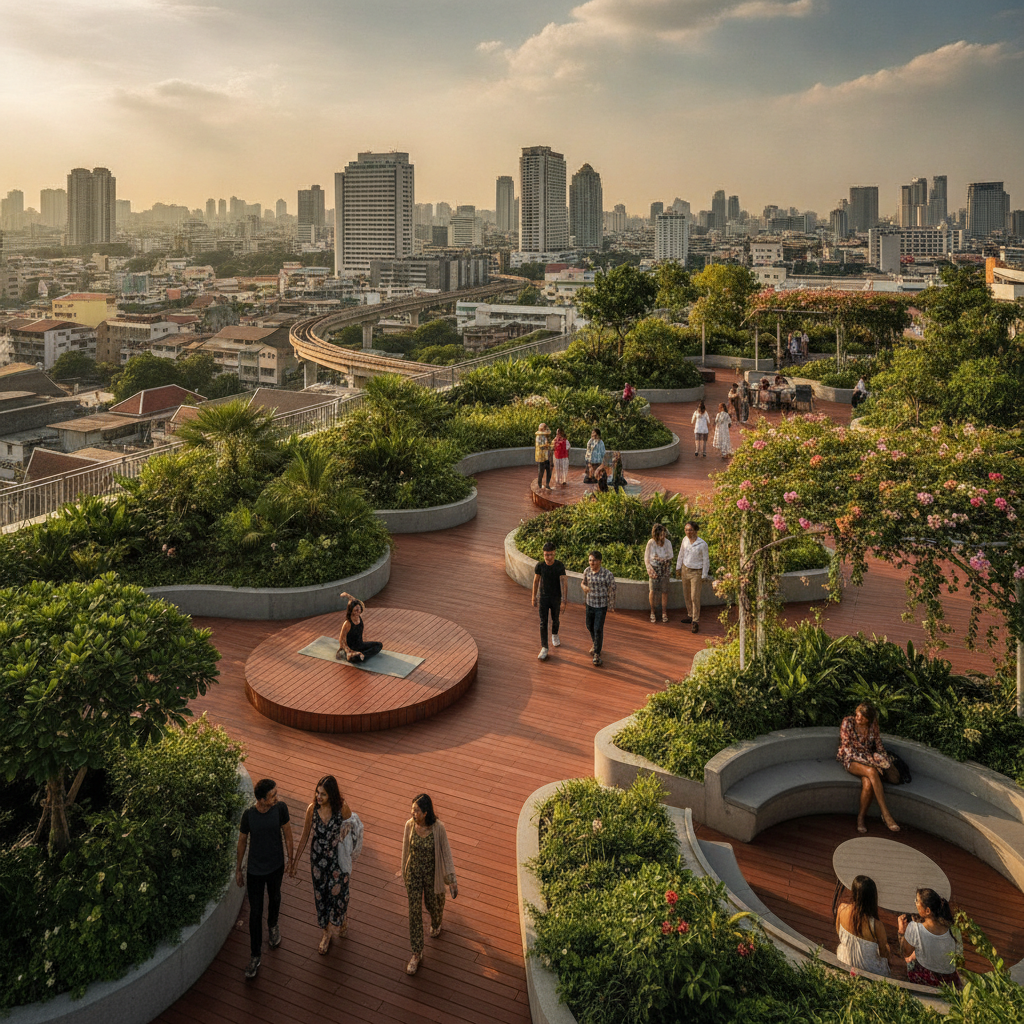
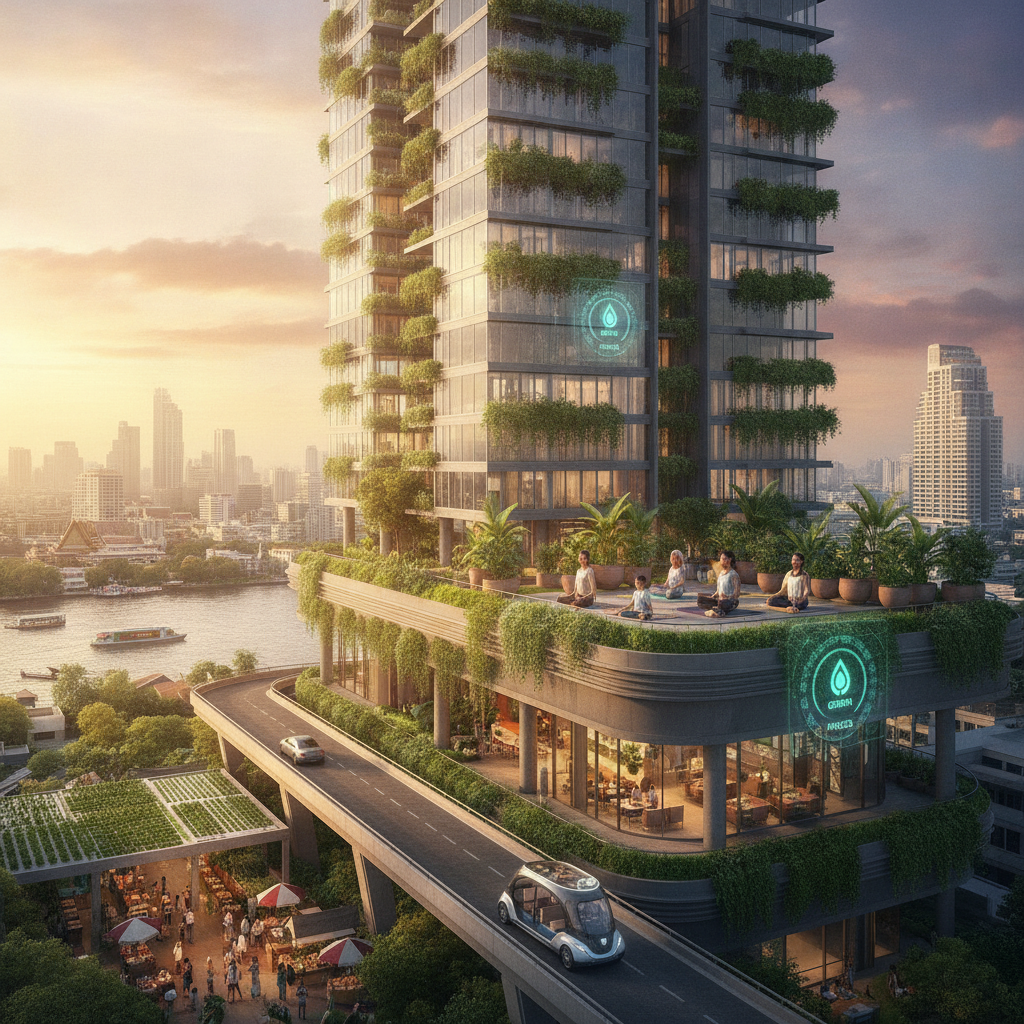
The case for freehold condo ownership in Bangkok is not purely legal or financial. The city's lifestyle infrastructure for long-term foreign residents has materially improved in 2026, making owner-occupation — not just investment — a compelling proposition.
- Green connectivity: The revamped 1.6-kilometre Green Bridge connecting Lumpini Park and Benjakitti Park officially reopened on May 1, 2026, offering a car-free elevated walkway with separate lanes for pedestrians, runners, and cyclists, with improved lighting and landscaping. It is open daily from 6 AM to 6 PM.
- Lumpini Park upgrades: A new public aerobics stage was inaugurated at Lumpini Park in April 2026, with daily sessions attracting participants of all ages. A new hawker centre near Gate 5 on Ratchadamri Road opened May 1, 2026, operating on a not-for-profit model with two shifts — 5 AM to 4 PM and 4 PM to midnight — offering affordable local food in a structured, hygienic environment.
- Running season: October and November 2026 represent Bangkok's peak outdoor fitness calendar. The Saucony Bangkok 10K runs October 25, the Amazing Thailand Marathon Bangkok takes place November 28–29 starting and finishing at Sanam Luang, and the Bangkok Marathon is scheduled for November 15 — all within easy reach of central residential districts.
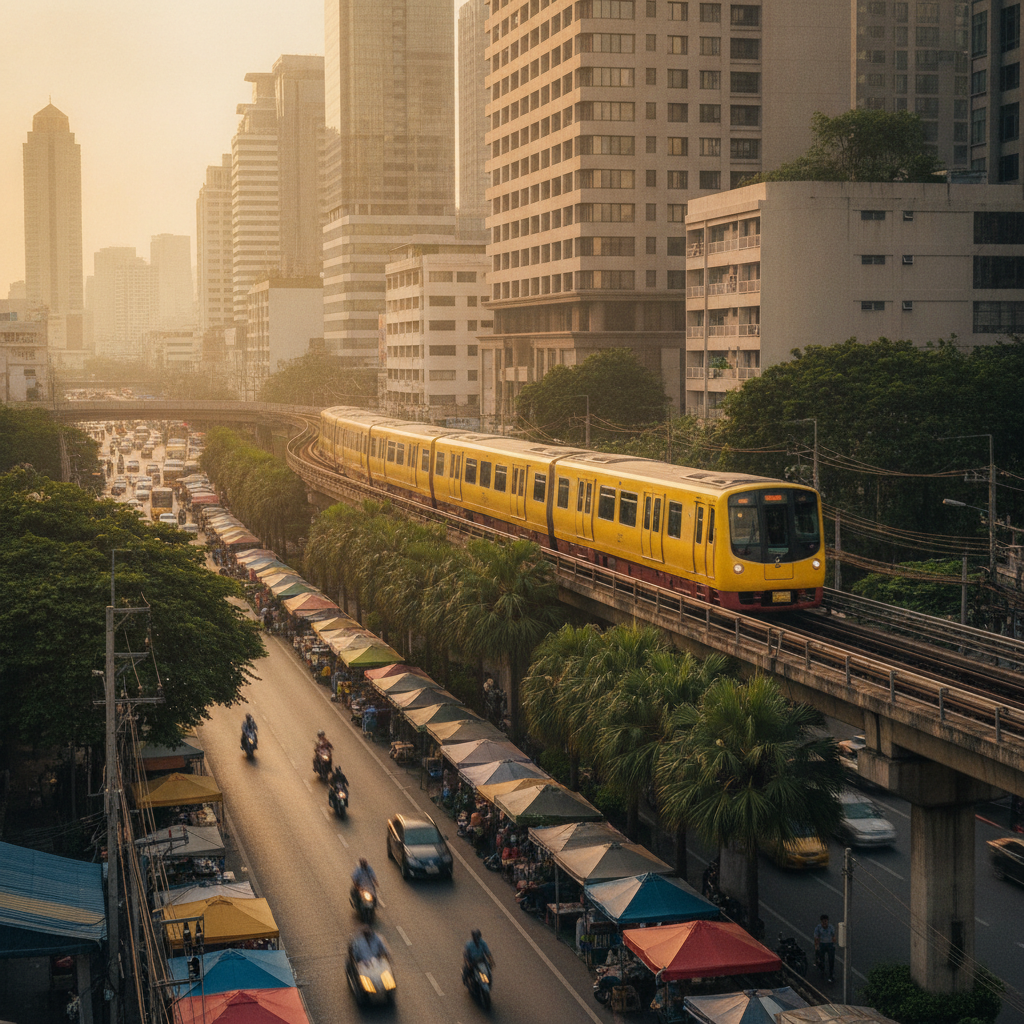
- Family and school corridors: The Thonglor and Ekkamai stretch on the Sukhumvit BTS line remains the strongest zone for expat families, with proximity to international schools including St. Andrews Soi 71, Wells International, Bangkok Prep, and Ruamrudee. Two-bedroom rentals in this corridor typically range from THB 45,000 to THB 70,000 per month.
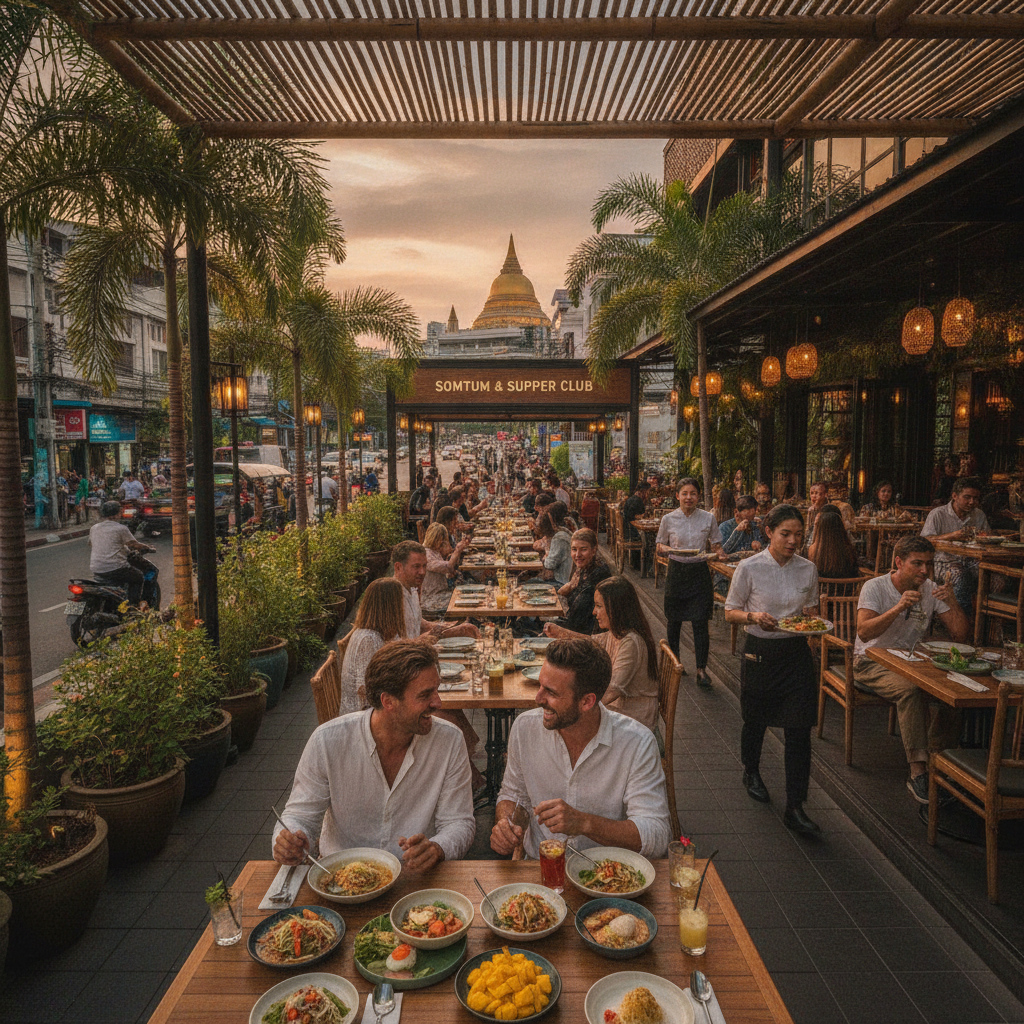
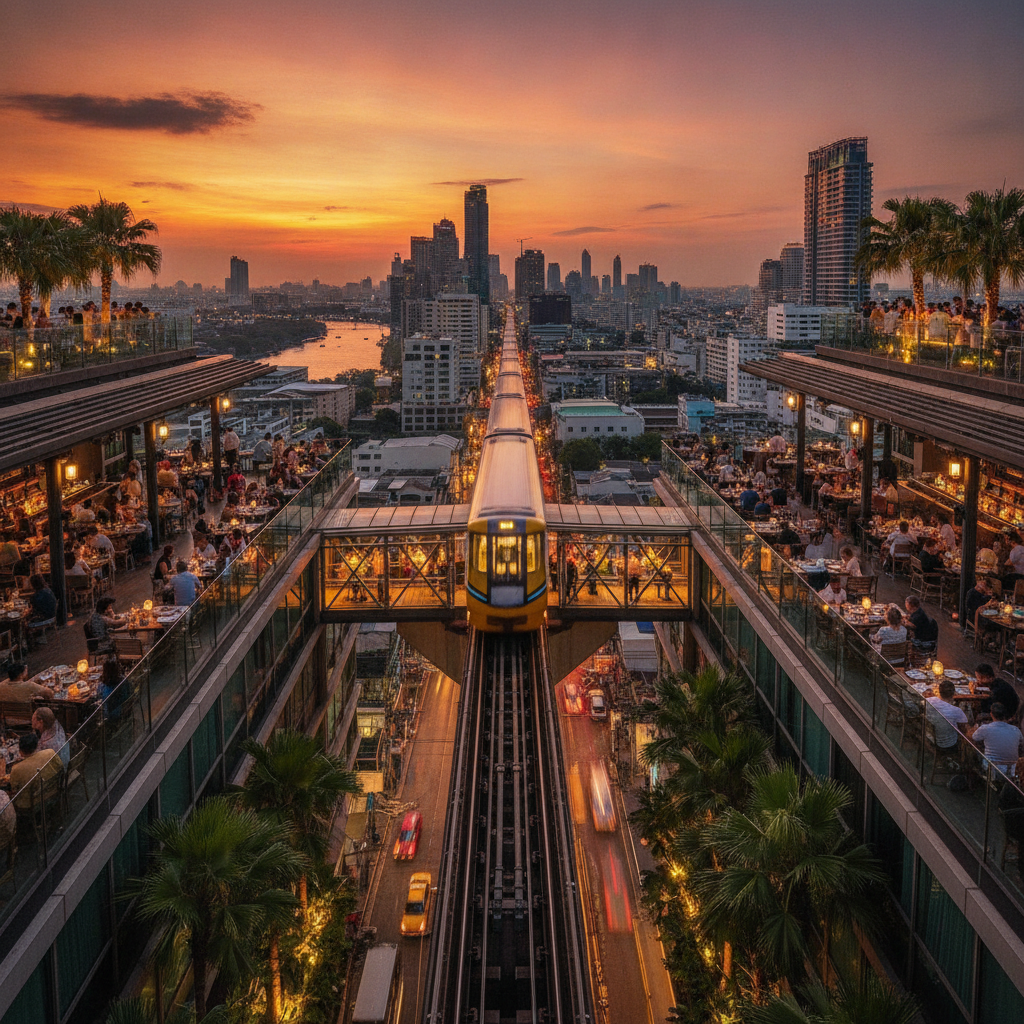
- Rooftop and dining events: The KHAO BIT event at Tichuca Rooftop Bar, T-One Building, Sukhumvit Soi 40 is scheduled for November 1, 2026 — the kind of mid-week cultural anchor that defines life in central Sukhumvit for long-term residents.
- Chinatown cultural calendar: The Yaowarat Vegetarian Festival runs October 10–18, 2026, with over 100–140 vendors across nine days. For context on Yaowarat's broader appeal beyond seasonal events, see our feature on Yaowarat Chinatown culture beyond the Vegetarian Festival.
For expat families evaluating Bangkok's school landscape before committing to a property zone, our coverage of HEI Schools Bangkok Ekkamai's Finnish early childhood education details one of the most significant new additions to the Ekkamai corridor's family infrastructure in 2026.
What the Nominee Crackdown Means for Your Buying Strategy
The December 2026 enforcement deadline is not a distant threat for investors still considering land or villa ownership through company structures. Provincial governors are now required to report identified cases, and the government has signalled compulsory sale — not amnesty — as the consequence for non-compliance.
For foreign nationals already holding Thai land through nominee arrangements, the advice from legal practitioners is consistent: seek qualified Thai legal counsel immediately, before the December deadline. Do not wait to see whether enforcement reaches your specific case.
For buyers entering the market now, the strategic conclusion is straightforward. Freehold condominium title within the 49% quota is the structure that requires no Thai partner, no nominee company, no trust arrangement, and no ongoing legal exposure. It is the structure that has been legal, clean, and enforceable since the Condominium Act was established — and it is the only structure that the 2026 crackdown leaves entirely untouched.
The condominiums market in Bangkok and surrounding provinces is also recovering faster than landed housing in 2026, with second-hand condos gaining significant market share — accounting for approximately two-thirds of the market by transaction volume. This means buyers have meaningful resale inventory to evaluate, not just new developer launches, when searching for quota-available freehold units.
If you are evaluating financing structures alongside your ownership decision, our analysis of the Bank of Thailand's LTV extension to June 2027 covers who qualifies for 100% financing and how that intersects with foreign buyer eligibility.
Request a Freehold Quota Check on Any Bangkok Condo You're Considering
Before any purchase decision, the single most important due-diligence step for a foreign buyer is a current quota check — confirming exactly how much foreign-owned floor area is already registered in your target building, and whether sufficient quota remains for your intended unit.
Our team runs live quota checks with the Land Department and provides a full foreign-buyer purchase pathway analysis — FET documentation requirements, developer due diligence, transfer cost breakdown, and rental yield modelling — at no obligation.
If you are comparing two or three shortlisted buildings, we can run parallel quota checks and return a structured comparison within 48 hours. No floor plans required to start — just the building name and the unit size you are targeting.
Send us your shortlist or a single building name. We will come back with the quota status, current available units within the foreign tranche, and a honest assessment of whether the asset stacks up for your specific ownership and income objectives.