Yaowarat Chinatown Culture: Beyond the Vegetarian Festival and Into Bangkok's Most Misunderstood Neighbourhood

Why Yaowarat Deserves More Than a One-Week Itinerary
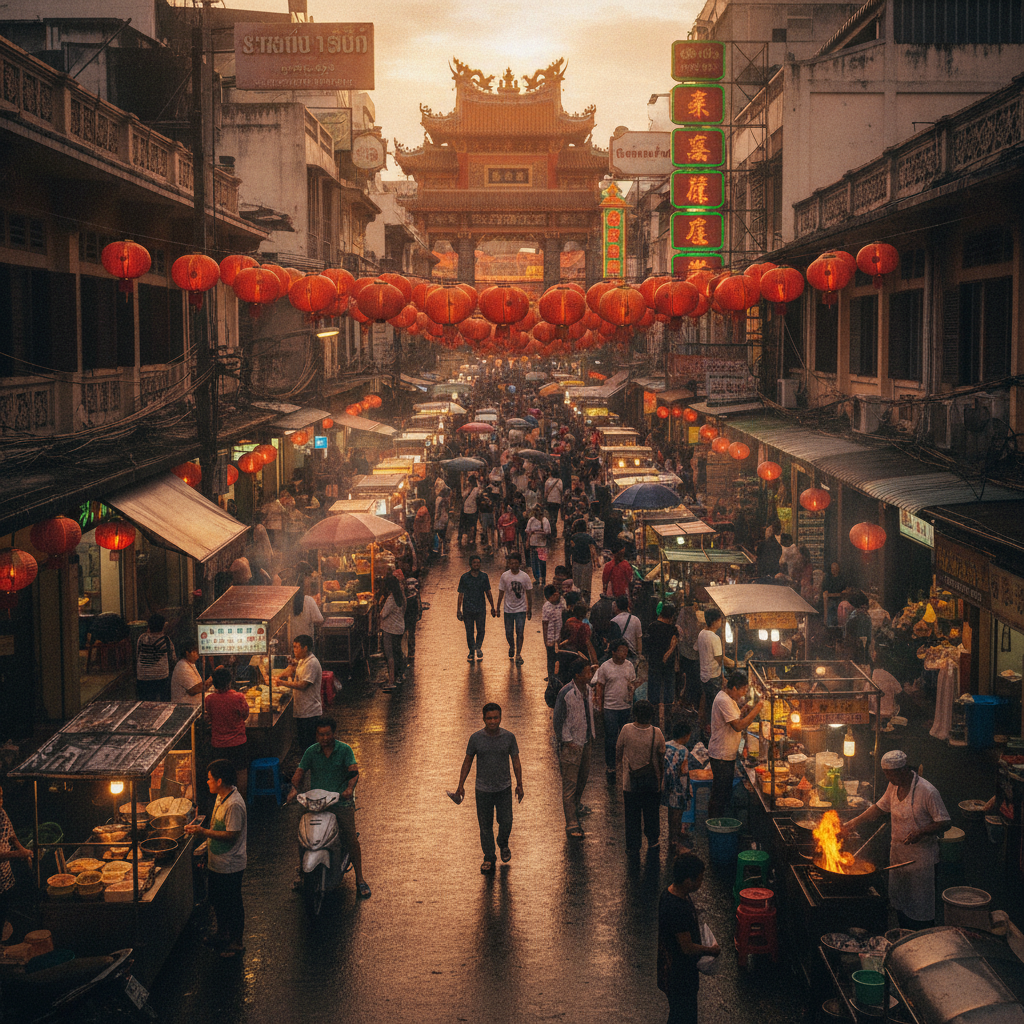
From October 9 to 18, 2026, Yaowarat Road transforms into something few cities on earth can replicate: a kilometre-long corridor of 'jay' strict vegan food stalls, cloud-white flags, and candlelit religious processions that shut down some of Bangkok's most historically charged streets. The Yaowarat Vegetarian Festival is not a manufactured tourism event — it is a genuine spiritual observance rooted in the Taoist traditions of Bangkok's Sino-Thai community, and it draws locals just as fiercely as it draws visitors.
But arriving only on October 9 and leaving on October 18 means missing the point entirely. Yaowarat's character — the gold merchants, the century-old noodle houses, the narrow sois that resist gentrification while quietly accommodating it — is a constant, not a seasonal performance.
This article is for the reader who wants to understand what Chinatown is becoming, not just what it looks like during festival week.
The 2026 Vegetarian Festival: What Actually Happens at Yaowarat Road
What is the Yaowarat Vegetarian Festival and when does it take place in 2026?
The Yaowarat Vegetarian Festival is a 10-day annual Taoist-Buddhist observance held in Bangkok's Chinatown district, running October 9–18, 2026, centred on Yaowarat Road and the Chinatown Gate. Participants abstain from meat, following strict 'jay' vegan rules, while street stalls, illuminated shrines, and religious processions animate the district around the clock.
The key landmarks during the festival are specific and worth knowing before you go. The Chinatown Gate on Yaowarat Road serves as the visual anchor for most photography and procession routes. The Chaloem Phra Kiat Gate Pavilion marks the ceremonial boundary. And for those who want something slightly off the main drag, Chula Soi 5 hosts the Amazing J Fest, a curated vegan food market that skews younger and more design-conscious than the traditional stalls.
The vegetarian observance itself runs October 10–18, one day behind the opening ceremony. That single-day gap matters: the opening night on October 9 tends to be the most electric, with the district at peak energy before the stricter ritual rules begin the following morning.
Insider insight: The street-food economics of Yaowarat during the festival are genuinely remarkable. A district where a bowl of kuay teow typically costs 60–80 THB operates at the same price points during the festival despite the volume surge, because vendors compete for merit as much as margin. It is one of the few food events in Bangkok where you eat better by spending less.
For visitors who want to pair the festival with Bangkok's broader culinary calendar, our guide to World Gourmet Festival 2026 at Anantara Siam covers the fine-dining counterpart running earlier in October. And if the festival's vegan noodle culture sparks a deeper interest in Bangkok's Chinese-rooted food scene, the story of Kolun.h and the 2026 Michelin Bib Gourmand Hainanese noodle houses explains exactly why queue times at certain Chinese-heritage restaurants are a signal of quality, not hype.
Yaowarat's Year-Round Character: The Neighbourhood Beneath the Yellow Flags
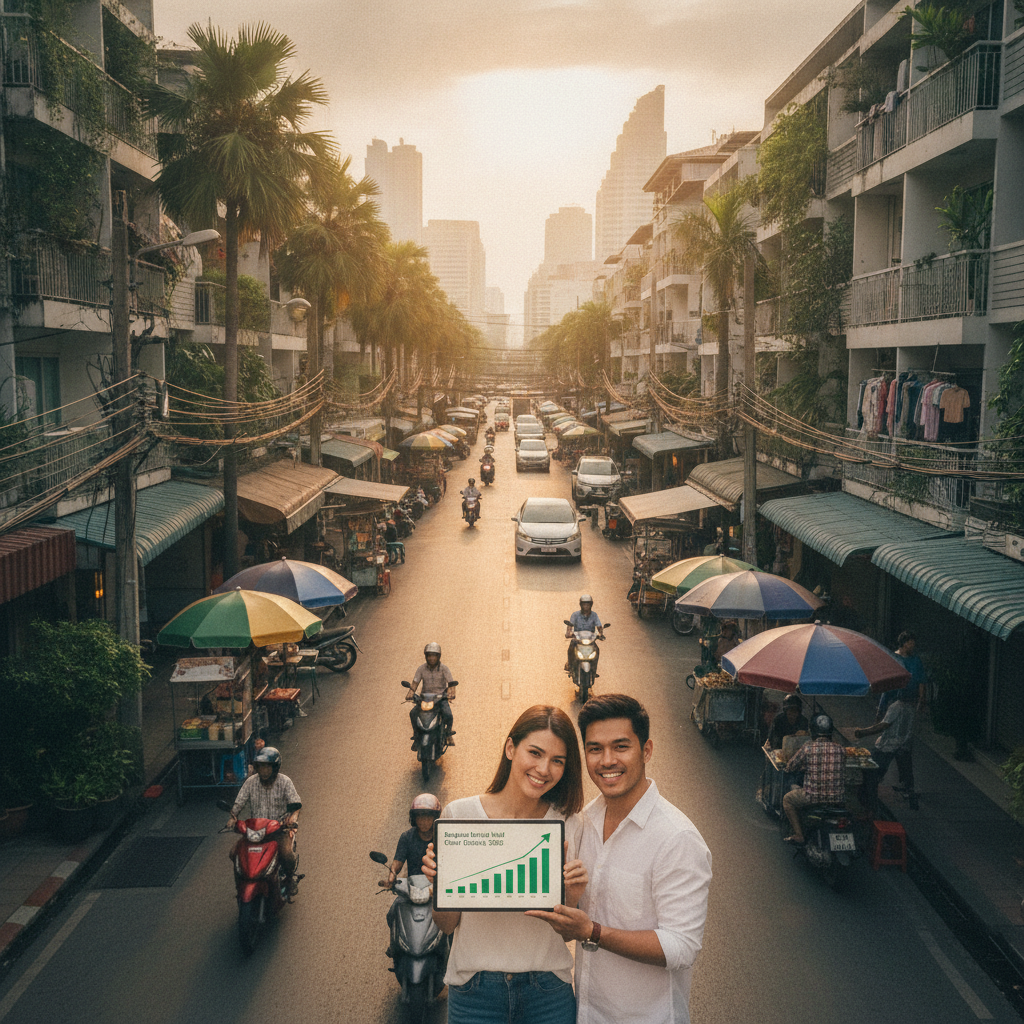
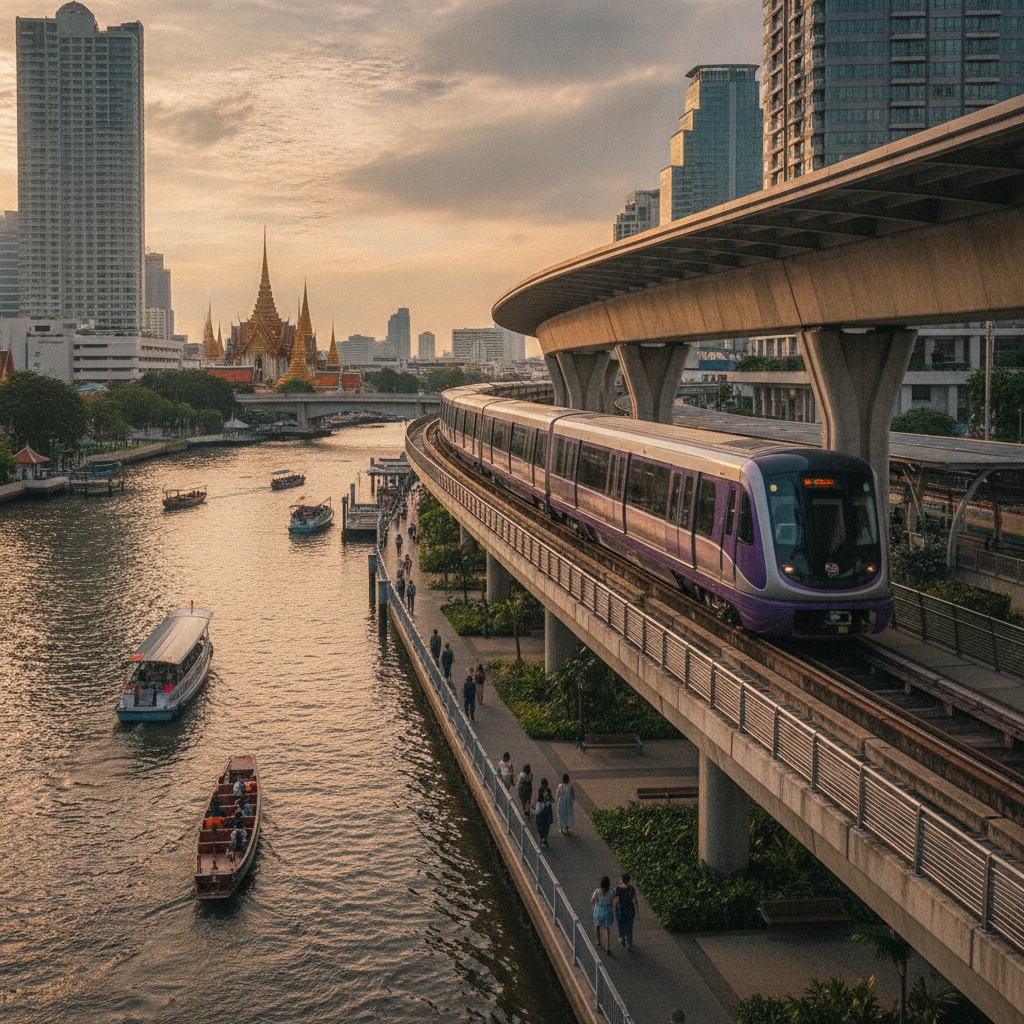
Yaowarat's real competitive advantage as a neighbourhood — and increasingly as a property catchment zone — is its layered density. Within a walkable radius of the Chinatown Gate, you have wholesale gold trading on Yaowarat Road itself, fresh produce markets in the alleys behind Sampeng Lane, century-old apothecaries, and a growing cluster of specialty coffee shops and natural wine bars that have colonised shophouse ground floors without erasing the shophouse above them.
This is not the gentrification pattern seen in Thonglor or Ekkamai, where older tenants are displaced entirely. Yaowarat's Sino-Thai landlord base tends to hold freehold title across generations, which means redevelopment moves slowly and the neighbourhood's texture survives longer than in districts with more fragmented ownership.
The result is a rare urban condition: a district that is simultaneously one of Bangkok's oldest and one of its most photogenic, attracting a resident profile that values authenticity over amenity homogeneity. That profile — creative professionals, restaurant industry workers, long-stay cultural tourists — is exactly the demographic that landlords in transitional neighbourhoods need to sustain rental demand during market rebalancing.
Bangkok's luxury residential market saw prices and rents fall by over 5% in the first half of 2026, a meaningful correction after a decade of roughly 75% cumulative price growth. In districts like Yaowarat, where entry prices have historically sat below the Sukhumvit premium, that rebalancing creates relative value for buyers who can read neighbourhood trajectory rather than just current yield.
Living in and Around Yaowarat: Transit, Dining, and Practical Lifestyle
- Lumpini Park Hawker Centre (Ratchadamri Road): Opened May 1, 2026, this structured street-food destination with natural ventilation sits a manageable distance from the Chinatown fringe and offers the affordable daily-dining anchor that any walkable neighbourhood needs. Priced at the THB tier, it complements rather than competes with Yaowarat's own street-food density.
- One Bangkok dining (Rama IV Road): Bangkok Wonder, part of the phased One Bangkok development on Rama IV, adds an all-day dining and after-work option in a semi-outdoor green setting. For residents positioned between Chinatown and Silom, this new mixed-use precinct is changing the after-dark geography of central Bangkok.
- The Lumpini–Benjakitti Green Bridge: The upgraded 1.6-kilometre elevated walkway between Lumpini Park and Benjakitti Park officially opened May 1, 2026, with non-slip surfaces, improved lighting, and universal design. For Yaowarat-adjacent residents who commute by foot or bicycle, this green corridor represents a meaningful quality-of-life upgrade, connecting two of Bangkok's major green lungs in a single uninterrupted route. Open daily 6 AM–6 PM.
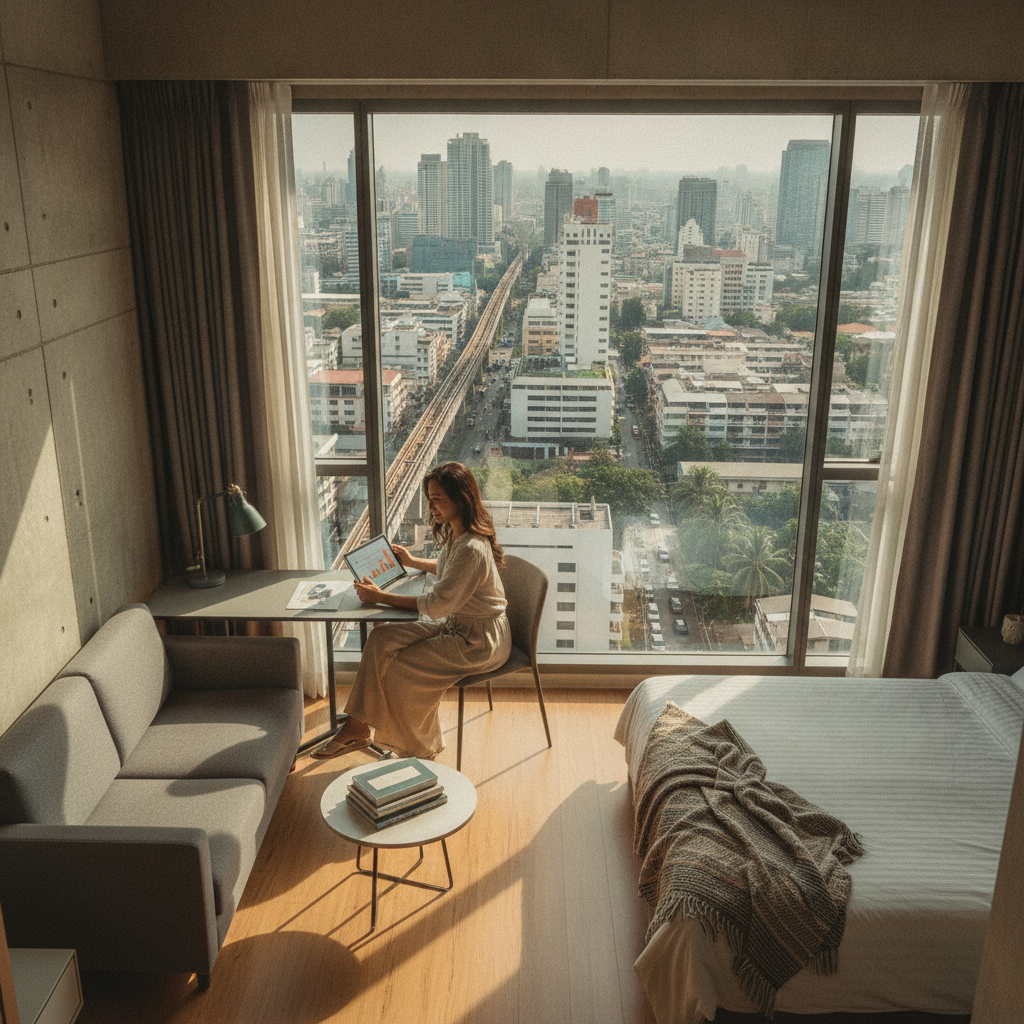
- BTS Asok / MRT Sukhumvit interchange: Bangkok's most critical transit hub for expat renters remains the BTS Asok–MRT Sukhumvit interchange, underpinning Sukhumvit's rental liquidity. For Chinatown, the more relevant connection is the MRT Blue Line's Hua Lamphong and Sam Yan stations, which bracket the district and make it far more transit-accessible than its street-level congestion suggests.
- October and November running calendar: The Amazing Thailand Marathon (November 28–29, 2026, starting at Sanam Luang) routes through historically significant Bangkok streetscapes that intersect with the Chinatown fringe. The 24H Bangkok International Championships (October 31–November 1) runs through city parkland. Our full breakdown of Bangkok's October 2026 running race calendar covers distances, start points, and registration timelines.
- Fortune Teller interactive art exhibition (One Bangkok): Julie Stephen Chheng's nature-themed digital installation runs October 2–November 15, 2026, on the 2nd floor of The Storeys at One Bangkok, Rama IV Road. It represents the growing integration of cultural programming into large-scale mixed-use developments — a trend reshaping Bangkok's creative geography beyond traditional gallery districts.
The Property Investment Case for Bangkok's Historic Core in 2026
Bangkok condominiums average 125,000–150,000 THB per square metre, placing them dramatically below comparable assets in Singapore or Hong Kong. Foreign buyers retain freehold access within the 49% quota, and gross yields across the city range from 4.5–6% in central districts to 6–8% in outer corridors like On Nut, Bearing, and Bang Na.
For districts like Yaowarat — which sit between Bangkok's CBD and the emerging riverside corridor — the investment thesis is not pure yield. Capital appreciation in luxury riverside-adjacent zones has historically run at 6–9% per annum, outperforming the mid-range central district average of 3–5%. As the market enters a rebalancing phase in 2026, buyers with a 5–7 year horizon may find entry points that were unavailable during the decade of sustained growth.
Foreign buyers should note that as of June 2026, Thailand's Land Department has significantly intensified enforcement against nominee ownership structures. The safest and cleanest route for foreign nationals remains freehold condominium ownership within the 49% quota — a structure that applies cleanly to the type of boutique residential product increasingly appearing in Chinatown-adjacent development sites.
For Thai nationals, the cabinet's extension of reduced transfer and mortgage registration fees (0.01%) for properties up to 7 million baht, now running until June 30, 2027, makes this an unusually cost-efficient window for first-home or second-home acquisition. Our detailed walkthrough of LTV financing rules and the 100% LTV structure for Bangkok buyers covers exactly how to structure a purchase before that window closes.
Investors more focused on yield than appreciation should examine the outer district data closely. Bang Na and Phra Khanong are delivering 8–13% growth in rental demand with comparatively stagnant prices — a combination that compresses entry costs while expanding income returns. Our analysis of Bangkok outer district rental yields for 2026 breaks this down by station and unit type.
Arrange a Private Consultation or Neighbourhood Analysis
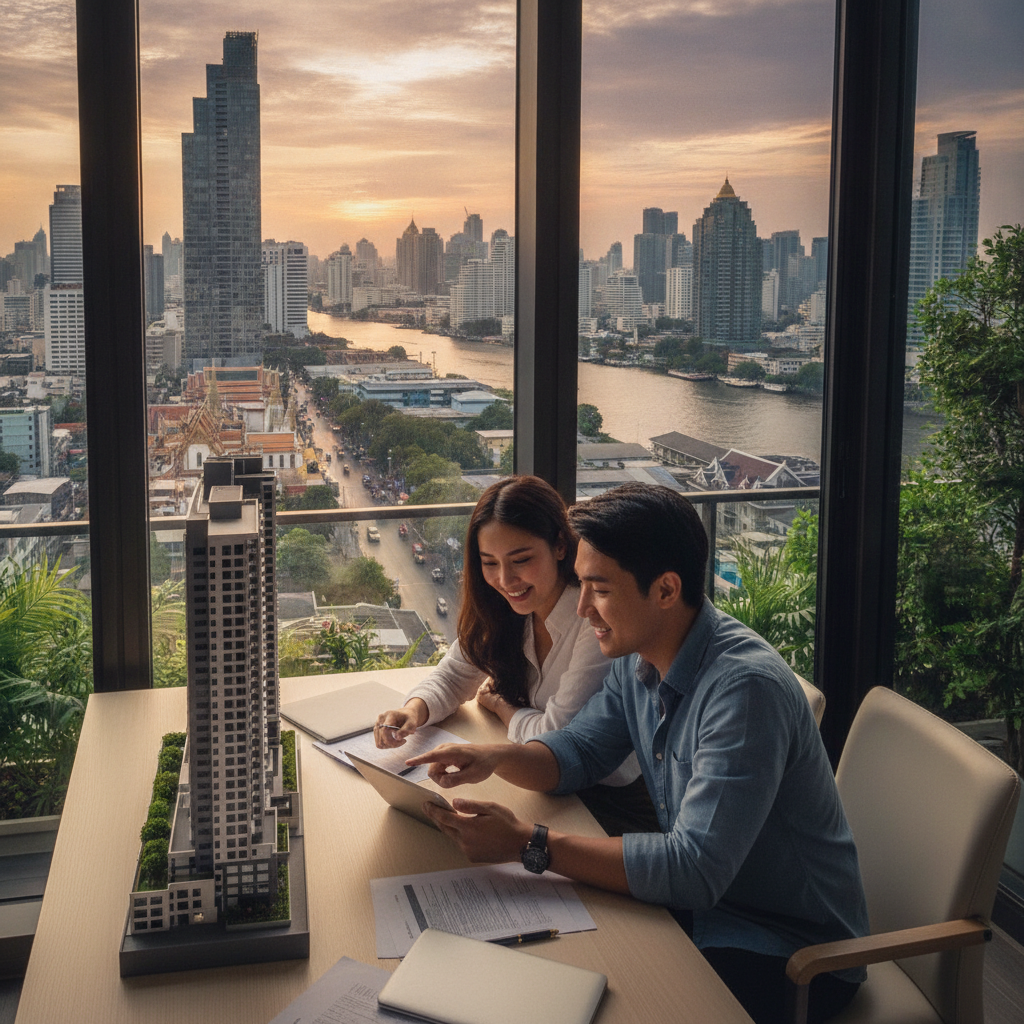
Yaowarat's cultural depth and shifting property fundamentals make it one of Bangkok's most nuanced neighbourhoods to evaluate — and one of the most rewarding to get right. Whether you are weighing a first Bangkok purchase, repositioning an existing portfolio, or simply trying to understand which districts will outperform through the current rebalancing, a conversation grounded in current data is more useful than any index.
Contact our Bangkok property team to request a private neighbourhood analysis, a current floor-plan and pricing comparison for properties in or near Chinatown and the historic core, or a structured walkthrough of the foreign ownership process under the 2026 enforcement framework.
No generic listings. No pressure. Just specific numbers for your specific situation.
Request your private consultation or neighbourhood analysis via therealtors.net — and let the data lead the conversation.