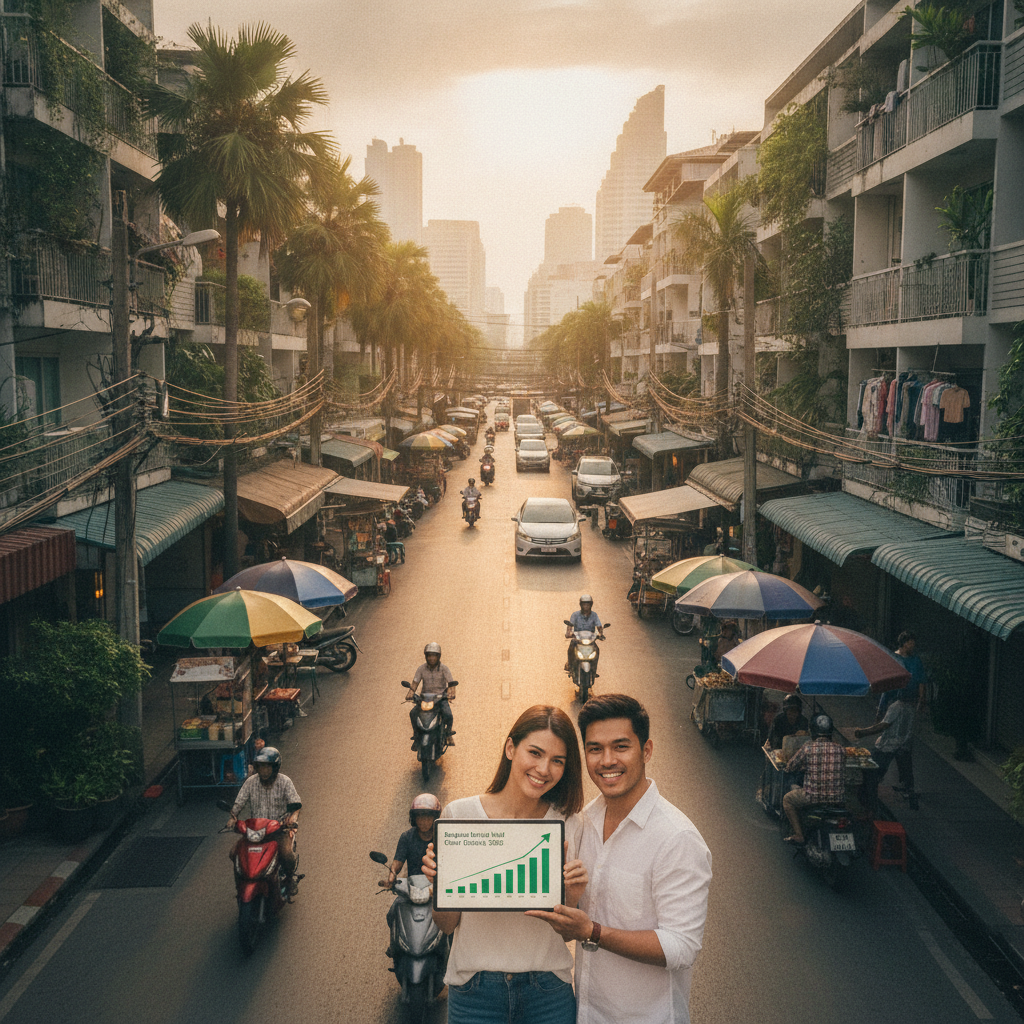
Bangkok Rental Yield Outer Districts 2026: Phra Khanong & Bang Na Hit 8–13% Growth While Prices Stall

The Yield Gap Is Real—and It Opens Right at BTS On Nut
Rental growth of 8–13% year-on-year in Phra Khanong and Bang Na in early 2026 is not a rounding error. It is the sharpest rent acceleration recorded along the BTS Sukhumvit corridor in recent memory—and it is happening while acquisition prices sit essentially flat.
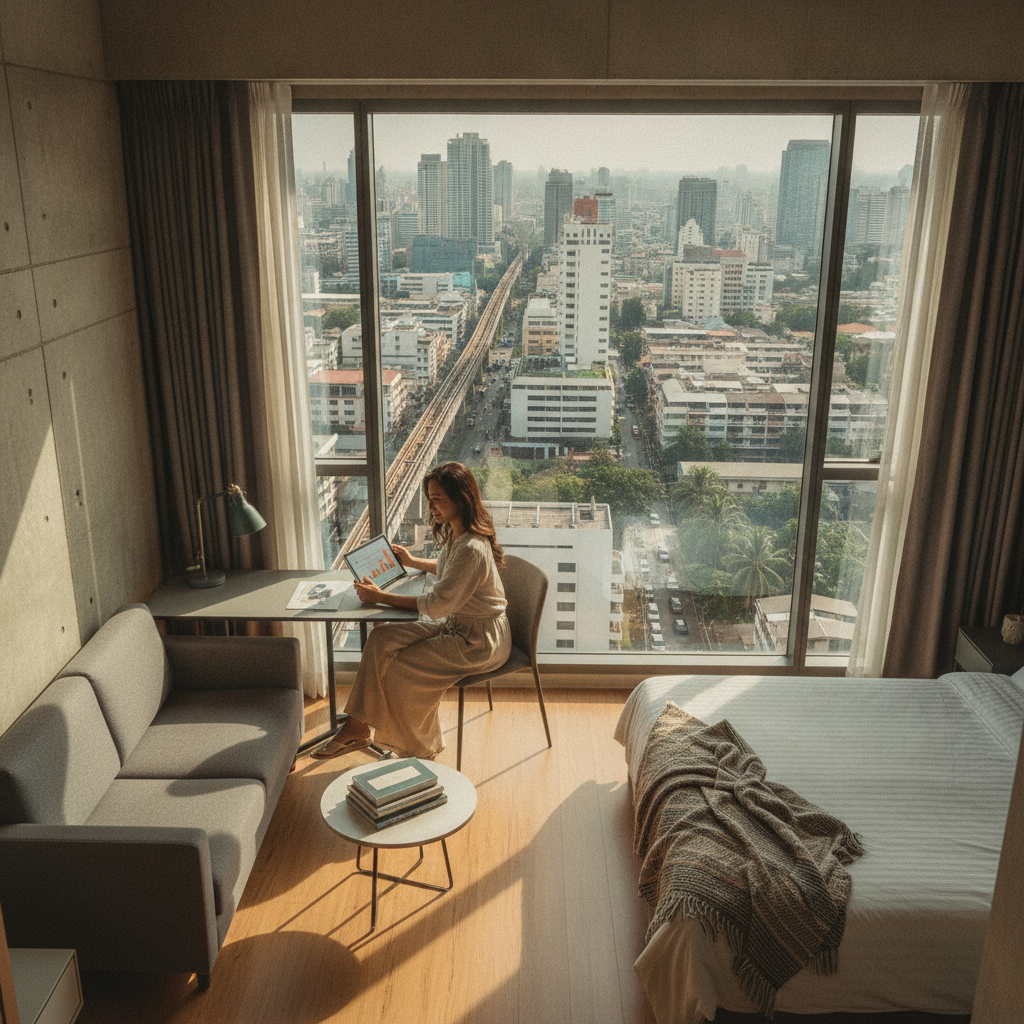
That combination—rising income, stagnant entry cost—is precisely the environment yield hunters spend years waiting for. The lower BTS Sukhumvit corridor spanning Phra Khanong, Punnawithi, On Nut, and Udom Suk has quietly evolved into Bangkok's most reliable rental belt, driven by a tenant base of Thai office workers and younger expatriates who value BTS connectivity above all else.
Meanwhile, downtown Bangkok condominiums in Sukhumvit, Silom, and Sathorn are pricing in a projected 15% asking-price increase for luxury and super-luxury stock in 2026. For income-focused buyers, that appreciation story compresses gross yields to ranges where the numbers no longer work on day one. The outer corridor does not have that problem—yet.
"The lower BTS Sukhumvit corridor is emerging as Bangkok's most dependable rental belt in 2026. Flat sale prices paired with 8–13% rent growth in Phra Khanong and Bang Na is the kind of yield-compression lag that serious income investors act on before the market corrects itself." — The Realtors Research Desk
Phra Khanong, Punnawithi, On Nut, and Bang Na: A District-by-District Data Breakdown
What rental yield can I expect from a condo in Phra Khanong or Bang Na in 2026?
Gross rental yields for condominiums in Phra Khanong and Bang Na range from 6–8% annually in 2026, with acquisition prices for new units averaging 70,000–110,000 THB per sqm—roughly half the cost of comparable downtown stock—while rental growth in these two districts hit 8–13% year-on-year in early 2026.
Breaking that down by station gives a clearer picture of the opportunity gradient along the corridor:
- BTS Phra Khanong: The district closest to the Thonglor and Ekkamai lifestyle pull, meaning tenant demand spills outward from pricier stations. One-bedroom units here attract both Thai professionals and expatriates who want BTS access without Thonglor rents. Gross yields sit at the upper end of the 6–8% range.
- BTS Punnawithi: A deep-value station with strong rental demand from the dense office and light-industrial workforce in the On Nut–Bang Na arc. Entry prices are lower than Phra Khanong, meaning the yield math is particularly compelling for investors buying sub-4-million-baht units.
- BTS On Nut: The anchor of the lower corridor—long established, highly liquid secondary market, and a proven track record with younger Thai and expat tenants. Gross yields here remain in the 6–7% range with the most transparent comparable rental data in the outer zone.
- BTS Udom Suk and Bang Na: The furthest points on the yield curve. Lower per-sqm acquisition costs push gross yields toward 7–8%, and the opening of the Yellow Line at Udom Suk Station has added a transit premium that is still being priced into rents rather than sale prices—a short-term arbitrage window. For more on the Yellow Line's impact, see our full breakdown of Bang Na Yellow Line rental yield at Udom Suk Station.
Critically, none of these stations are insulated from Bangkok's broader oversupply—the city holds more than 50,000 unsold condominium units. What separates the lower BTS Sukhumvit corridor is that its unsold inventory skews toward mid-range price points rather than the sub-3-million-baht suburban stock that analysts warn most sharply against. Tenant demand here is structural, not speculative.
For a direct comparison with how studio-format yields perform across the full outer BTS and MRT network, see our analysis of Bangkok studio rental yields on outer BTS and MRT corridors.
Why Tenants Choose Phra Khanong and Bang Na: Lifestyle Drivers That Underpin Demand
Rental yield is only as durable as the tenant pipeline that supports it. In Phra Khanong and Bang Na, that pipeline is fed by a specific set of lifestyle amenities and connectivity factors that are not replicable further out along suburban lines.
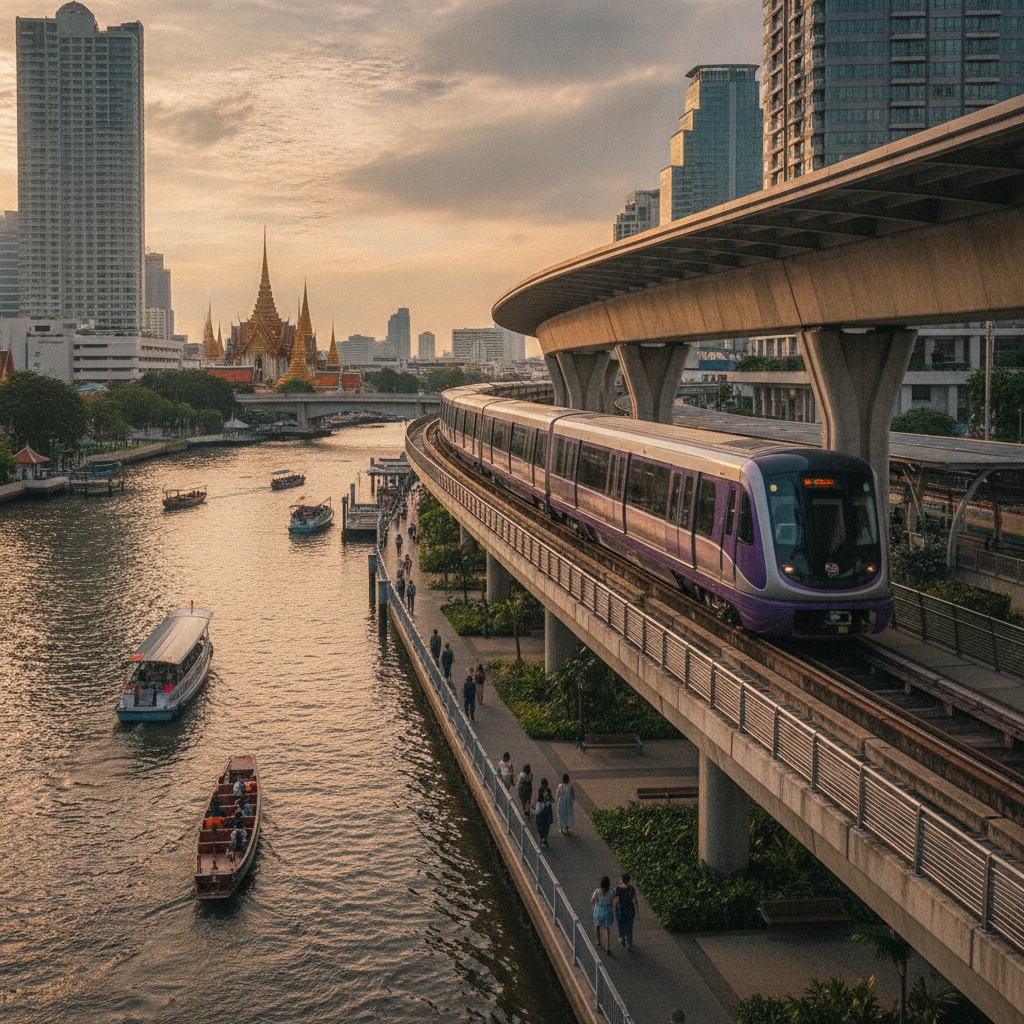
- Transit connectivity: The BTS Sukhumvit line delivers direct, no-transfer access to the CBD employment corridor at BTS Asok, BTS Sala Daeng (via interchange), and Siam. Commute times from Phra Khanong to Asok run under 15 minutes during off-peak hours—a figure that drives genuine, repeat tenant demand rather than speculative occupancy.
- The MRTA Transit-Oriented Development at Rama IX: The MRTA's first commercial TOD project, with groundbreaking slated for early 2026 in the Rama IX area, signals Bangkok's long-term commitment to compact, transit-anchored urban growth. While Rama IX itself is not on the lower BTS Sukhumvit line, the TOD policy direction validates the structural tenant preference for BTS-connected living that underpins outer-corridor demand.
- Running culture and wellness infrastructure: Benjakitti Park's Sunday morning and Friday night running sessions—home to clubs like Sabai Run Club—draw the exact tenant demographic (health-conscious, professionally employed, socially active 25–40-year-olds) that landlords in Phra Khanong compete to attract. The park is directly accessible from the BTS corridor. For more on Bangkok's running club boom and what it signals about tenant preferences in urban neighbourhoods, read our piece on Bangkok's October 2026 running races.
- Muay Thai and fitness gyms: Bangkok's thriving Muay Thai training scene—anchored by gyms like Yokkao Training Center, Khongsittha Muay Thai, and Petchyindee Kingdom across Sukhumvit and beyond—appeals heavily to the expatriate tenant segment that populates outer-corridor rentals.
- Dining: The broader Sukhumvit corridor that tenants access from these stations now includes Bangkok's most decorated restaurant scene. Sühring, the city's first Three-MICHELIN-Star restaurant in 2026 (and the first German restaurant in Asia to achieve that distinction), anchors fine dining credibility. INDDEE's new Two-MICHELIN-Star recognition and Juksunchae becoming the first Korean restaurant in Thailand to earn a MICHELIN Star in 2026 illustrate the depth of the city's culinary identity—a lifestyle amenity that matters to the internationally mobile tenant profile renting in this corridor.
- Major events and entertainment: Tenants in the lower BTS corridor are minutes from venues hosting The Weeknd's After Hours Til Dawn Stadium Tour at Rajamangala National Stadium (October 11–13, 2026), BTS WORLD TOUR 'ARIRANG' IN BANGKOK at Rajamangala National Stadium (December 3, 5, and 6, 2026), and the Amazing Thailand Marathon Bangkok on November 28, 2026—all events that reinforce Bangkok's status as a global-standard city for internationally minded residents.
- Family and school access: NIST International School on Sukhumvit Soi 15—Thailand's first full IB World School, which completed new Innovation and Elementary Buildings in 2025—is accessible from the BTS Sukhumvit line. Families anchored in the Phra Khanong–Bang Na corridor use the BTS to reach NIST without the daily congestion of inner-city driving. For early-childhood options along the corridor, our guide to Kids Kingdom Sukhumvit 26 and BTS-connected early learning covers the landscape in depth.
The Downtown Divide: Why 15% Price Growth in Sukhumvit–Silom–Sathorn Actually Helps Outer Yields
Bangkok's luxury and super-luxury condominium segment in downtown Sukhumvit, Silom, and Sathorn is on a different trajectory entirely—asking prices are projected to increase up to 15% year-on-year in 2026, with new per-sqm pricing running 140,000–220,000 THB for new stock.
At those prices, gross rental yields for a 1-bedroom unit in the downtown core typically compress to the 4–5% range. That compression is not a failure of the downtown market—it reflects genuine capital appreciation demand from owner-occupiers and long-term investors who are buying for price growth rather than income.
But it does mean that yield-hungry investors who need 6%+ annual income to justify an acquisition are being structurally priced out of central Bangkok. The outer corridor—at 70,000–110,000 THB per sqm and 6–8% gross yields—absorbs that displaced capital. The 8–13% rent growth in Phra Khanong and Bang Na in early 2026 is, in part, a consequence of tenants who can no longer afford rising rents in Thonglor and Ekkamai and are migrating one or two stations south.
The broader Bangkok condominium market does carry real risk: the city's unsold inventory exceeds 50,000 units, condo transfers fell 35% in Q1 2026, and analysts specifically warn against investing in sub-3-million-baht suburban stock due to severe oversupply and high mortgage rejection rates. The lower BTS Sukhumvit corridor sits above that risk band—both in price point and in the quality of tenant demand—but careful project and unit selection remains non-negotiable.
Foreign buyers should also note the Thai government's intensified 2025–2026 crackdown on nominee structures used to circumvent land ownership restrictions. Freehold condominiums remain the cleanest, legally robust structure for non-Thai buyers, and the outer BTS corridor offers a wide range of freehold-eligible stock at entry prices well below the downtown threshold. Registered 30-year leases are the only other defensible structure; all nominee arrangements now carry severe legal consequences.
Request a Yield Analysis for Your Target Station
If you are targeting a specific station—Phra Khanong, Punnawithi, On Nut, Udom Suk, or Bang Na—the most useful next step is a unit-level yield model that accounts for actual asking rents, management fees, void periods, and acquisition costs rather than headline gross yield figures.
Our team can pull current comparable rental data, identify the specific buildings along the lower BTS Sukhumvit corridor with the tightest vacancy rates, and model net yields for 1-bedroom and studio formats at your target budget.
Request a private yield analysis or floor-plan shortlist by contacting The Realtors directly. No commitment is required—just a conversation grounded in the numbers that actually matter for income-focused acquisitions in 2026.
You can also explore our broader cost-of-living framework to understand what your target tenants are spending month-to-month: our guide to living alone in Bangkok—real monthly budgets for single expats gives landlords precise context on what a competitive rent looks like from the tenant's perspective.