Living Alone in Bangkok: Real Monthly Budgets and Where Your Money Actually Goes

What Bangkok Actually Costs a Solo Expat in 2026
A single person living in central Bangkok in 2026 can expect to spend between THB 50,000 and THB 80,000 per month — or more — to live comfortably in areas like Asoke, Phrom Phong, Thonglor, or Ekkamai. Drop outside the central BTS corridor and that same lifestyle costs THB 30,000–45,000. The gap is real, and it's almost entirely driven by one line on the spreadsheet: housing.
A one-bedroom condo near a central BTS station runs THB 20,000–33,000 monthly. That single figure swallows 40–60% of a mid-range expat budget before a single baht is spent on food, transport, or weekend plans. Understanding this isn't pessimism — it's the foundation for making a smart district decision from day one.
If you're still weighing neighbourhoods, Bangkok condo rental prices in 2026 for first-time renters in Sukhumvit and beyond gives you the granular per-soi breakdown to compare options before you sign anything.
District-by-District Budget Reality: Where Solo Expats Are Actually Landing
How much does a single expat need to live comfortably in Bangkok per month?
A single expat needs roughly THB 50,000–80,000 monthly for a comfortable central Bangkok lifestyle in 2026, covering a one-bedroom condo at THB 20,000–33,000, dining, transport, and fitness. Budget-conscious living outside prime zones costs THB 30,000–45,000.
Sukhumvit Corridor: Phrom Phong, Thong Lo, Ekkamai
This is where the majority of corporate expats and digital nomads land — and where the bill lands hardest. A one-bedroom in a quality building near Phrom Phong BTS sits firmly at the top of the THB 20,000–33,000 rent band. Add dining out four or five times a week (a realistic baseline for solo expats with no kitchen habit), and food alone runs THB 15,000–22,000 monthly across street food, mid-range Thai restaurants, and the occasional international meal.
Transport in this corridor is genuinely manageable. A monthly BTS rabbit card costs around THB 1,400–1,800 depending on usage, and Grab fills the gaps. Budget THB 3,000–5,000 monthly for combined transport unless you're a committed cyclist along the new Green Bridge connecting Lumpini and Benjakitti parks.
The Sukhumvit corridor delivers something no budget spreadsheet captures: a self-contained expat ecosystem where your gym, your grocery store, your clinic, and your social life exist within a 1km radius. That convenience has a real dollar value — especially for solo arrivals still building their Bangkok network.
Ratchathewi & Victory Monument: The Underrated Value Zone
Often overlooked in favour of flashier Sukhumvit postcodes, Ratchathewi consistently outperforms on pure value. Studios in buildings like Ideo Q Ratchathewi sell for THB 4.5–5.5 million and rent for THB 18,000–23,000 monthly — meaningfully cheaper than comparable Phrom Phong units while still sitting on the BTS network. The tenant profile tells the story: young professionals, medical staff from nearby Phyathai Hospital, and university students from nearby campuses.
For a solo expat whose priorities are a central location, BTS access, and a realistic monthly number, Ratchathewi often delivers a THB 10,000–15,000 monthly saving over Thonglor for a broadly equivalent lifestyle. That delta, compounded over a 12-month lease, pays for a regional flight holiday every two months.
Budget-Conscious Living: Outside the Central Ring
Bangkok is not a one-price city. A solo expat willing to live in districts like Udomsuk (now sharply more accessible via the operational MRT Yellow Line extension connecting to BTS Bearing), or on the Thonburi side near Bang O MRT, can find quality one-bedroom rentals well below THB 15,000 monthly. The trade-off is commute time and social infrastructure — both real considerations for solo movers building a life from scratch.
If community and integration matter as much as the budget line — and for solo arrivals they typically do — what first-time solo expats actually need to know about community and loneliness in Bangkok is worth reading before choosing a postcode purely on rent.
What the Rest of the Budget Actually Looks Like
- Fitness & Wellness (THB 2,500–6,000/month): Options have expanded dramatically in 2026. Vault Fitness in Sukhumvit 16, opened July 2026, runs a boutique HIIT model in its signature 'Red Room' studio with post-workout recovery via infrared saunas and ice baths included after sessions — a meaningful upgrade on standard gym membership. On the Thonburi side, The O2 Bangkok (Charansanitwong Soi 84, near Bang O MRT, opened June 2026) offers a 10,200-sqm integrated sports and medical complex with 24-hour AI-managed fitness, badminton via the Sapsiree Badminton Academy, football and basketball academies, and hydrotherapy. For Muay Thai — still Bangkok's most authentic and cost-effective workout — gyms near Phrom Phong BTS like Migaku Fitness Club offer flexible drop-in rates, typically offering sessions twice daily.
- Healthcare (THB 1,500–4,000/month average, highly variable): International health insurance is non-negotiable for serious expats. Monthly premiums for a healthy single adult typically run USD 100–200 depending on coverage level and provider. In Thonglor and Sukhumvit, Samitivej Sukhumvit Hospital provides comprehensive care including specialist consultations; in Sathorn and Silom, BNH Hospital and Bangkok Christian Hospital are accessible alternatives with strong international patient services.
- Groceries (THB 5,000–10,000/month): Cooking at home from Villa Market or Tops Supermarket in Sukhumvit runs considerably higher than local wet markets, but the convenience premium is consistent with the rest of central Bangkok pricing. Budget-focused expats using fresh local markets and cooking a majority of meals can land closer to THB 5,000.
- Entertainment & Culture (THB 2,000–6,000/month): Bangkok's 2026 cultural calendar is genuinely broad. The 'Transverse: Navigating Emerging Thai Art' exhibition runs at the Four Seasons Hotel Bangkok ART Space by MOCA Bangkok and River City Bangkok until September 27, 2026, featuring 17 artists — and entry is consistent with the accessible pricing that defines Bangkok's gallery scene. 'The Spirit of Sculptors' exhibition runs at Museum Pier through October 31, 2026. For gallery-dense weekends without a cover charge, Bangkok regularly delivers value that no European capital can match.
- Utilities & Internet (THB 2,000–4,500/month): Air conditioning is the dominant cost driver. A centrally located one-bedroom running AC 10–14 hours daily can produce electricity bills of THB 2,500–4,000 monthly in the hot season. Fibre internet from AIS or True typically runs THB 500–800 monthly for a standalone package.
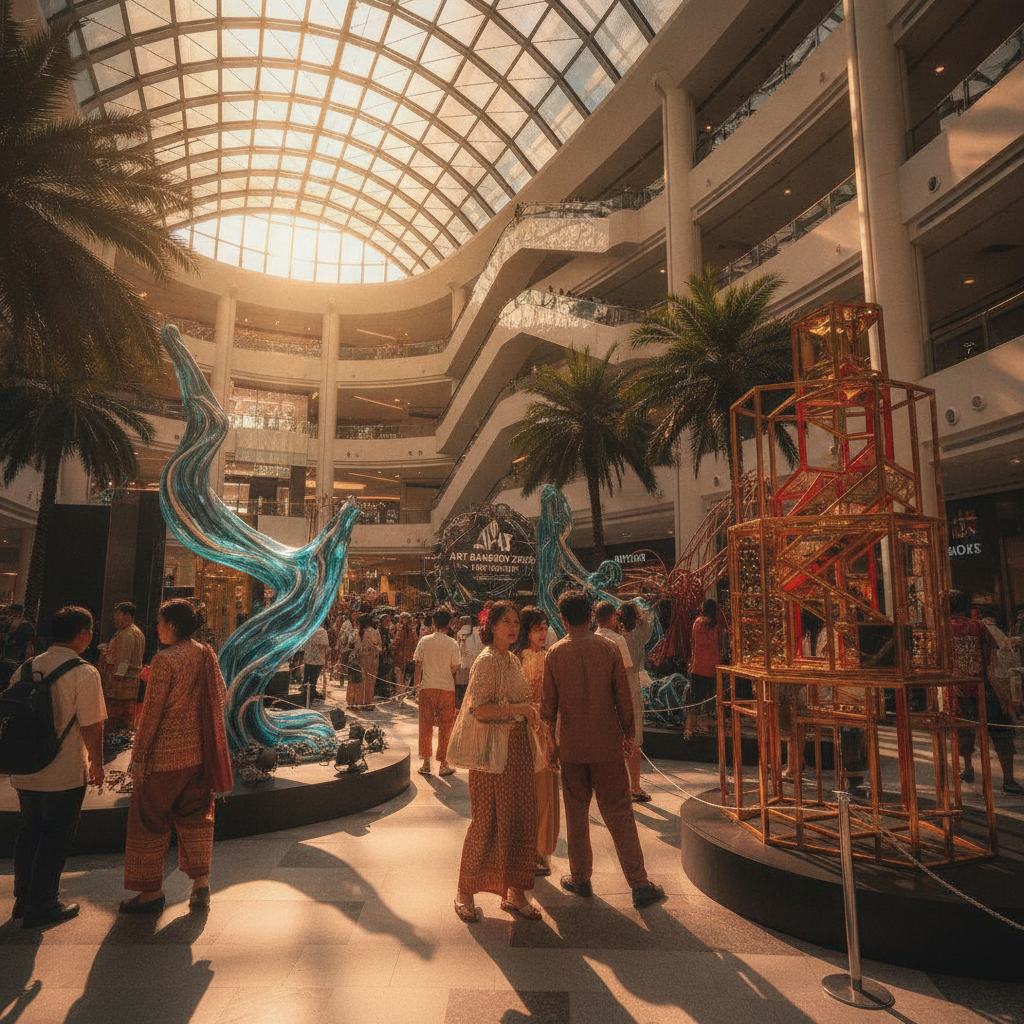
For a picture of how Bangkok's art and lifestyle scene is evolving in real time, the Art Bangkok 2026 First Chapter at Siam Paragon in October is the kind of calendar anchor that signals how much a solo expat's social and cultural life can cost — or not cost — here.
Property Ownership as a Residency Tool: The 2026 Visa Angle for Solo Buyers
For solo expats moving from renter to owner, 2026 introduced a significant structural change worth knowing. Thailand's new property investment-based Non-Immigrant 'B' Investment visa, introduced in October 2025, grants up to 12 months of continuous residence — renewable annually — to foreign nationals who own qualifying real estate valued at a minimum of THB 3,060,000. The property must be registered in the applicant's name at the Department of Lands. Both freehold condominiums and eligible leasehold properties qualify.
This 'THB 3M Property Visa' is a direct pathway for long-term stays tied to ownership, without the higher investment thresholds or age restrictions of other visa categories. It sits entirely separate from the Long-Term Resident (LTR) Visa — which, following BOI amendments in February 2025, also accepts property investment as a qualifying vehicle. Wealthy Global Citizens can qualify for the 10-year LTR with a minimum USD 500,000 (approximately THB 17.5 million) property investment; Wealthy Pensioners need USD 250,000.
The foreign ownership framework itself remains stable. As of September 2026, the 49% foreign ownership quota for condominiums is unchanged — proposals to increase this to 70% or introduce 99-year leases have not been enacted. Foreign buyers still pay the full 2% transfer fee rather than the 0.01% rate extended for Thai nationals until June 2027. The full picture of what foreign buyers actually pay at closing is detailed in our post on the 0.01% fee cut myth and your actual Bangkok property costs.
From a pure investment standpoint, the Sukhumvit Corridor (Phrom Phong, Thong Lo, Ekkamai) delivers gross rental yields of 5.5–6% with occupancy exceeding 90% for studios in newer projects. Capital appreciation has averaged 4.2% annually over the past five years — numbers that make a Bangkok condo purchase genuinely competitive against other Asian markets for a solo buyer who wants their residence to work as an asset simultaneously.
Get a Personalised Bangkok Budget and Property Shortlist
Every solo expat's Bangkok budget is shaped by three decisions: which district, which lifestyle tier, and whether you're renting or buying. The numbers in this guide give you the framework — but the right property, at the right price, in the right soi, requires a conversation rather than a calculator.
Our team works exclusively with serious buyers and renters in Bangkok's mid-to-premium residential market. Whether you want a floor-plan analysis for a specific building, a curated shortlist of available units in Phrom Phong or Ratchathewi that match your monthly budget, or a private viewing arranged within 48 hours — we handle that without pressure or obligation.
Message us directly with your target district, budget range, and move-in timeline. We'll come back with something specific, not a generic brochure.