Foreign Buyers Still Pay Full Price: The 0.01% Fee Cut Myth and Your Actual Bangkok Property Costs

The Fee Cut That Does Not Apply to You
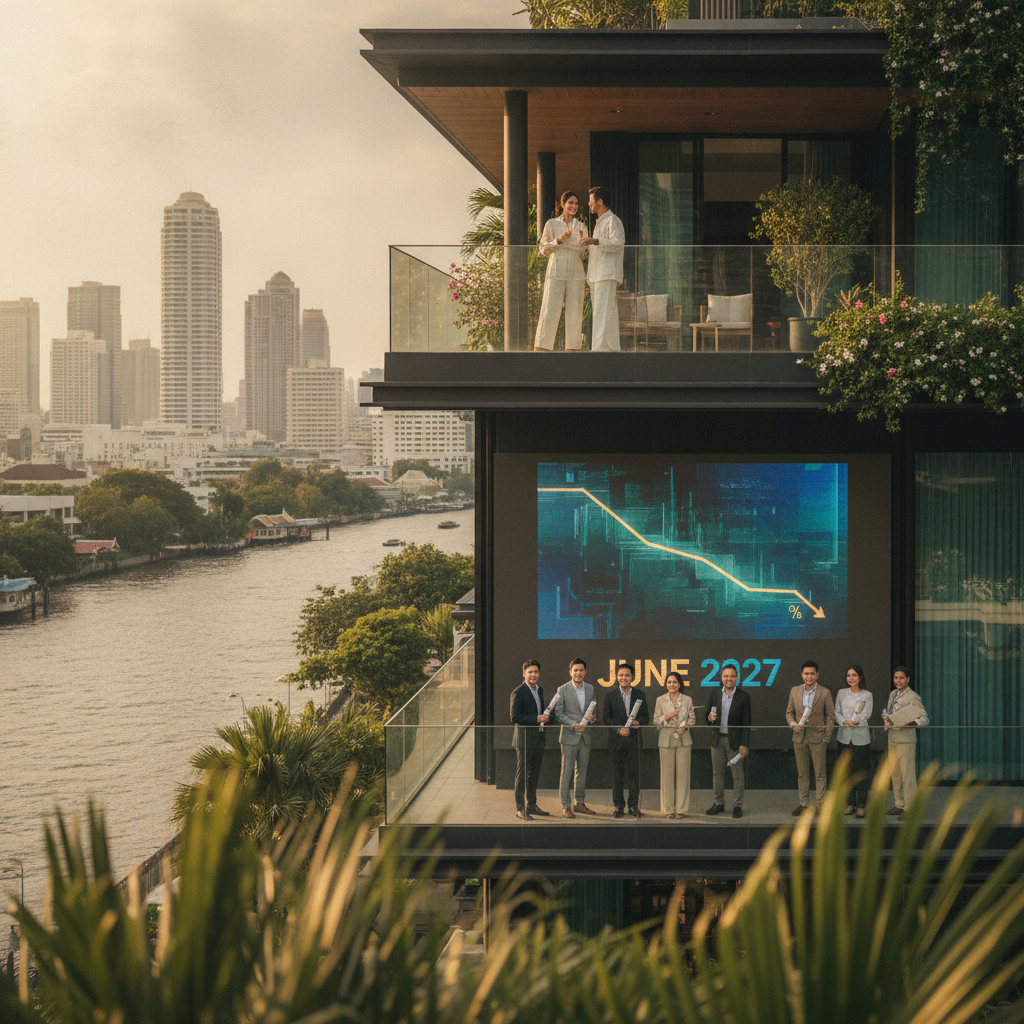
You have likely read the headline: Thailand has extended its property transfer and mortgage registration fees to just 0.01% until June 30, 2027. For Thai nationals buying a home valued under 7 million baht, that is a genuinely historic saving. For you, as a foreign buyer, it is legally irrelevant.
The Thai Cabinet's resolution is explicit — this incentive applies to individual Thai nationals only. Foreign purchasers, whether individuals or companies incorporated abroad, remain subject to the standard rates. That distinction is buried in the fine print of nearly every report celebrating the stimulus, and missing it can blow a six-figure hole in your acquisition budget.
Our dedicated breakdown of the timeline and full mechanics is covered in Extended 0.01% Property Transfer Fee Until June 2027: Bangkok's Last Window to Buy Below Market Closing Costs — but that window is not open for you. Read on to understand what your closing costs actually look like.
Your Real Closing Costs as a Foreign Buyer in Bangkok
What property transfer fees do foreign buyers actually pay in Bangkok?
Foreign buyers pay the standard 2% transfer fee and a 1% mortgage registration fee on the registered value of the property — rates that have not changed. The widely reported 0.01% reduction, extended until June 30, 2027, applies exclusively to Thai nationals purchasing properties valued up to 7 million baht, leaving foreign purchasers subject to full statutory fees.
To make this concrete: on a 6 million baht condo — well within the scope of the stimulus for a Thai buyer — a foreign purchaser pays 120,000 baht in transfer fees alone, plus up to 60,000 baht in mortgage registration fees if financing is involved. A Thai buyer under the incentive scheme pays a combined total of roughly 1,200 baht for the same transaction. That is not a rounding error; it is a structural cost difference that reshapes your true acquisition price.
Additional government fees that remain constant for all buyers include the Specific Business Tax (SBT) at 3.3% (applicable if the seller has owned the property for fewer than five years) or stamp duty at 0.5% (if SBT does not apply). Withholding tax on the seller's side is also factored into negotiations in most transactions, though it occasionally gets passed back to buyers contractually — always verify this in your sale and purchase agreement.
Insider insight: In Bangkok's current buyer's market — where new condo launches dropped 67% quarter-on-quarter in Q2 2026 — foreign buyers have meaningful leverage to negotiate the seller's side costs into the headline price. A skilled agent will use the softness in unsold inventory to compress the effective premium you pay, even if the fee structure itself cannot be changed.
The 49% foreign ownership quota per building adds another layer of due diligence. As of September 2026, neither the proposed increase to 75% nor the 99-year lease reform has been enacted. Verifying the remaining foreign quota before exchanging contracts is non-negotiable — and your FET (Foreign Exchange Transaction) form documenting overseas fund remittance must be in order before the Land Department will process your transfer.
For a full picture of how these structural costs interact with rental yield calculations across Bangkok's key districts, see our guide to Smart Investing in Bangkok 2026: Unlocking Rental Yields and Capital Growth in a Segmented Market.
Bangkok Districts Where the Fee Gap Hurts Most — and Least
The 2% transfer fee scales linearly with purchase price, so where you buy determines how much the exclusion stings. In the Wireless Road / Langsuan corridor, where prices run from 250,000 to 450,000 THB per sqm, a 50 sqm unit at the lower end of that range costs 12.5 million baht — generating a 250,000 baht transfer fee bill before you have moved a single piece of furniture. The same corridor offers Bangkok's highest historical capital appreciation at 6–8% per year, which goes some distance toward absorbing that upfront hit.
In Silom and Sathorn, Bangkok's financial district, one-bedroom units of 35–45 sqm are priced at 5–8 million baht. The transfer fee on an 8 million baht purchase lands at 160,000 baht. Corporate tenant demand here is consistent, making yield stability the investment thesis — but the closing cost must be modelled accurately into your yield calculation from day one.
The Sukhumvit corridor (Phrom Phong, Thong Lo, Ekkamai) delivers gross rental yields of approximately 5.5–6% with occupancy rates exceeding 90%, driven by Japanese, Korean, and European corporate renters. Entry prices at 120,000–350,000+ THB per sqm mean the transfer fee on a mid-range two-bedroom can comfortably exceed 150,000 baht. Against a backdrop of 4.2% average annual capital appreciation over five years, however, the arithmetic still works for long-term holders.
The most fee-efficient entry points for foreign investors are the mid-ring BTS/MRT-adjacent districts: Ari, Ratchathewi, On Nut, and Phra Khanong. Studios in these zones start around 3.2–4.0 million baht, capping your transfer fee at 64,000–80,000 baht while delivering gross yields of 5.5–7%. Our deep-dive into these corridors is worth reading: Bangkok's Hidden Yield Champions: Why Eastern Suburbs Like On Nut and Bang Na Are Outperforming Prime Districts in 2026.
Living Context: What Bangkok Delivers at These Price Points
Understanding acquisition costs is only half of the equation. The other half is whether Bangkok's lifestyle ecosystem justifies the premium relative to other Southeast Asian capitals — and the evidence in late 2026 is compelling.
- Dining at the top end: Sühring in Chong Nonsi was elevated to Three Michelin Stars in the 2026 guide, making Bangkok one of only a handful of Southeast Asian cities with a Three-Star restaurant. INDDEE in Phrom Phong and Anne-Sophie Pic at Normandie (Riverside, Mandarin Oriental) both received Two Michelin Stars in the same cycle — the calibre of fine dining within a short taxi ride of most prime residential districts is genuinely world-class.
- Cultural programming: Bangkok's 28th International Festival of Dance and Music runs September 5 to October 17, 2026, at the Thailand Cultural Centre. International concerts at Rajamangala National Stadium this season include Post Malone (September 22) and The Weeknd's three-night run (October 11–13).
- Wellness infrastructure: Free outdoor HIIT sessions run Sunday mornings at 8:45 AM at Benjakitti Park. Lumphini Park hosts group aerobics most mornings. Bangkok is actively positioning itself as a regional wellness hub, with the Global Wellness Summit scheduled for November 2026 in Phuket.
- Schools for families: Phrom Phong and Thong Lo give direct access to NIST International School (Sukhumvit Soi 15, IB curriculum) and Wells International. Ekkamai connects to St. Andrews Soi 71 and Bangkok Prep. Families considering Ari will find a quieter, more Thai neighbourhood with Bangkok Hospital Ari nearby — explored in our neighbourhood guide to Ari: The Quieter Alternative to Sukhumvit for Bangkok Expat Families in 2026.
- Transit improvements: The MRT Orange Line East Section (22.5 km) is expected to open in 2027, and the MRT Purple Line South Extension (23.6 km) follows the same timeline, meaningfully expanding the accessible residential map. The SRT Light Red Line extension to Salaya (14.8 km) is targeted for 2026.
The LTR Visa Does Not Change the Ownership Rules
A secondary misconception circulates alongside the fee cut myth: that Thailand's Long-Term Resident (LTR) visa unlocks broader property ownership rights. It does not. The 'Wealthy Global Citizen' tier requires a minimum USD 500,000 investment in Thailand — which can include real estate — but holding an LTR visa does not exempt you from the 49% foreign freehold quota or open the door to freehold land ownership.
The LTR visa is a residency instrument, not a property law instrument. Its tax benefits and 10-year stay permission are meaningful for the right profile of buyer, but they operate in a completely separate legal register from the Condominium Act and Land Code. Foreign buyers who structure a purchase assuming the visa confers expanded ownership rights are exposed to a serious legal and financial risk.
The practical implication: your due diligence checklist must include a confirmed foreign quota check from the building's juristic person office, a verified FET form process with your bank, and independent Thai legal counsel — regardless of visa status, purchase price, or how long you have lived in Thailand. The market's current supply softness (new launches down 67% in Q2 2026) gives you time to do this properly without losing a unit to another buyer in a bidding war.
Get an Accurate Cost Breakdown Before You Commit
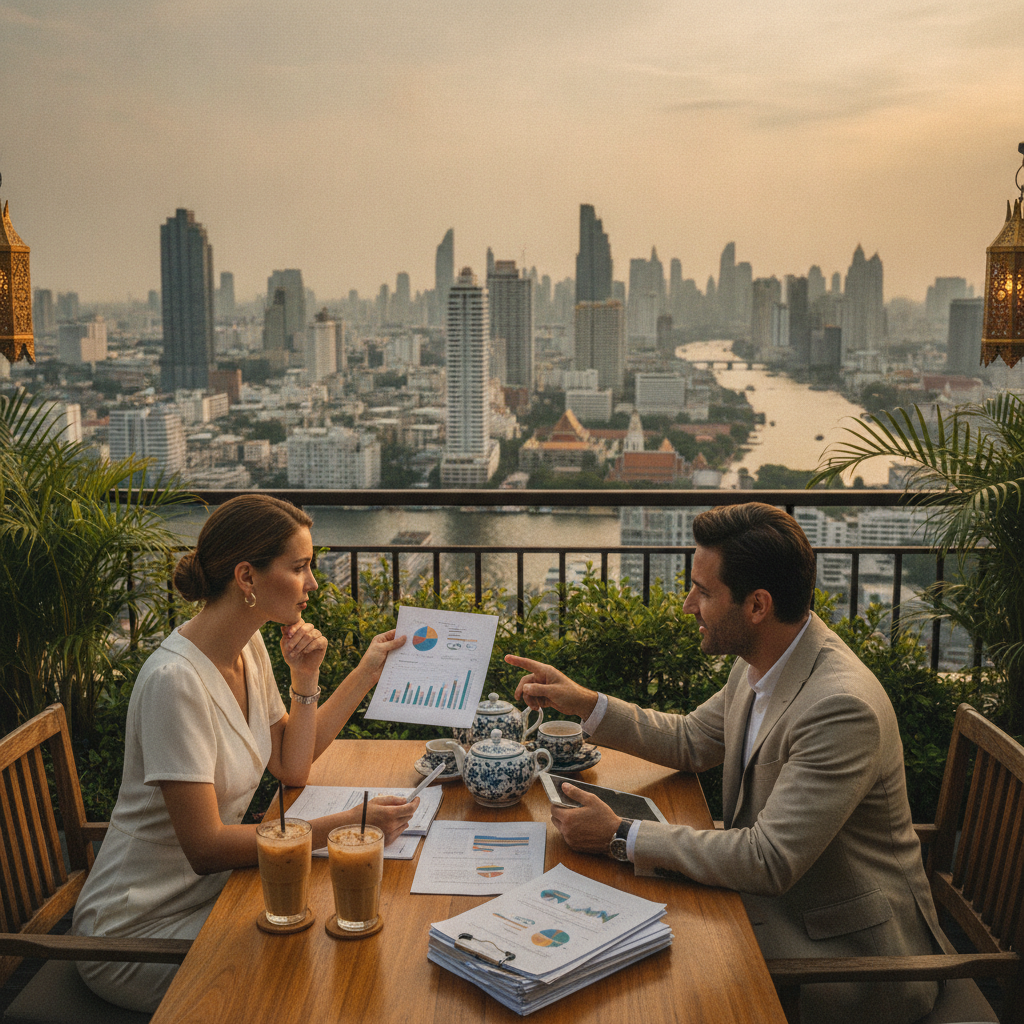
The difference between what the headlines report and what you will actually pay at the Land Department is measurable in tens or hundreds of thousands of baht. Before you move from interest to offer, you need a line-by-line acquisition cost model built around your specific target property, purchase price, and financing structure.
Our advisors work exclusively with foreign buyers navigating Bangkok's freehold market. We will pull the current foreign quota for any building you are considering, confirm the FET documentation requirements with your bank, and build a transparent closing cost schedule so the number on your wire transfer is the number you planned for — not a surprise.
Request a private cost consultation or floor-plan analysis for any property on your shortlist. There is no obligation and no sales pressure — just an accurate picture of what owning that unit will actually cost you in 2026.
Contact our team directly to arrange your private consultation. If you are still building your shortlist, our market overview — Bangkok's Best Family-Friendly Neighborhoods for Expats: Schools, Amenities and Transit in 2026 — is a practical starting point for narrowing down the right district before we discuss specific buildings.