
Bangkok's Hidden Yield Champions: Why Eastern Suburbs Like On Nut and Bang Na Are Outperforming Prime Districts in 2026

The Eastern Bangkok Yield Story That Prime-District Investors Are Missing
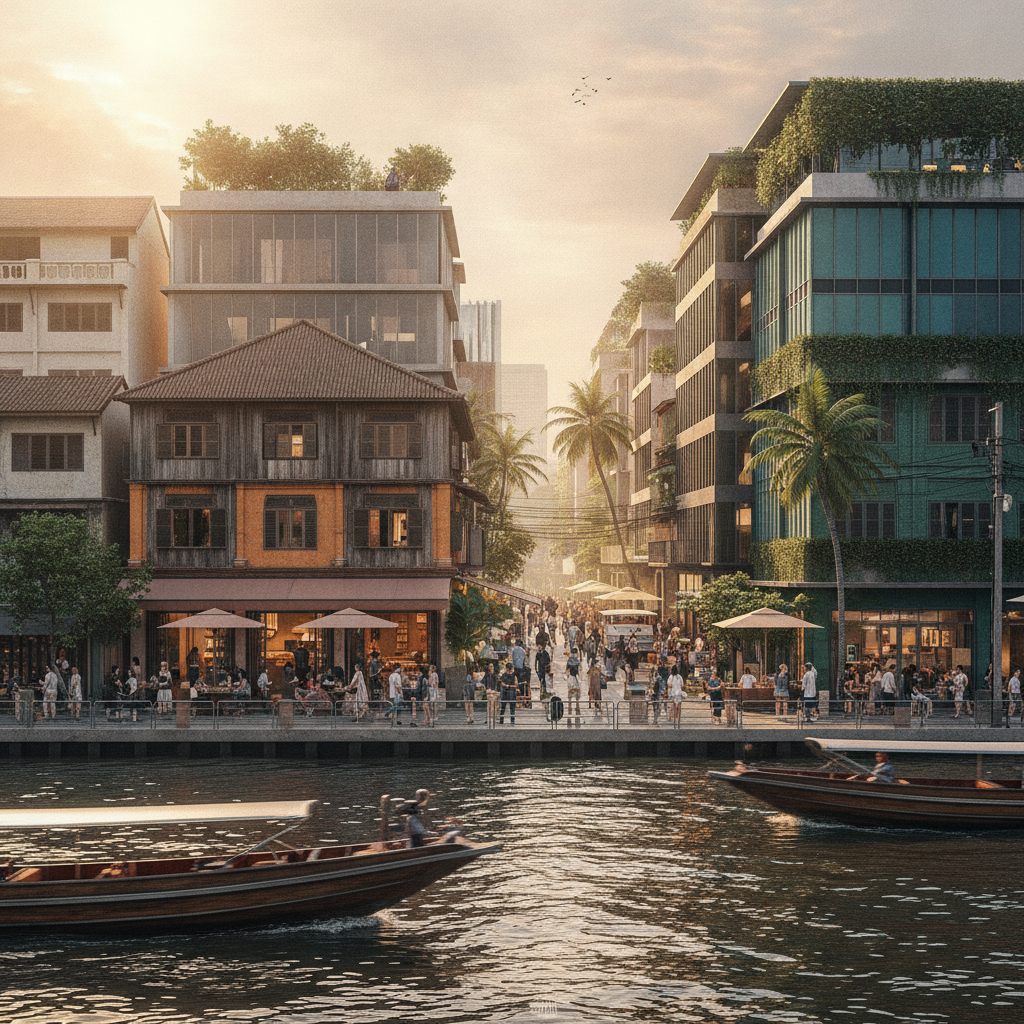
While buyers compete for floor plans in Phrom Phong and Thong Lo, a sharper trade is playing out 15 minutes further east. On Nut, Bearing, and Bang Na are currently producing gross rental yields of 5–7% — in some micro-pockets reaching as high as 7% — at entry price points that are a fraction of what central Sukhumvit commands.
The Bangkok-wide average for new condominiums sits at 85,000–130,000 THB per square metre in Q1 2026. Eastern corridor assets frequently undercut that range, which means the same investment budget that buys a compact one-bedroom in Phrom Phong can acquire a larger, higher-yielding unit in On Nut or Bang Na — and still leave capital to absorb vacancy risk.
This isn't a speculative call. It's an arithmetic one. And the infrastructure has finally caught up.
On Nut, Bearing & Bang Na: A District-by-District Yield Analysis
What rental yield can investors realistically expect in On Nut and Bang Na in 2026?
Eastern Bangkok condominiums in On Nut, Bearing, and Bang Na are currently delivering gross rental yields of 5–7% annually, driven by affordable entry pricing and accelerating rental demand from digital nomads, LTR visa holders, and domestic migrants priced out of central districts — outpacing Silom/Sathorn's 4.5–5.5% long-term rental benchmark.
Silom and Sathorn — Bangkok's financial district — are often cited as yield plays, but their 4.5–5.5% long-term rental range reflects a market where entry prices have already risen to reflect prime-district status. The eastern suburbs haven't yet been fully repriced, which is precisely where the opportunity window exists.
"Investors are repositioning capital to On Nut and Bang Na before the market fully realises their potential. The MRT Yellow Line made these districts accessible. Surging rental demand from digital nomads and LTR visa holders is filling those units."
Luxury condo rental rates across Bangkok are growing at 8–15% year-on-year, and the eastern suburbs are capturing a disproportionate share of that growth because supply hasn't yet flooded the market the way it has in over-developed central corridors.
Compare the key districts side by side:
- On Nut / Bearing / Bang Na: Gross rental yield 5–7%, lower entry price per sqm, MRT Yellow Line operational, high occupancy driven by affordable rents attracting a wide tenant base.
- Sukhumvit (Phrom Phong, Thong Lo, Ekkamai): Gross rental yield ~5.5–6%, corporate tenant demand, occupancy exceeding 90%, capital appreciation ~4.2% per year — but entry prices are substantially higher, compressing absolute returns.
- Silom / Sathorn: Gross rental yield 4.5–5.5% long-term (8–11% short-term, with compliance complexity), CBD location, strong professional demand.
- Ari / Phaya Thai: Gross rental yield 5.5–6.5%, annual occupancy ~88%, trendy digital-nomad profile — but a different tenant demographic to the family-and-professional mix emerging in Bang Na.
The eastern suburbs currently sit in a rare position: yields at the top of the city's range, with capital appreciation upside still ahead as the transit effect compounds over the next five to seven years. For context on how new MRT infrastructure directly lifts surrounding property values, the evidence from Bangkok's ongoing network expansion is consistent — see our deep dive on how Bangkok's new MRT extensions are reshaping property values and neighbourhood dynamics.
Life East of Asok: Transit, Lifestyle & Family Infrastructure
A common objection to eastern suburb investment is lifestyle — the assumption that relocating tenants will sacrifice convenience for space. The MRT Yellow Line has fundamentally changed that calculation, and the neighbourhood infrastructure is richer than most prime-district agents acknowledge.
- MRT Yellow Line (operational): The recently opened Yellow Line has transformed Bang Na and Udomsuk connectivity, directly linking eastern residents to the city's broader BTS/MRT network. Lower commute friction equals lower vacancy risk for landlords.
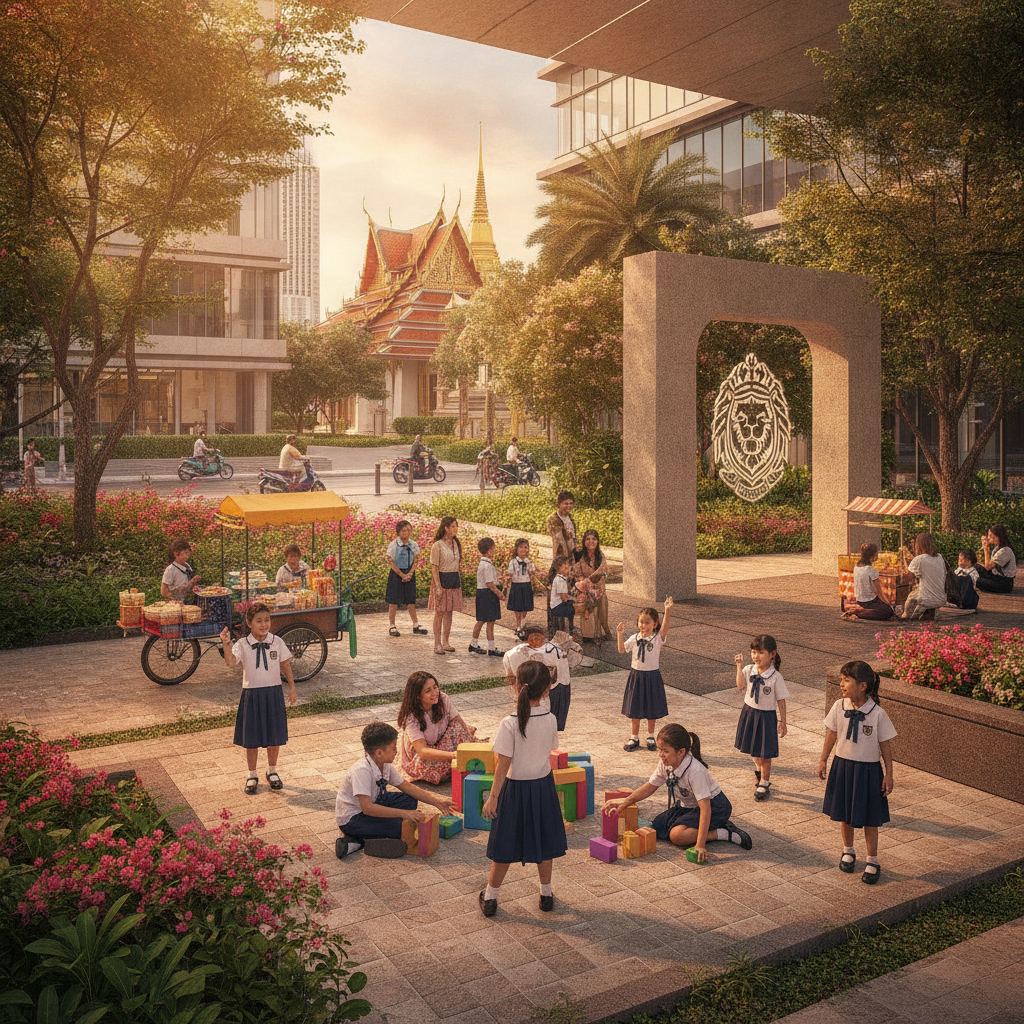
- International Schools: Bang Na and the eastern corridor are emerging as a family-friendly gateway, with international schools and expanding office clusters making the area increasingly self-sufficient for relocating expat families. The Sukhumvit family-school belt (Bangkok Prep, NIST) remains accessible via BTS for tenants who value both space and school proximity.
- Night Markets: Jodd Fairs Ratchada — one of Bangkok's most popular current night market destinations — anchors the wider eastern lifestyle offer with street food, vintage clothing, and a vibrant evening economy open most evenings from 5:00 PM.
- Fitness & Wellness: Social running clubs at Benjakitti Park (Sabai Run Club, Meep Meep Run Club, SarDine Run Club) operate on Sunday mornings and weekday evenings — a proven tenant lifestyle draw for the young professional and expat demographic that fills eastern corridor units.
- Muay Thai Training: Bangkok-wide gyms including Yokkao Training Center and Khongsittha Muay Thai offer daily morning and evening sessions, appealing to the health-conscious international tenant base concentrating in the east.
- Major Events: Rajamangala National Stadium — within reach of the eastern corridor — hosts Post Malone (September 22, 2026), The Weeknd (October 11–13, 2026), and BTS World Tour 'ARIRANG' (December 3–6, 2026), underscoring the area's pull for the entertainment-led young professional tenant.
The argument that eastern Bangkok is a lifestyle compromise is increasingly outdated. The infrastructure gap between On Nut and Phrom Phong has narrowed substantially — and the yield gap has not.
The Regulatory Landscape: What Eastern Bangkok Investors Must Know in 2026
Strong yields mean little without secure ownership. The Thai regulatory environment in 2026 has tightened in ways that make the structure of your acquisition as important as the asset itself.
Since 2025, Thai authorities have intensified investigations into nominee ownership structures — arrangements where property is registered through Thai citizens or shell companies on behalf of foreign buyers. In June 2026, the Land Department updated its guidelines, increasing data-sharing with the Department of Business Development (DBD) specifically to detect illegal nominee structures in real estate. Nominee land ownership now carries significant legal risk.
Freehold condominium ownership remains the most secure route for foreign buyers — and the eastern suburbs offer exactly this. The statutory 49% foreign quota per project is the framework to operate within, and eastern corridor projects — many of which are newer launches — often have healthier remaining foreign quota than saturated prime-district developments.
Two additional policy developments are material for 2026 buyers:
- Transfer fee reduction (July 1, 2026 – June 30, 2027): The Thai government has reduced transfer fees from 2% to 0.01% and mortgage registration costs from 1% to 0.01% for properties valued up to 7 million baht. Many eastern corridor units fall within this threshold, making this policy a direct cost saving for buyers transacting now.
- Proposed quota expansion (under consideration): The government is reviewing proposals to increase the foreign condominium ownership limit from 49% to 75% and extend leasehold terms to 90 years. If passed, this would disproportionately benefit areas with remaining development pipeline — precisely the eastern suburbs.
Understanding how transit infrastructure interacts with these regulatory shifts is essential to timing a purchase correctly. Our analysis of Bangkok's MRT extensions and their impact on property values provides the spatial context for where regulatory-driven capital is likely to flow next.
Request a Private Yield Analysis for Eastern Bangkok Condominiums
The data case for On Nut, Bearing, and Bang Na is compelling — but the right unit, floor, and building within these districts determines whether you achieve 5% or 7% gross yield. Entry timing, remaining foreign quota, and building management quality all vary significantly at the micro level.
Our team specialises in identifying eastern Bangkok assets that combine strong rental fundamentals with clean ownership structures for foreign buyers — qualifying properties against the 2026 transfer fee incentive window before it closes on June 30, 2027.
Arrange a private yield analysis or floor-plan review today. Tell us your target budget, preferred tenant profile (corporate expat, digital nomad, or family), and whether you are prioritising yield or capital appreciation — and we will present a curated shortlist of qualifying eastern Bangkok condominiums within 48 hours.
Contact our investment advisory desk directly or submit a floor-plan request through the form below. The transfer fee window is open now. The yield gap between east and prime-central will not remain this wide indefinitely.