The Orange Line Effect: How Bangkok's New MRT Extensions Are Reshaping Property Values and Neighborhood Dynamics

Why the Orange Line Is the Most Consequential Infrastructure Bet in Bangkok Right Now
Property investors who bought within 500 metres of Bangkok's BTS extensions a decade ago captured some of the strongest capital appreciation in Southeast Asia. The MRT Orange Line is shaping up to be the next version of that story — and the window to act ahead of the curve is closing.
The eastern section, running from Thailand Cultural Centre to Yaek Rom Klao, is already in system and operational testing, with trial operations targeted for late 2027 and a full opening in early 2028. The western section — Bang Khun Non to Thailand Cultural Centre — is under construction at approximately 37% completion as of August 2026, with a targeted full opening in 2030.
That timeline matters enormously. History across every major Asian transit city shows that the steepest price uplift happens in the two to three years before a line opens, not after. Buyers who wait for the ribbon-cutting ceremony are typically buying at the peak of the re-rating, not the beginning of it.
The Orange Line Corridor: A Station-by-Station Property Intelligence Briefing
What is the MRT Orange Line and how will it change Bangkok property values?
The MRT Orange Line is a new Bangkok metro corridor linking western, central, and eastern Bangkok in a single east-west route. Once fully operational, it is projected to carry 100,000 passengers daily initially, connecting residential zones with commercial districts and key interchange stations, most critically Thailand Cultural Centre, where it intersects the existing MRT Blue Line. Properties within walking distance of interchange stations historically command a 15–25% premium over comparable stock further away, making transit-adjacent assets the highest-conviction plays along this corridor.
Thailand Cultural Centre: The Interchange That Anchors Everything
Thailand Cultural Centre station is the single most strategically significant node on the Orange Line. It connects the new east-west corridor directly to the MRT Blue Line, instantly placing residents within one transfer of Silom, Lumphini, Sukhumvit, and Chatuchak — Bangkok's four most important employment and lifestyle hubs.
Interchange stations in Bangkok have a documented track record of disproportionate value uplift. The Asok/Sukhumvit interchange, where BTS meets MRT, helped transform the surrounding precinct into one of the city's highest-value residential addresses. Thailand Cultural Centre is positioned to follow the same trajectory.
Insider insight: In Bangkok's transit-led property cycles, the sharpest capital gains accrue to buyers who close within 18 months of a confirmed operational date — not at launch. With the eastern section targeting trial operations in late 2027, that window for the eastern corridor is open today and narrowing fast.
The Eastern Section: Active Construction, Imminent Value Re-Rating
The eastern section from Thailand Cultural Centre to Yaek Rom Klao is the more immediately actionable part of the Orange Line story. With system testing already underway and a full opening targeted for early 2028, developers and informed investors are already pricing transit proximity into new launches in this corridor.
Eastern Bangkok has historically traded at a significant discount to Sukhumvit and Silom, offering buyers a lower entry point with a clear, infrastructure-backed catalyst for appreciation. The Orange Line collapses commute times to the CBD from what can currently be a 40-minute car journey into a predictable, air-conditioned 15-minute ride.
The Western Section: The Longer Play With the Larger Upside
The western section — Bang Khun Non to Thailand Cultural Centre — is at approximately 37% construction completion as of August 2026 and is targeted for a 2030 full opening. This is the longer-duration, higher-upside side of the Orange Line trade.
Western Bangkok has been structurally underserved by rapid transit for years, creating pockets of undervalued residential land with strong organic community character. A 2030 opening timeline means investors buying into this corridor today are acquiring assets at the widest possible discount to their post-transit-connection value.
The risk-reward calculus here is straightforward: the entry prices are lower precisely because the opening is further away. Buyers with a five-year horizon are purchasing the infrastructure catalyst at its cheapest point.
Life on the Orange Line: The Lifestyle Case for Corridor Living
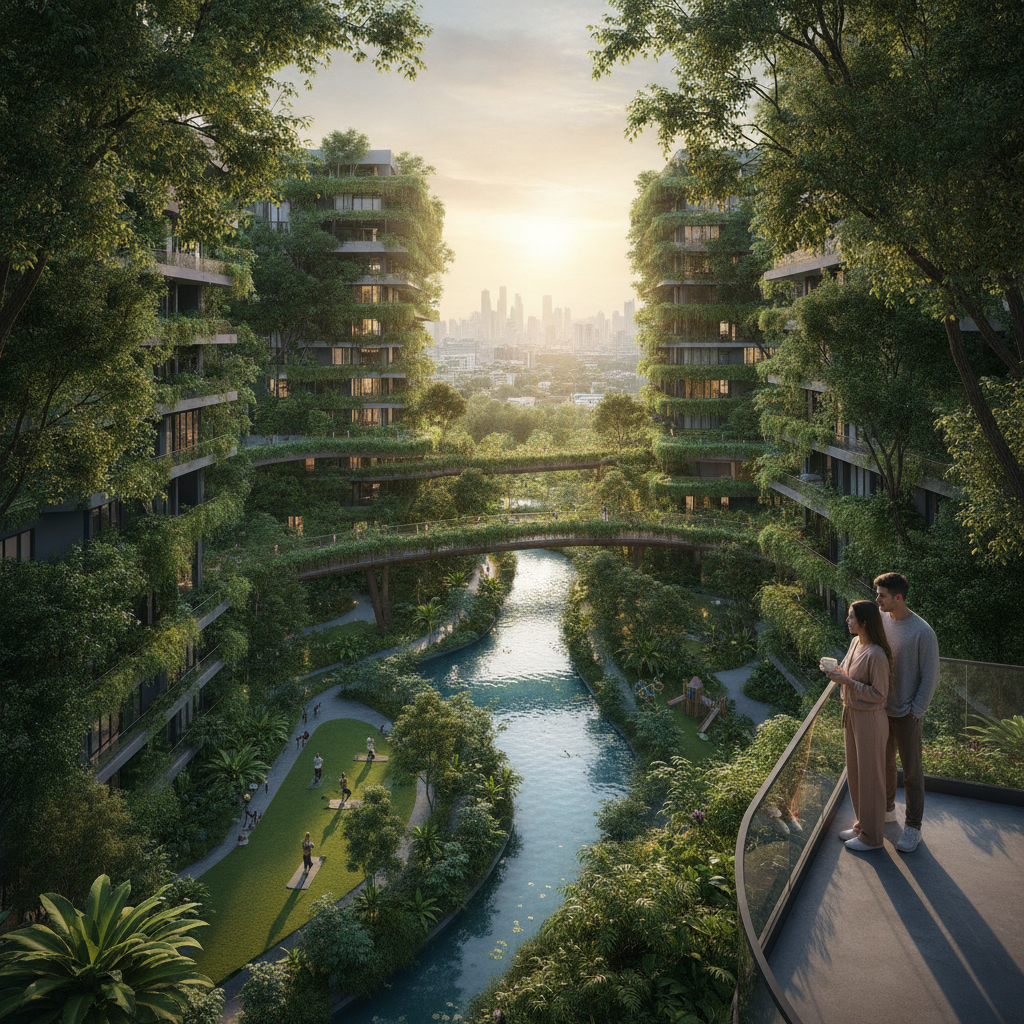
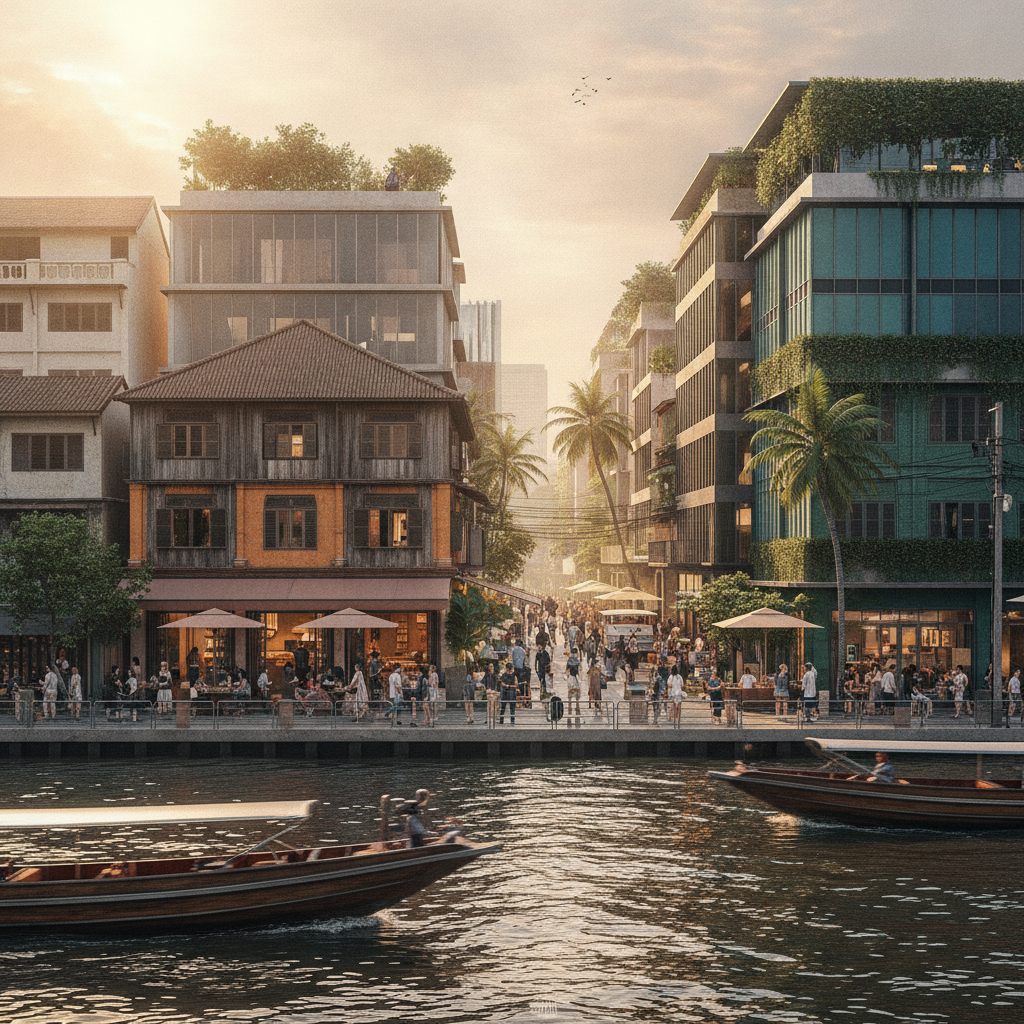
A transit investment thesis without a compelling lifestyle proposition is just a spreadsheet. The Orange Line corridor delivers on both dimensions — and the surrounding neighbourhood infrastructure is already world-class.
- Dining at Michelin level: The Thailand Cultural Centre interchange puts residents within a single BTS or MRT hop of Maison Dunand in Sathorn (Michelin Star, 2026 guide), pairing French culinary discipline with alpine-inspired flavours, and Haoma in Sukhumvit (Michelin Star, 2026 guide), setting a global benchmark for zero-waste fine dining with its backyard aquaponics garden.
- The green commute: Lumphini Park and Benjakitti Park — now linked by the GreenMile — are the city's premier urban fitness corridors. Run clubs including Sabai Run Club (Friday nights), Bangkok Runners, and Meep Meep Run Club meet regularly here, attracting a dense expat and professional community. Rocket Coffeebar Lumphini on Sarasin Road, named one of Bangkok's best new cafes of 2026, is the natural post-run destination.
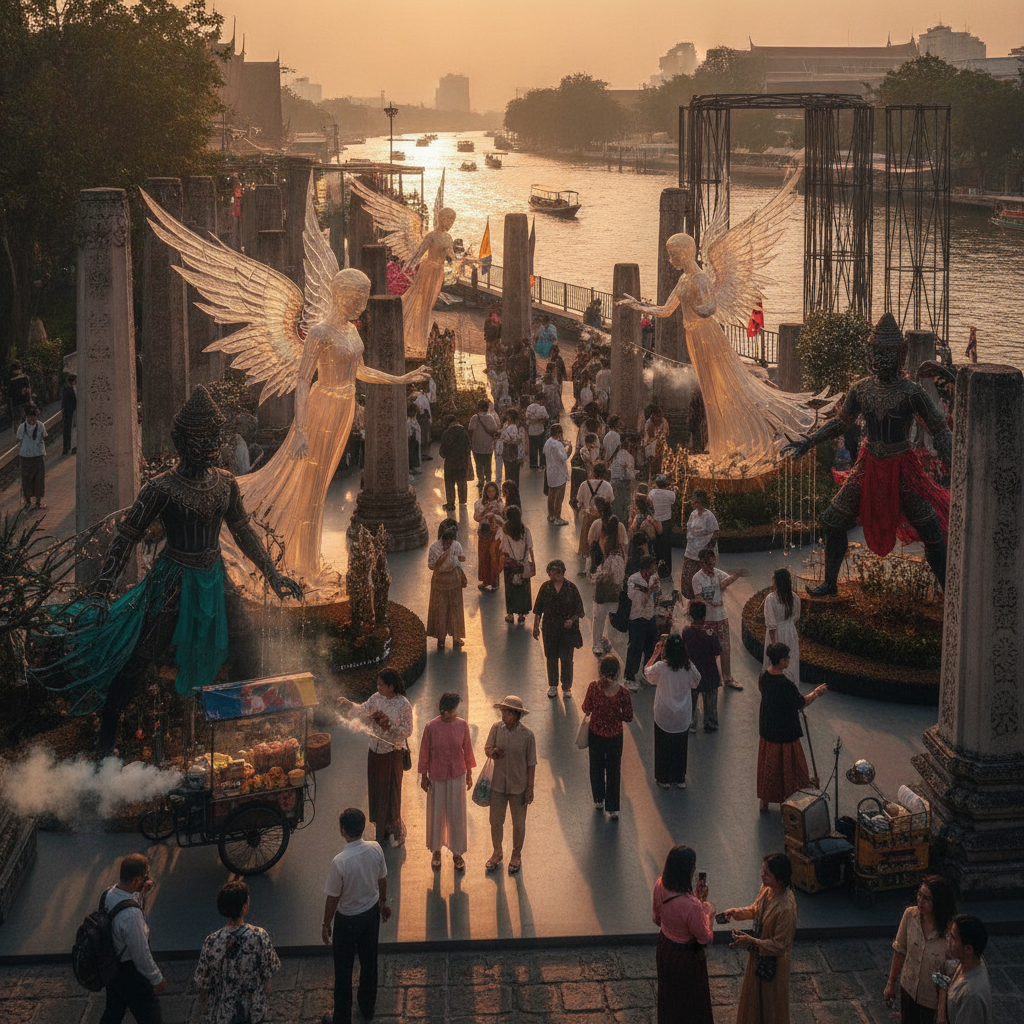
- Culture within reach: The Thailand Cultural Centre is the home venue of the Bangkok International Festival of Dance & Music 2026 (September 5 – October 17, 2026), and the Bangkok Art Biennale 2026 runs from October 29, 2026 through February 28, 2027 across citywide venues including Wat Arun, Wat Pho, BACC, and Museum Siam. Residents on the Orange Line corridor are centrally positioned for both.
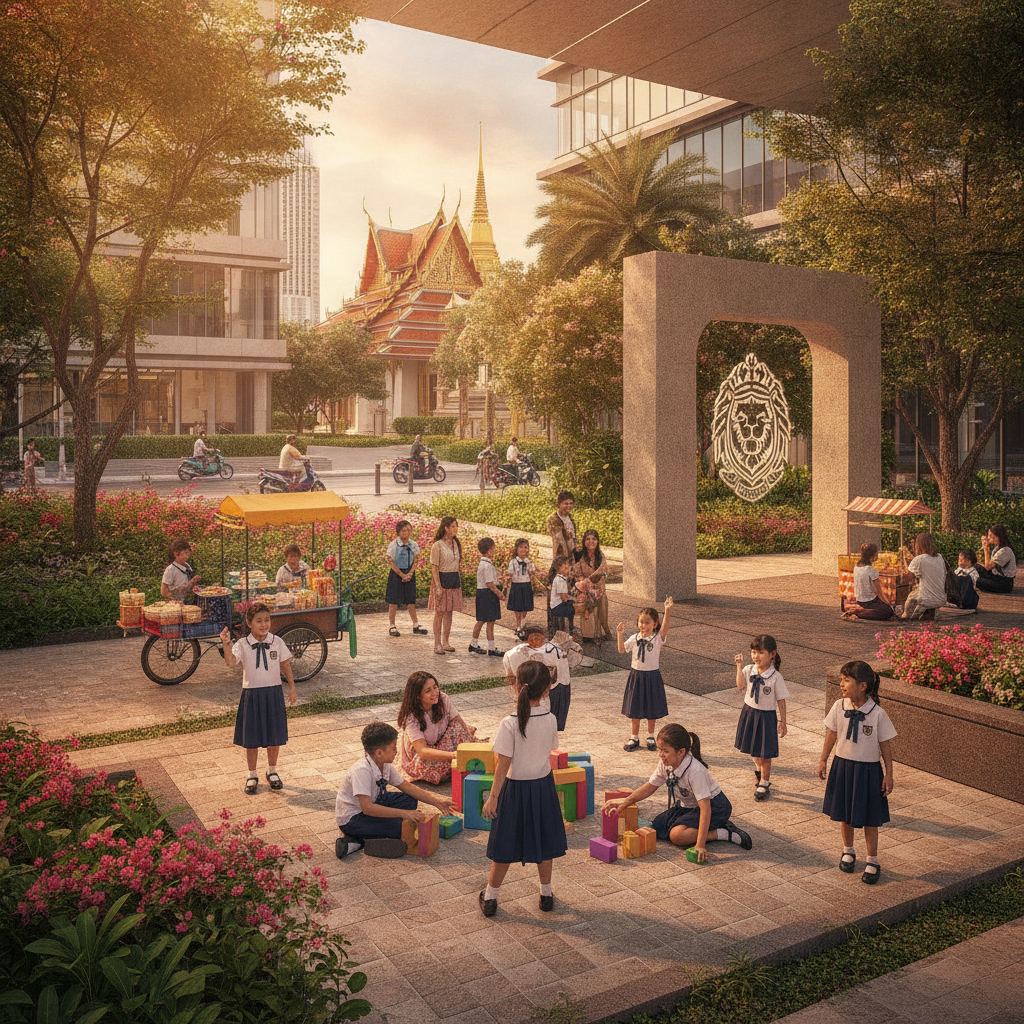
- International schooling: Families are a core tenant demographic for any high-quality corridor property. NIST International School on Sukhumvit 31, offering the IB curriculum with a strong non-profit ethos, is accessible via the Blue Line interchange. Shrewsbury International School's City Campus at Rama 9 also sits in the eastern Bangkok catchment, making the corridor genuinely family-viable.
- Expat community infrastructure: InterNations and community groups host regular events — Mid-Week Sips, Bangkok Dads Social, BKK Curry Club — at venues spread across the city's central districts, all reachable from the Orange Line corridor without a car.
The Investment Fundamentals Behind the Orange Line Property Thesis
The lifestyle case is compelling. The hard numbers behind Bangkok's broader luxury property market make the Orange Line corridor investment argument even more persuasive.
Prime CBD districts — Sukhumvit, Silom, Sathorn — are currently posting gross rental yields of approximately 4.5–6.5% per year in 2026, with net yields between 3.5–5.2% after costs. Occupancy rates for quality condominiums in these areas regularly exceed 90%, driven by consistent corporate and expat demand. The Orange Line corridor, at lower entry prices, offers the potential for yields at the higher end of that range as tenant demand follows infrastructure.
On capital values, new Bangkok condominiums are averaging 85,000–130,000 THB per square metre in Q1 2026, with prime CBD developments reaching 200,000–350,000 THB per square metre. That broad range reflects the exact opportunity the Orange Line is beginning to collapse — corridor properties currently pricing at the lower end of the market with a clear, time-bound catalyst to re-rate toward prime CBD comparables.
Against global benchmarks, Bangkok's prime residential market remains 40–55% below comparable units in major Western European capitals, creating a structural entry-point advantage for international buyers. The Bangkok property market in 2026 is characterised by a pronounced divergence: the luxury and prime transit-connected segment shows 3.4% year-on-year price growth in early 2025 and rising stability, while the domestic mass market faces headwinds from high household debt and tighter lending. International buyers, who are less reliant on local credit markets, are the primary demand driver in the premium segment — precisely the buyer profile suited to Orange Line corridor assets.
On the regulatory front, Thailand's Cabinet has extended ultra-low property transfer and mortgage registration fees — reduced from 2% and 1% respectively to just 0.01% — until June 30, 2027, for residential properties valued up to 7 million baht. For foreign buyers, freehold condominium ownership within the 49% quota remains the most legally secure structure, with the Land Department and Department of Business Development actively increasing scrutiny of nominee arrangements since 2025–2026. Proposals to raise the foreign ownership quota to 75% and extend leasehold rights to 99 years are under consideration but not yet enacted.
Arrange Your Orange Line Property Consultation
The eastern section of the MRT Orange Line opens in early 2028. The re-rating of corridor assets is already in motion — it does not wait for a ribbon-cutting ceremony.
Whether you are evaluating a specific unit for rental yield, comparing corridor projects for capital appreciation potential, or assessing the legal structure for a foreign freehold purchase, the analysis you need is granular and time-sensitive.
Request a private floor-plan review or a tailored investment briefing on the Orange Line corridor today. Our team provides site-specific yield modelling, legal ownership guidance for international buyers, and access to pre-launch pricing on projects where that window is still open.
Contact us now to schedule your confidential Orange Line property consultation — no obligation, just the numbers you need to make the right decision before the market moves.