Yellow Line Commute Time Bangna vs Sukhumvit: How Outer Districts Now Compete on Travel-Time Value

The Commute Equation Has Changed — And Most Buyers Haven't Noticed
The assumption that living in Sukhumvit means shorter commutes no longer holds without scrutiny. The recently opened Yellow Line extension — now connecting to BTS Bearing — has slashed journey times from areas like Bangna, Udomsuk, and On Nut into the CBD, fundamentally altering the cost-per-minute calculus that informed Bangkok property decisions for the past decade.
What took 40–55 minutes by road in peak-hour traffic from Bangna to Asok can now be mapped as a predictable, clock-reliable rail commute. That predictability is the variable most renters and buyers undervalue — until they've sat in a Sukhumvit gridlock at 8:30 a.m. and paid the premium rent for the privilege.
This piece decodes the actual commute-time arithmetic, benchmarks outer-district rental prices against Sukhumvit comparables, and explains why the Yellow Line's ripple effect on property values in previously suburban corridors is the most underreported story in Bangkok real estate right now.
Yellow Line Commute Time: Bangna and the Outer-District Rail Revolution
How long does it take to commute from Bangna to Sukhumvit on the Yellow Line?
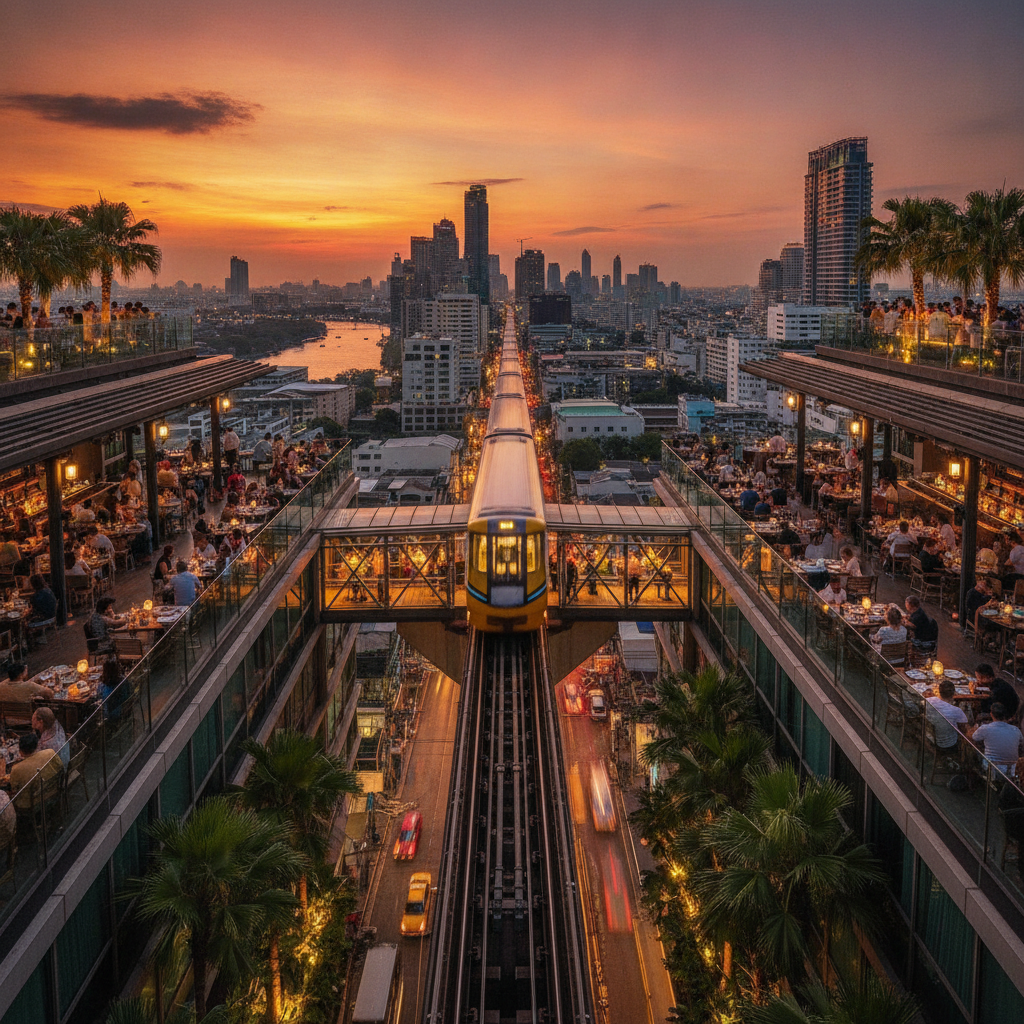
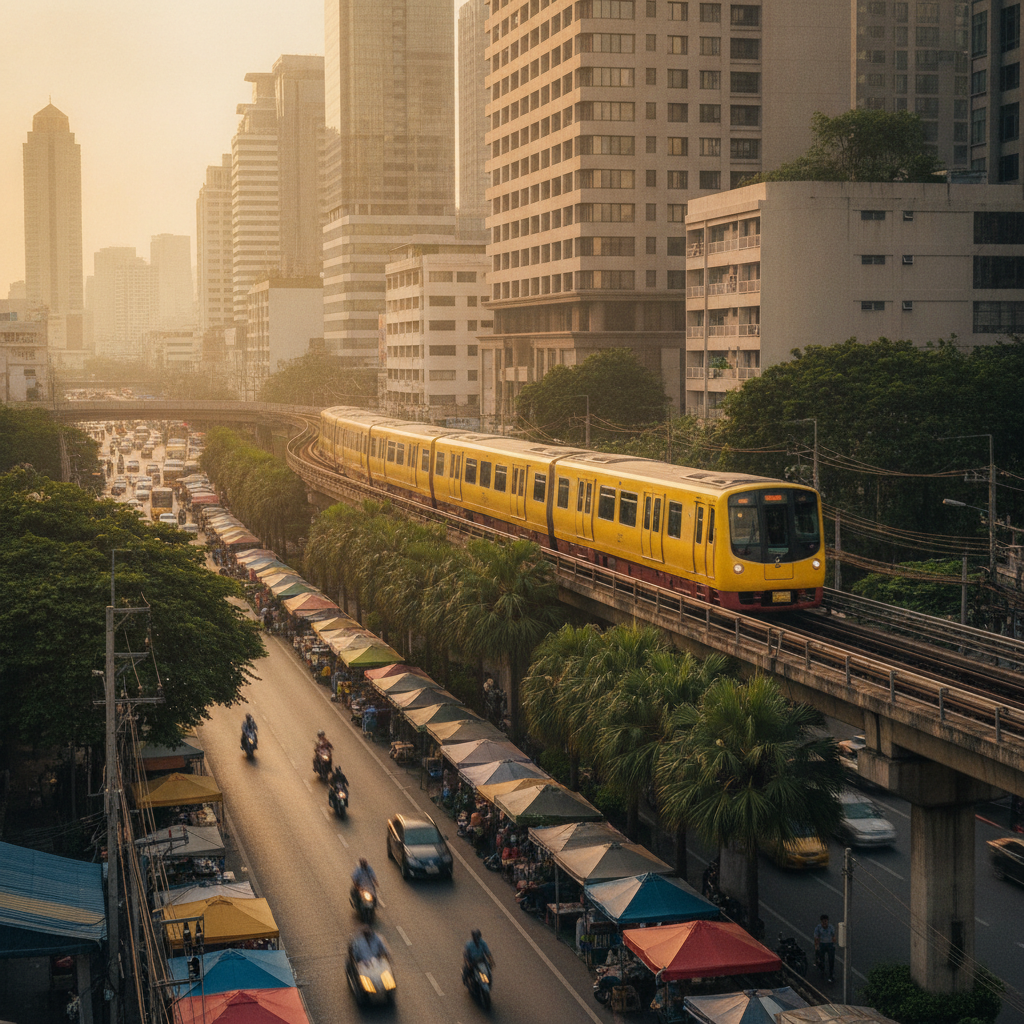
The Yellow Line commute from Bangna to the Sukhumvit CBD via BTS Bearing runs approximately 30–40 minutes door-to-door during peak hours — a figure that rivals or beats the actual in-vehicle time many Sukhumvit residents spend crawling between BTS Asok and BTS Phrom Phong on bus or taxi during morning gridlock.
Before the Yellow Line extension connected to BTS Bearing, commuters from Bangna and Udomsuk were road-dependent for any meaningful CBD access. Rail connectivity simply didn't reach far enough to make those districts competitive. That has now changed decisively.
The BTS Bearing interchange point is the critical link. From Bearing, Yellow Line riders transfer to the BTS Sukhumvit Line and are at BTS Asok (the Sukhumvit–Asok corridor's primary node) within minutes. The total elapsed time from a Bangna-area condo lobby to Exchange Tower or Terminal 21 Asok — including walking time, platform wait, and the actual train ride — is now genuinely comparable to a Phrom Phong resident taking the same journey during peak congestion.
"Commute predictability is the new premium. A rail journey that reliably takes 35 minutes is worth more to a corporate expat than a taxi route that varies between 20 and 60 minutes depending on rain and school-run traffic. Outer districts with fixed rail access are finally being priced for that reliability." — Bangkok property investment insight, 2026
The Yellow Line's impact on districts like Bangna and Udomsuk is already visible in rental demand data. Increased accessibility is driving tenant interest in areas that previously suffered a liquidity discount precisely because they lacked reliable mass-transit links. For the full context on how this is reshaping the outer-district lifestyle proposition, see our deep-dive on Bangna, the Yellow Line, and the outer-district lifestyle shift rewriting Bangkok's property map.
For the MRT Orange Line (West section), specific 2026 opening dates remain unconfirmed — but the Yellow Line precedent suggests that each new rail link triggers a 12–24 month demand repricing cycle in the corridors it serves. Investors who move before the pricing fully catches up capture the structural upside.
Living the Outer-District Life: What You Actually Get for the Rent Difference
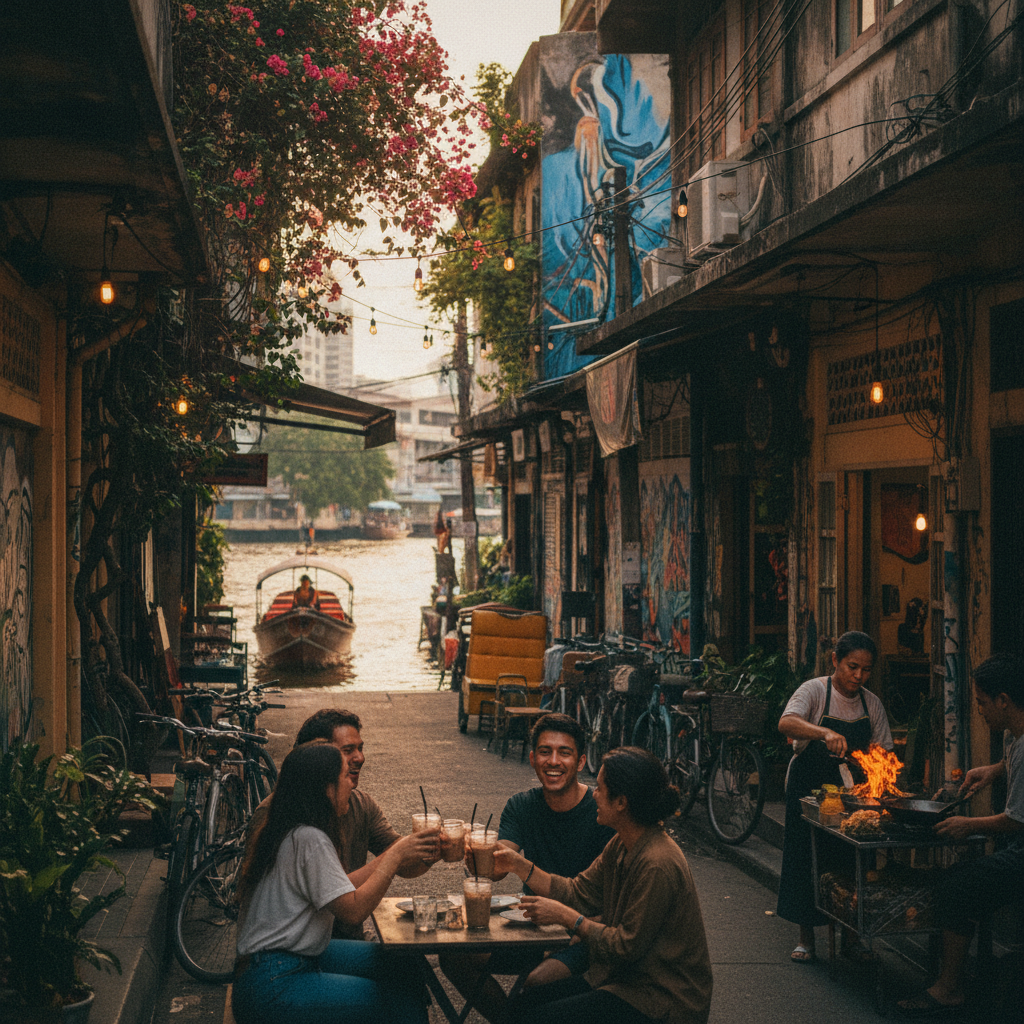
The travel-time argument only lands if the lifestyle trade-offs stack up. Here's what the research data tells us about what renters and buyers gain — and sacrifice — by shifting from Sukhumvit to the Yellow Line corridor.
- Rental pricing spread: Studios in newer buildings between Asok and Phrom Phong fetch THB 15,000–22,000 per month. Comparable or larger units in well-connected outer districts sit meaningfully below that ceiling — creating genuine purchasing power for renters willing to swap postcode prestige for square meterage.
- Unit size advantage: Districts like Ladprao offer larger unit sizes at lower absolute prices compared to central areas, with good MRT connectivity via the Yellow Line and newer monorail links. For families, the size-to-cost ratio is difficult to replicate in Sukhumvit.
- Family and school infrastructure: Thonglor and Ekkamai in the Wattana District — still BTS-accessible and close to the outer corridor — serve as the primary expat family hub, with direct BTS access, Ruamrudee International School, Bangkok Christian College, community malls, and a dense service ecosystem. For families evaluating the eastern BTS corridor specifically, HEI Schools Bangkok Ekkamai represents one of the newer early-childhood anchors worth factoring into school-zone decisions.
- Arts and cultural access: The Yellow Line corridor sits within reach of some of Bangkok's most significant cultural events in 2026. The Bangkok Art Biennale 2026 — 'Angels & Mara' — runs October 29, 2026 through February 28, 2027, across multiple venues including Wat Pho, Wat Arun, BACC, CentralWorld, and Siam Paragon. For outer-district residents with rail access, attending is a direct train commute, not a lifestyle compromise. Read the complete guide to Bangkok Art Biennale 2026 for venue-by-venue coverage.
- October 2026 cultural calendar: Art Bangkok 2026 runs October 7–11 at Siam Paragon's NEX Hall; the Yaowarat Vegetarian Festival anchors Chinatown from October 9–18, with street-food pop-ups along Yaowarat Road and deity processions at Odeon Circle; and the 'Between Memory and Becoming' group exhibition opens at Tang Contemporary Art from October 24 through December 6. All are reachable by rail from the Yellow Line corridor.
- Cost of living calibration: A comfortable single-person budget in central Sukhumvit, Phrom Phong, or Thonglor runs THB 50,000–80,000 per month, with a one-bedroom condo alone costing around THB 20,000. On Nut offers studios from THB 12,000 — and the Yellow Line now makes previously-inaccessible outer nodes comparably priced relative to transit proximity.
Investment Fundamentals: Yield Arithmetic Favors the Outer Corridor
The rental yield data embedded in this market's fundamentals makes the outer-district case even more compelling for investors than for owner-occupiers.
Gross rental yields across central Bangkok are holding at 5.0–7.5% in Q4 2026, with net yields (after fees and vacancy) typically ranging from 3.5–5.5%. That's a mature, stable band — not a growth story, but a reliable income narrative for long-term holds.
Within that range, the district-level variation is where the opportunity lives. Sukhumvit's Asok-to-Phrom Phong corridor yields a gross 5.0–5.8% — solid, but compressed by high entry prices and significant new supply competing for the same corporate-expat tenant pool. Meanwhile, the Talat Phlu and Wutthakat districts on the Thonburi side — accessed via the BTS Silom Line — are generating gross yields of 5–6% on significantly lower condo purchase prices, with a predominantly Thai tenant base that typically means lower turnover and lower vacancy friction.
The Yellow Line corridor — Bangna, Udomsuk, and their neighboring nodes — sits in an analogous structural position: lower entry prices than Sukhumvit, rail-driven demand acceleration already underway, and a yield premium relative to the center that has not yet fully compressed. Investors who entered Talat Phlu before it became a mainstream recommendation understand exactly this playbook.
For investors assessing financing options alongside yield, the Bank of Thailand's loan-to-value framework is a critical input — see our analysis of who qualifies for 100% financing under the LTV extension to June 2027. And for foreign buyers structuring their acquisition correctly, the 49% foreign freehold quota and the Foreign Exchange Transaction (FET) certificate requirement are non-negotiable compliance steps — covered in detail in our piece on foreigner freehold condo ownership in Thailand.
One additional lever for high-net-worth foreign investors: Thailand's Long-Term Resident (LTR) Visa 'Wealthy Global Citizen' category requires a minimum USD 500,000 investment in qualifying Thai real estate — including freehold condominiums and leasehold properties with over 10 years remaining — completed and documented before the visa application. The outer-district yield premium, combined with a lower entry price per square meter, means qualifying for the LTR threshold doesn't automatically require a Sukhumvit address.
Find Your Outer-District Property: Request a Floor plan or Commute-Time Analysis
If the Yellow Line commute-time case has shifted your thinking about where in Bangkok you actually need to live — or where your investment capital can work hardest — the next step is a property-specific analysis, not a general search.
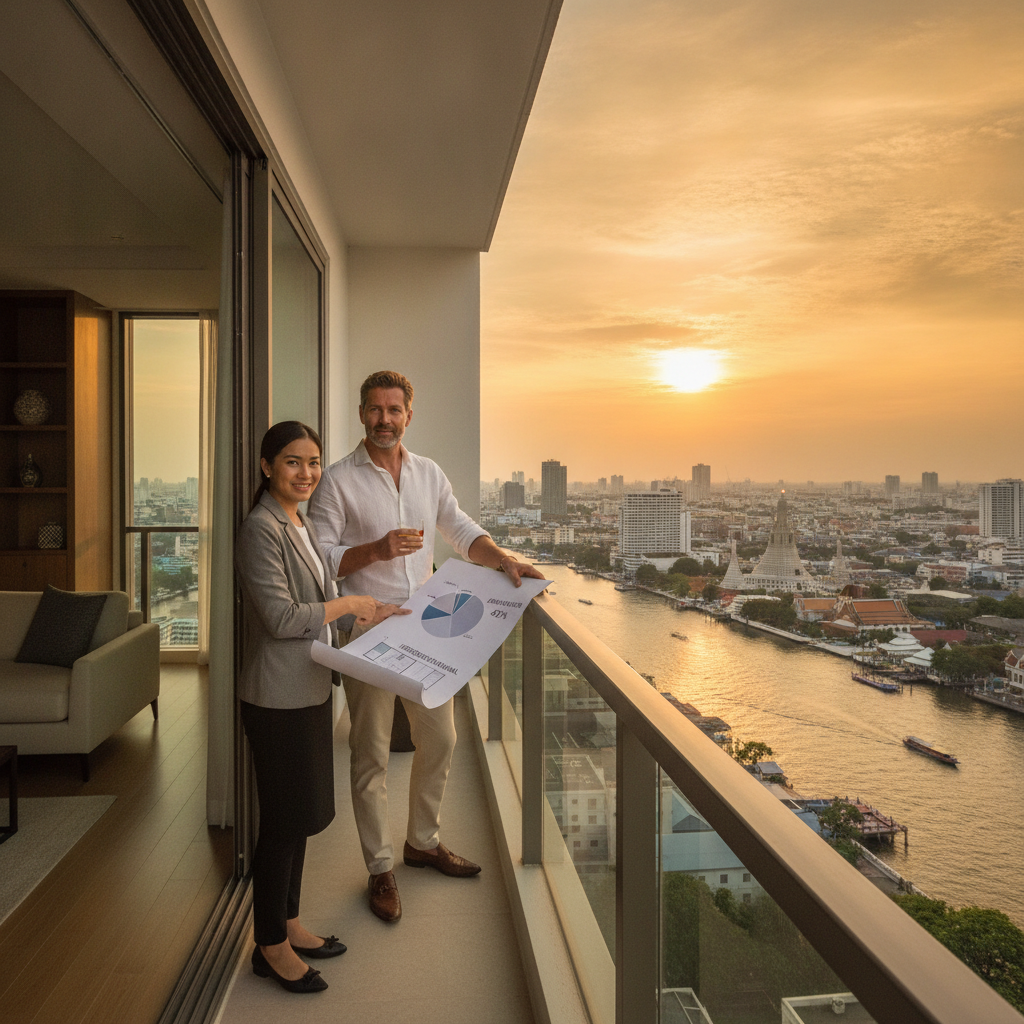
Our team maps commute times from specific buildings to your workplace or target BTS/MRT station, cross-references current rental yields with comparable transactions, and identifies units where the foreign ownership quota still has available freehold slots.
Request a private floor plan review or a tailored commute-time-versus-rent analysis for any outer-district building you're considering. There's no obligation — just a clearer picture of whether the numbers actually work for your specific situation.
Contact us directly to arrange a confidential consultation or to receive a curated shortlist of Yellow Line corridor properties matched to your budget and yield requirements.