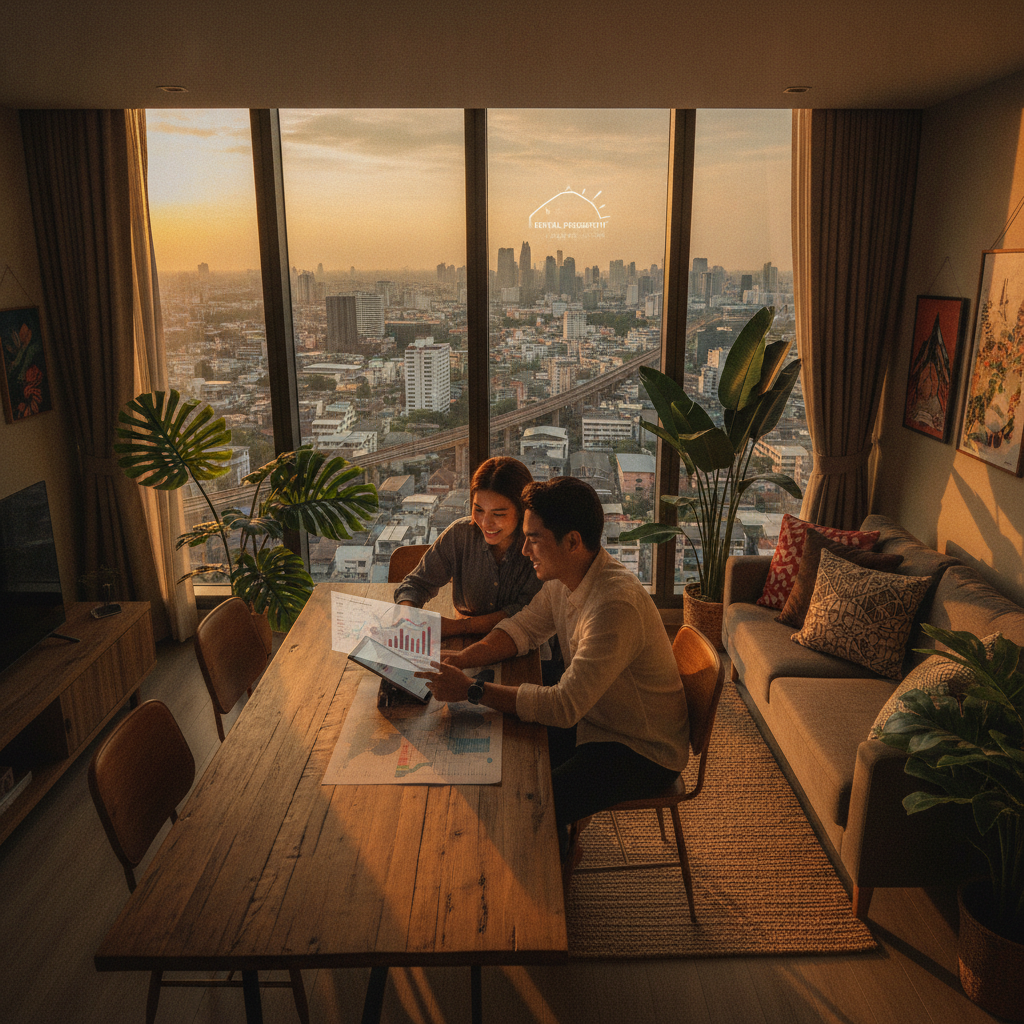
Bangkok Suburb Condo Rental Yield: Why Huamark and Chatuchak Beat Oversupplied Sukhumvit CBD Units

The Sukhumvit Yield Problem — and Where the Smart Money Is Going
If your Bangkok condo investment sits somewhere between BTS Nana and Phrom Phong, your gross rental yield is almost certainly stalling in the 4–5% range — and that is before management fees, vacancy months, and the furnishing refresh that upper-end Sukhumvit tenants demand every two years.
The research is blunt: suburban districts like Huamark, Chatuchak, Rama 9 Road, Bang Kapi, and Suan Luang are pricing two-bedroom condos at 14,000–30,000 THB per month in rental income, on acquisition prices that are a fraction of what the Sukhumvit corridor commands. That gap is where rental yield lives.
Our sister analysis on Bangkok rental yield outer districts in 2026 showed Phra Khanong and Bang Na posting 8–13% growth while prices stalled — Huamark and Chatuchak are following an identical structural playbook, and they are doing it with better transit infrastructure than most buyers realise.
Insider Insight: The highest-yielding rental assets in Bangkok are rarely the most glamorous addresses. They are the addresses where the tenant pool is deep, sticky, and local — government workers, university staff, healthcare professionals — people who renew annual contracts quietly and without drama.
Huamark and Chatuchak: The Suburban Yield Case, District by District
What rental yield can I realistically expect from a Huamark or Chatuchak condo in 2026?
Suburban Bangkok condos in Huamark and Chatuchak typically generate gross rental yields of 5–7%+ on two-bedroom units priced at 14,000–30,000 THB per month, compared to the 4–4.5% ceiling most Sukhumvit CBD apartments reach before vacancy and competition erode returns further.
Huamark sits on the MRT Blue Line at MRT Huamark station, placing residents 20–25 minutes from the commercial heart of Rama 9 and Asok without changing lines. Two-bedroom units in this corridor rent for 14,000–22,000 THB per month, targeting a reliable tenant base of local Thai professionals and government employees who prioritise commute time and value.
The tenant demographic matters enormously here. Unlike Sukhumvit's transient expat market — where lease churn, short-term lets, and unit presentation expectations create ongoing cost pressure — Huamark tenants typically sign 12-month contracts and renew. Lower turnover costs alone can add 0.5–1 percentage point to effective annual yield.
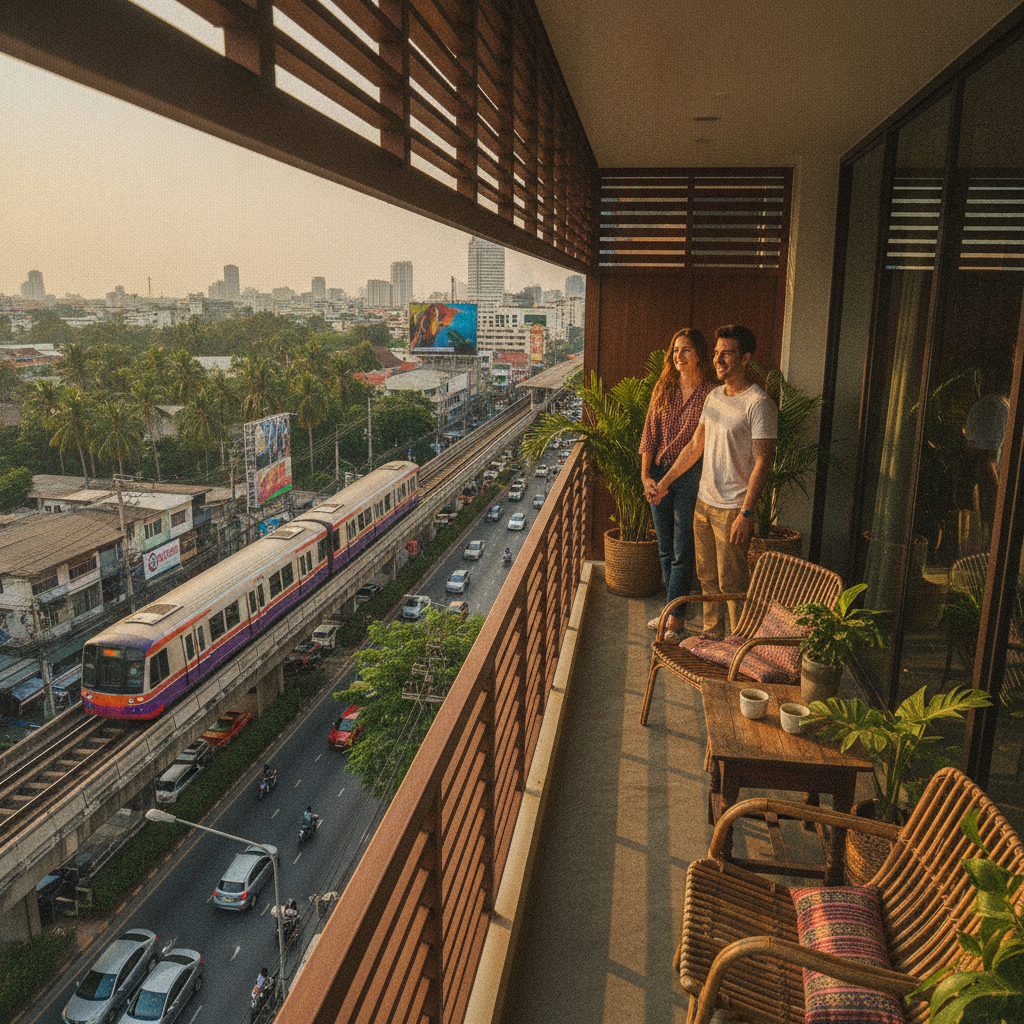
Chatuchak offers a different but equally compelling case. With MRT Chatuchak Park and BTS Mo Chit converging at the same interchange, this district is one of Bangkok's best-connected suburban nodes. Two-bedroom rental pricing of 18,000–30,000 THB per month reflects slightly higher demand from university-adjacent tenants (Kasetsart University, Rajamangala University of Technology) and professionals working along the northern BTS corridor.
New residential developments are actively emerging along both corridors, meaning acquisition prices remain significantly below the Sukhumvit premium while rental income tracks upward with improving infrastructure. For a direct comparison with the outer BTS model, the data on Bangkok studio rental yield across outer BTS/MRT corridors reinforces precisely this structural advantage.
Practical Living: Transit, Schools, and October 2026 Culture Around These Districts
- MRT Blue Line (MRT Huamark): Direct, no-transfer access to Rama 9, Phetchaburi, Sukhumvit, and Silom — one of Bangkok's most important employment corridors sits within a single unbroken ride.
- BTS Mo Chit / MRT Chatuchak Park interchange: Chatuchak residents access both the BTS Sukhumvit Line northward and the MRT Blue Line southward from a single node, giving them citywide mobility that most suburban addresses cannot offer.
- MRT Yellow Line (operational since 2023): Running from Lat Phrao to Samrong, the Yellow Line has materially improved east-to-west connectivity for Bang Kapi and Suan Luang, extending the catchment area for suburban rental demand.
- MRT Pink Line (operational since 2024): The Khae Rai to Min Buri corridor has unlocked northern Bangkok neighbourhoods — including Laksi and Pak Kret — and is already driving residential demand in areas previously considered too remote for professional tenants.
- International Schools: The Sukhumvit 32–49 cluster (Bangkok Prep, Saville School, St. Andrews Soi 71, Wells International) is accessible from Chatuchak via BTS in under 30 minutes, making this district viable for expat families who cannot afford Ekkamai or Thonglor pricing. NIST International School on Sukhumvit Soi 15 — the longest-established full IB World School in Bangkok — is equally reachable. For families weighing the Ekkamai and Thonglor option, our first-time renter's guide to the Thonglor and Ekkamai corridor explains exactly where the price-to-amenity trade-off tips.
- Cultural Calendar (October 2026): The Bangkok Art Biennale 2026 — "Angels and Mara" — runs October 29 through February 28, 2027, spanning multiple venues including Wat Arun, Wat Pho, BACC, and One Bangkok, giving residents citywide cultural programming throughout the cooler season.
- Wellness: Rooftop yoga sessions at King Power Mahanakhon (74th floor) and Amara Bangkok continue on Saturday and Sunday mornings, typically from 6:30 AM, offering the kind of lifestyle infrastructure that makes suburban rental listings genuinely competitive with CBD alternatives.
- Muay Thai Training: Bangkok remains a global hub for Muay Thai, with F.A. Group Muaythai, Khongsittha Muay Thai, and Elite Fight Club all offering daily morning and afternoon sessions — a draw for the fitness-first tenant profile increasingly common in suburban Bangkok developments.
The Investment Fundamentals That Make This a 2026 Opportunity, Not Just a Theory
Three regulatory developments in 2026 directly shape the risk-adjusted case for suburban Bangkok condo investment — and all three favour the Huamark and Chatuchak model over speculative CBD plays.
Reduced transfer and mortgage fees extended to June 2027. The Thai government has extended reduced property transfer fees from 2% to 0.01% and mortgage registration costs from 1% to 0.01% for properties valued up to 7 million baht. Suburban Bangkok condos in Huamark and Chatuchak routinely fall within this threshold — Sukhumvit CBD units rarely do. This makes the cost of acquisition materially lower, improving day-one yield calculations.
Foreign freehold quota unchanged at 49%. Despite proposals to raise the foreign condominium ownership quota to 75% or introduce 99-year leaseholds, neither change has been enacted as of October 2026. The legal framework is stable. For foreign buyers, freehold condo ownership within the 49% quota remains the most secure path — and suburban developments, being less targeted by speculative foreign capital, often have more quota availability than prime Sukhumvit towers.
Nominee structure crackdown intensifying. As of mid-2026, the Thai Land Department and Department of Business Development have escalated enforcement against nominee structures used to circumvent land ownership laws. Thousands of suspicious firms are under review or prosecution. This reinforces why condo freehold — not land via company structures — is the only rational ownership model for individual foreign investors. Suburban condo acquisition aligned with the law is not a compromise; it is the only compliant play.
For buyers utilising mortgage financing, the current fee incentive pairs directly with the guidance in our step-by-step Bangkok financing guide for first-time and second-home buyers, which covers the full LTV and cost structure applicable through June 2027.
The Bangna and Udomsuk station market offers a parallel data point worth benchmarking against: Yellow Line Bangna rental yield research shows how outer-corridor nodes are consistently delivering 4.5–5.5% returns — and Huamark and Chatuchak, with stronger employment catchment areas, are structurally positioned to exceed that floor.
Request a Suburban Yield Analysis or Private Viewing — No Obligation
If you are currently holding or considering a Sukhumvit CBD unit and want an honest side-by-side yield comparison against Huamark or Chatuchak alternatives, our team can run the numbers on real available listings — not theoretical projections.
We specialise in helping investors identify suburban Bangkok condos that meet strict yield thresholds, fall within the government's fee-reduction window (properties under 7 million baht), and carry verifiable foreign quota availability. No nominee structures, no grey-area structures — just compliant, yield-optimised acquisitions.
Contact us to request a private yield analysis, floor-plan review, or in-person viewing of shortlisted Huamark or Chatuchak units. Turnaround on written yield comparisons is typically within 48 hours. Use the enquiry form on this page or reach the team directly via the contact details below — and let the data make the case before you commit a single baht.