
When Creative Districts Eat Their Own: Charoenkrung's Gentrification Trap for Small Vendors

The Street That Sold Itself
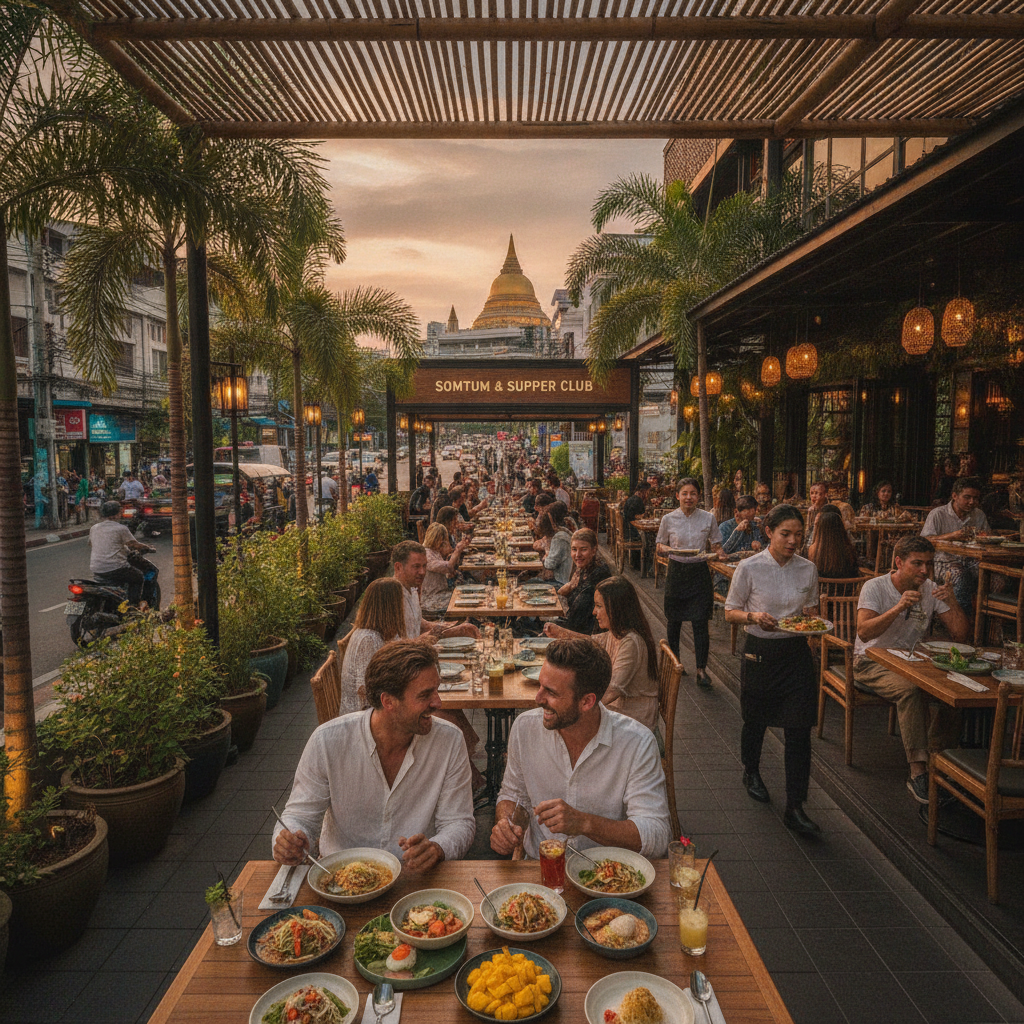
The noodle vendor who has operated from the same corner of Soi Charoen Krung 30 for thirty years did not leave because he wanted to. Rising rents, new landlords, and a neighbourhood rebranded for Instagram drove him out — replaced by a cold-brew bar charging 180 baht per cup.
This is the precise tension at the heart of Charoenkrung's 2026 moment. The relocation of the Thailand Creative & Design Centre (TCDC) to the Grand Postal Building and the momentum of Bangkok Design Week 2026 have made this strip of Charoenkrung Road and Talat Noi one of the most talked-about urban corridors in Southeast Asia.
But the creative economy that generated 1.44 trillion baht annually for Thailand in 2026 has a displacement cost that rarely makes the press release. Galleries, boutique hotels, and design-focused businesses are absorbing the street-level square footage that once belonged to generations of traditional vendors — and the cultural texture they provided is disappearing faster than anyone is documenting it.
Charoenkrung's Gentrification: What the Data and the Streets Actually Show
What is happening to small vendors in Charoenkrung's Creative District?
Small vendors in Charoenkrung's Creative District are being displaced by rising commercial rents driven by the area's repositioning around the TCDC at the Grand Postal Building, Bangkok Design Week, and the arrival of design businesses, galleries, and boutique hospitality. Traditional food stalls and longtime traders along Charoenkrung Road and Talat Noi face direct competition for lease space from higher-margin creative economy tenants.
The gentrification pattern here is textbook but locally specific. Charoenkrung and Talat Noi were already architecturally distinctive — Chinese shophouses, Portuguese-influenced facades, narrow sois threading between warehouses — which made them attractive to creatives long before the TCDC anchor arrived. Warehouse 30 on Soi Charoen Krung 30 was an early signal: a restored heritage warehouse repurposed as a co-working and event space that drew weekend foot traffic of a demographic that had never previously visited the area.
That foot traffic validated the neighbourhood for the next tier of tenants, and the tier after that. Rents followed the visitors. Traditional vendors — operating on thin margins, typically without long formal leases, dependent on local customer bases rather than tourist spend — had no buffer against a market repricing event of this speed.
Insider insight: In Bangkok's most rapidly gentrifying corridors, the businesses that survive are rarely the ones that were there first. They are the ones that owned their floor space. For property investors and buyers evaluating Charoenkrung right now, that distinction — between a tenant of the creative economy and an owner within it — is the single most important variable in long-term positioning.
The irony the research confirms is explicit: the creative economy boom that produced 1.44 trillion baht annually for Thailand in 2026 is simultaneously eroding the vernacular culture that made Charoenkrung worth visiting in the first place. This is not unique to Bangkok — it echoes Shoreditch in London, Kreuzberg in Berlin — but the speed of displacement in Bangkok is amplified by weaker tenant protections and a commercial property market with no equivalent to rent stabilisation mechanisms.
For a deeper look at how Charoenkrung's cultural roots intersect with the neighbourhood's identity, our piece on Chinatown traditions that locals still fiercely protect captures the parallel story unfolding just blocks away in the Yaowarat corridor.
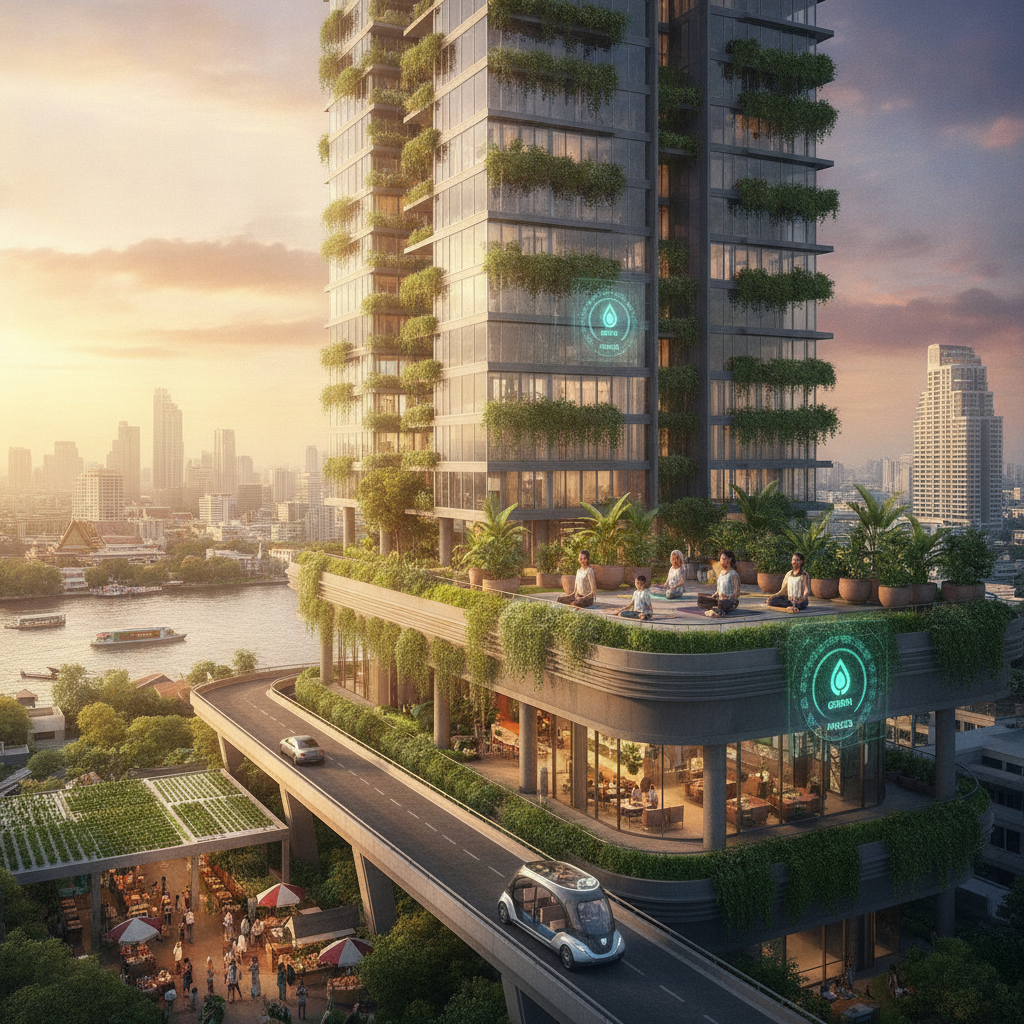
And the waterfront dimension of this same riverside transformation is examined in detail in our analysis of Chao Phraya waterfront condo green space and Bangkok's riverfront changes — because Charoenkrung's gentrification does not stop at the road. It extends to the river's edge.
The Neighbourhood Beyond the Gallery Walls: What Life Around Charoenkrung Actually Offers
Understanding what is being lost requires understanding what the neighbourhood still offers — and what newly positioned around it.
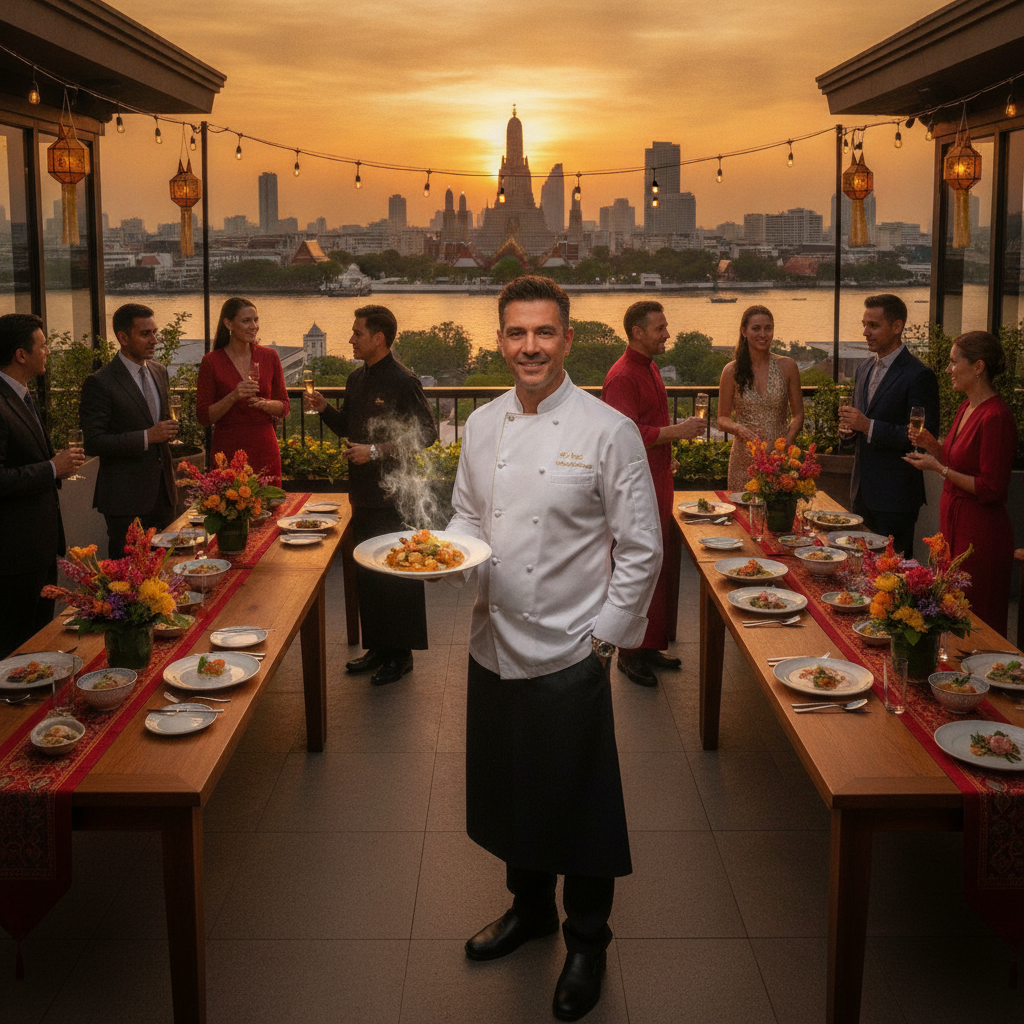
- Michelin-starred dining within the corridor: Anne-Sophie Pic at Le Normandie (Mandarin Oriental, Charoenkrung) was newly awarded two Michelin Stars in the 2026 guide, offering exceptional French dining at the neighbourhood's southern end. This is not a neighbourhood restaurant for the vendor community — it is a cultural trophy that further signals the area's luxury repositioning.
- Shrewsbury International School Bangkok is located in the Charoenkrung riverside area, making the corridor one of the few central Bangkok locations where walkable proximity to a top-tier British curriculum school is possible. For relocating families, this is a significant draw — but it is also a driver of further residential demand pressure.
- Bangkok International Film Festival 2026 opens September 13 at ICONSIAM — just across the river — and Bangkok's 28th International Festival of Dance & Music runs September 5 to October 17, 2026 at the Thailand Cultural Centre. These events reinforce the cultural capital of the broader riverside zone without directly benefiting the street-level vendors who remain.
- Bangkok Art Biennale 2026 has significant exhibition presence in the Charoenkrung area. Our resident's guide to Bangkok Art Biennale 2026 neighbourhoods and condos near venues maps the exact streets where art infrastructure and residential supply overlap.
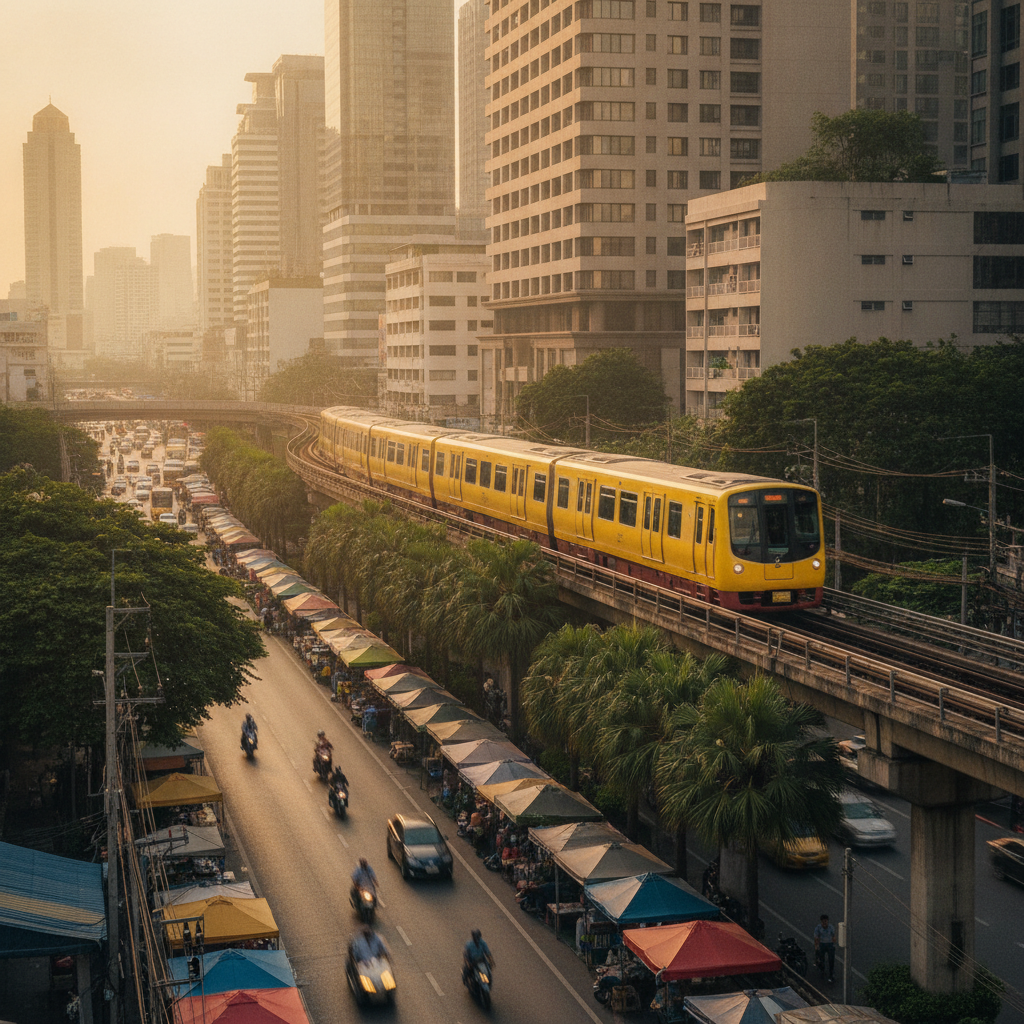
- Transit note: The MRT Blue Line's shift to fully EMV contactless payment from June 1, 2026 has streamlined access to the Hua Lamphong and Sam Yan stations that serve the northern reach of Charoenkrung. For residents without cars, this is a meaningful quality-of-life improvement.
Property Values in a Gentrifying Creative District: The Investment Calculation
For property investors, Charoenkrung's gentrification presents a classic early-mover paradox. Values are rising — driven by the creative economy repositioning, the TCDC anchor, and proximity to the Chao Phraya waterfront — but the neighbourhood has not yet repriced to the levels of Wireless Road or Langsuan, where luxury condominiums trade at 250,000 to 450,000 THB per square metre with capital appreciation of 6 to 8% annually.
Charoenkrung sits below that ceiling today, which is precisely what makes it interesting. The gentrification displacement happening at street level is a leading indicator of the property repricing that follows. Historically in Bangkok, the sequence is: cultural infrastructure arrives, creative businesses cluster, F&B upgrades, then residential developers acquire adjacent land. Charoenkrung is between stages three and four right now.
The foreign ownership position remains clear: the 49% freehold condominium quota is stable and unchanged, making condominium purchase the most legally secure route for international buyers in this corridor. Nominee structures face significantly increased enforcement scrutiny following DBD and Land Department updated guidelines released in June 2026 — a risk that buyers evaluating older company-held assets in this area should factor carefully.
For the rental yield picture, central Bangkok — the category that includes the Silom and Sathorn districts adjacent to Charoenkrung — delivers net yields of approximately 3.5 to 5.2% annually after management fees, common area charges, and Thai tax, with stable capital appreciation of 3 to 5% annually over the past five years. The Charoenkrung premium, if the creative economy positioning holds, may push that appreciation trajectory higher over a five-to-seven year horizon.
The full Bangkok investment framework — including how central districts compare with outer BTS and MRT corridors offering gross yields of 6 to 7% — is analysed in our piece on smart investing in Bangkok: rental yields and capital growth in a segmented market.
One cost consideration investors must now price in: Thailand's Land and Building Tax returns to full statutory enforcement in the 2026 tax year after pandemic-era relief measures ended. Vacant land in Charoenkrung — held speculatively ahead of development — faces escalating tax liability that may accelerate sales and new supply into the market.
Speak to a Specialist About Charoenkrung Property Before the Window Closes
Charoenkrung is not a neighbourhood that will wait. The TCDC is operational. Design Week is annual. The Michelin two-star anchor at Le Normandie has already reset what affluent visitors expect from this riverside strip.
The vendors being displaced are a signal, not a tragedy to be observed from a distance. They are the data point that tells you the repricing is real and already underway.
If you are evaluating residential or investment property in the Charoenkrung corridor — or comparing it against Silom, Sathorn, or the Wireless Road luxury segment — our team offers private consultations, off-market floor-plan access, and a no-obligation analysis of how specific buildings within this corridor are positioned for the next five years of creative-economy-driven appreciation.
Request a private Charoenkrung property briefing or floor-plan analysis by contacting our team directly. We work exclusively with buyers who are ready to move with precision — not chase a market that has already left the room.