Sustainable Housing Bangkok Din Daeng: NHA's 13,000 Eco-Friendly Units Explained

Din Daeng Is Being Rebuilt — And This Time, It's Built to Last
Thailand's National Housing Authority has announced an eight-point strategic plan targeting the delivery of over 13,000 new housing units in 2026, with Din Daeng as the centrepiece of its urban renewal agenda. This is not a vague policy statement — it is a funded, scheduled programme grounded in two non-negotiable design standards: Eco-Friendly construction and Universal Design for accessibility.
The NHA's 2026 roadmap places Din Daeng — a dense, mid-city district long associated with ageing public housing stock — at the heart of Bangkok's most ambitious social housing overhaul in a generation. For residents, owner-occupiers, and investors watching the city's sustainable credentials mature, this announcement carries real weight.
The scale matters. Thirteen thousand units is not an incremental addition; it is a neighbourhood-level intervention. When a single programme reshapes that volume of housing under unified sustainability and accessibility standards, it changes the baseline expectation for what affordable Bangkok housing can and should look like.
The NHA's Eco-Village Standards and Universal Design: What the 2026 Roadmap Actually Delivers
What does the NHA's Eco-Friendly housing standard mean for Din Daeng residents in 2026?
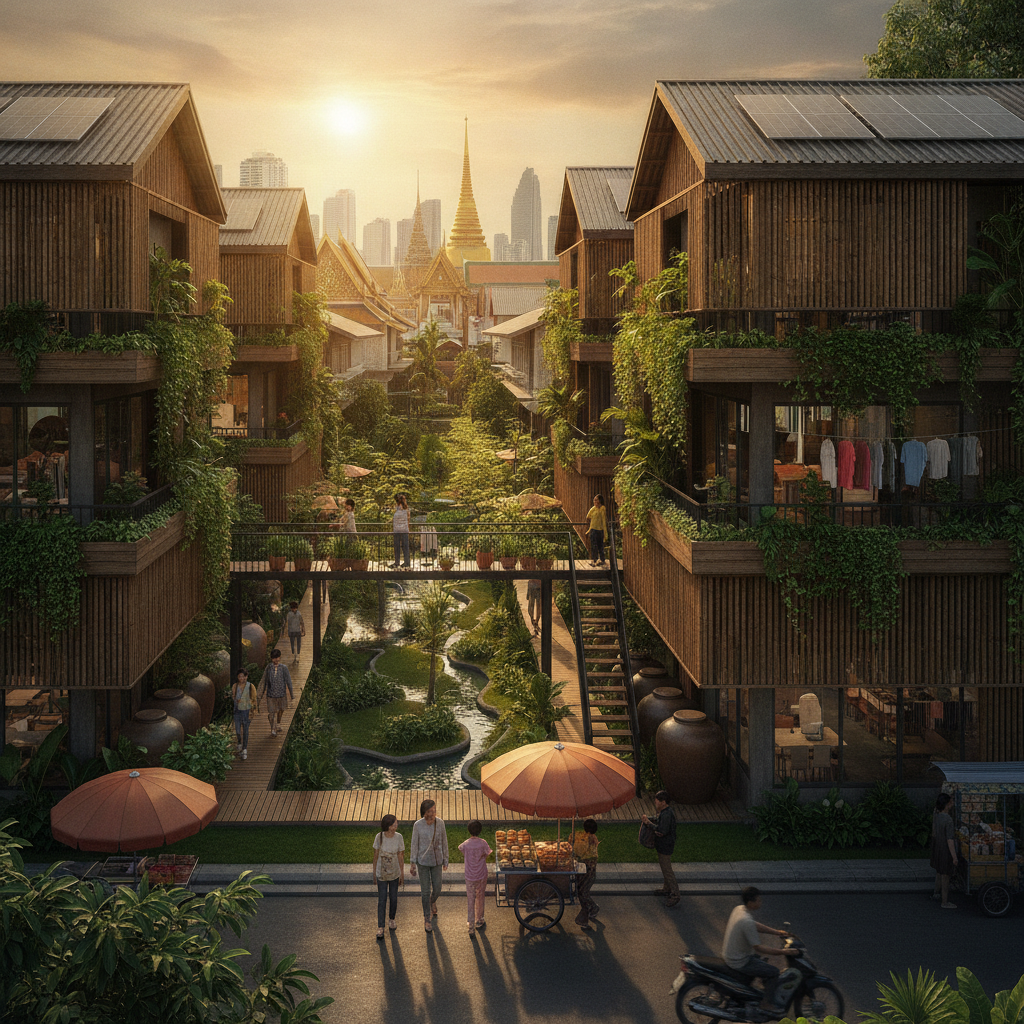
The NHA's Eco-Friendly standard encompasses sustainable construction materials, energy-efficient building systems, and green common-area planning across all new Din Daeng units. Universal Design provisions ensure step-free access, wider corridors, and barrier-free facilities for elderly and disabled residents — codified, not optional.
The two pillars of the programme — Eco-Village standards and Universal Design — are distinct but complementary. Eco-Village focuses outward: site planning, energy systems, waste management, and the environmental footprint of the development as a whole. Universal Design focuses inward: the lived experience of residents whose mobility, vision, or age makes conventional housing design exclusionary.
Both pillars respond to pressures that are intensifying across Bangkok simultaneously. The city is ageing — Thailand's elderly population is growing faster than most Southeast Asian peers — while climate resilience has moved from aspiration to policy necessity after successive years of extreme heat and urban flooding.
Insider insight: Din Daeng's urban renewal under the NHA represents one of the few large-scale opportunities in Bangkok where eco-standards and accessibility requirements are being embedded at the design stage rather than retrofitted. That distinction — designed-in versus bolted-on — is precisely what separates durable long-term value from compliance theatre in Bangkok's housing sector.
The NHA's eight-point strategic plan also signals that Din Daeng's transformation is not a one-off project. It is the template. If the programme performs, expect the Eco-Village and Universal Design standards to migrate to other NHA estates across the city, creating a ripple effect on what Bangkok's affordable housing market is expected to deliver by 2027 and beyond.
For context on how Bangkok's broader market is processing the 'flight to quality' narrative — where premium design standards are increasingly the separator between resilient and vulnerable price segments — see our analysis of smart investing in Bangkok: rental yields and capital growth in a segmented market.
Living Near Din Daeng: Transit, Dining, and the Lifestyle Infrastructure Around the Renewal Zone
- Transit connectivity: Din Daeng sits within reach of the MRT Blue Line, and Bangkok's ongoing Transit-Oriented Development focus means that as the NHA estate matures, transit access becomes a compounding asset. The Asok BTS/Sukhumvit MRT interchange — one of Bangkok's best-connected nodes — is a short commute away, keeping Din Daeng residents inside the city's primary employment corridor.
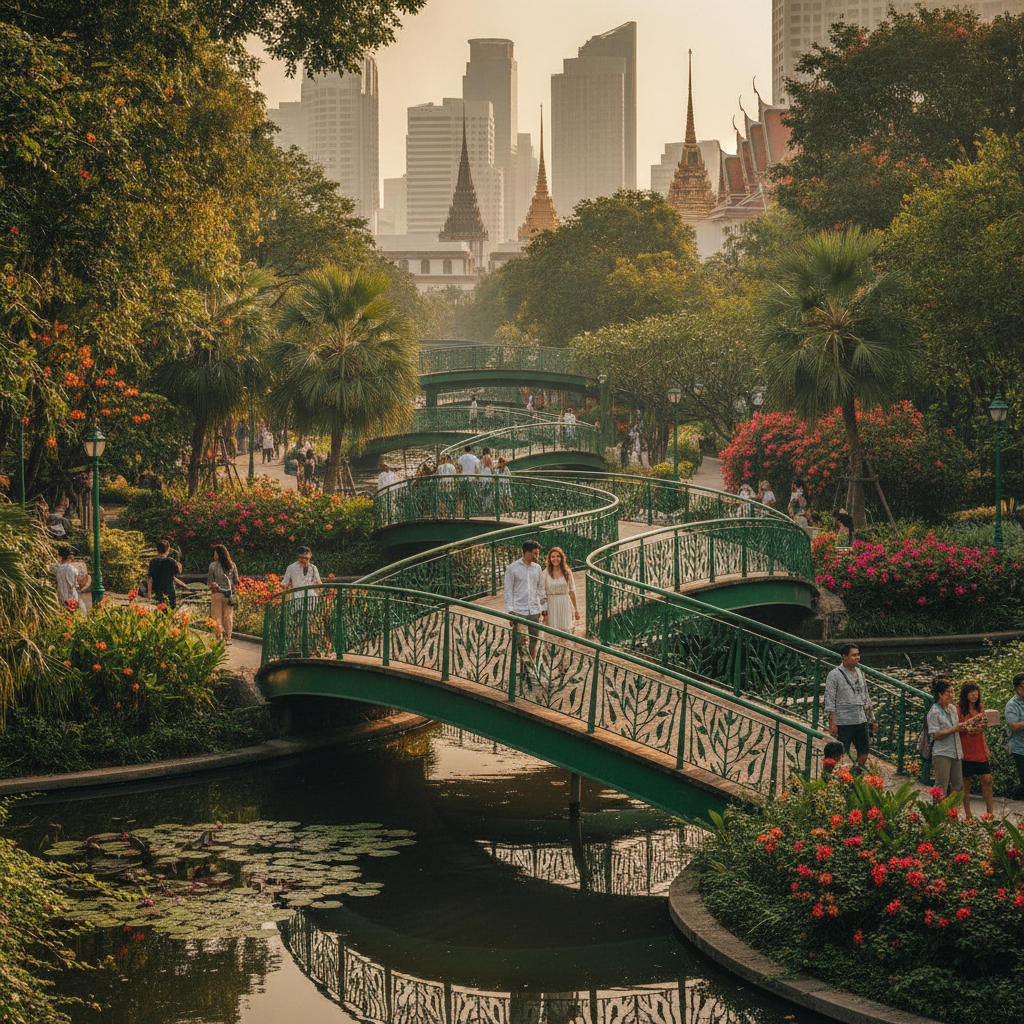
- Active parks: Lumphini Park and the expanded Benjakitti Forest Park, with its popular elevated scenic walkway, are within viable distance for residents who prioritise outdoor fitness. Both parks operate daily, particularly busy in mornings and evenings, and represent the kind of green infrastructure that the NHA's Eco-Village concept aspires to replicate within the Din Daeng estate itself.
- Dining access: Bangkok's 2026 Michelin Bib Gourmand scene has expanded to include neighbourhood-anchored spots like Kolun.h — a Hainanese-style noodle house celebrated for its crispy pork belly and slow-simmered broth — and Jaan by Khun Jim, recognised for authentic Southern Thai and Thai-Chinese dishes made with freshly pressed coconut milk. Both represent the accessible, quality-first dining culture that mid-city districts like Din Daeng are well positioned to absorb.
- Cultural calendar: The Bangkok Art Biennale 2026 — themed 'Angels & Mara' — runs from October 29, 2026 through February 2027 across historic and modern landmarks throughout the city. Residents in centrally located districts like Din Daeng are within reach of multiple exhibition venues. For a neighbourhood-by-neighbourhood guide to the Biennale, see our Bangkok Art Biennale 2026 resident's guide to neighborhoods and condos near exhibition venues.
- Wellness options: The city-wide wellness trend is extending well beyond luxury hotels. Puppy and Kitten Yoga Therapy sessions are gaining ground at studios across Bangkok, while The Peninsula Bangkok's Riverside Wellness Retreat — offering Sunrise River Yoga, SUP Yoga, Pilates, Sound Healing, and Ice Bath Rituals — sets the benchmark for experiential urban wellness that is now filtering into resident expectations across all price segments.
Market Signals: What the Din Daeng Renewal Means for Bangkok's Sustainable Housing Investment Thesis
Bangkok's condominium market in 2026 is bifurcated. The mass-market segment — units priced below 3 million THB — faces oversupply, tighter mortgage lending, and subdued domestic demand. The luxury and super-luxury segments, by contrast, are showing resilience: steady pricing, cash-buyer dominance, and limited central land supply act as natural floors.
The NHA's Din Daeng programme operates in a different category from either of those segments — it is publicly funded, socially mandated housing — but it sends a market signal that the city's planning apparatus is now treating sustainability and accessibility as baseline requirements, not premium add-ons. That shift matters for developers targeting mid-market buyers, who will increasingly benchmark new private stock against NHA's Eco-Village specification.
For foreign investors, the policy environment adds another layer of complexity. Thailand's Land Department has tightened scrutiny on nominee structures as of June 2026, reinforcing that freehold condominium ownership within the 49% foreign quota remains the most legally secure route to property ownership. The much-discussed proposals for a 75% foreign quota and 99-year leaseholds have not been enacted into law. If you are navigating acquisition costs and legal structure, our breakdown of why foreign buyers still pay full price despite the 0.01% fee cut is essential reading before you proceed.
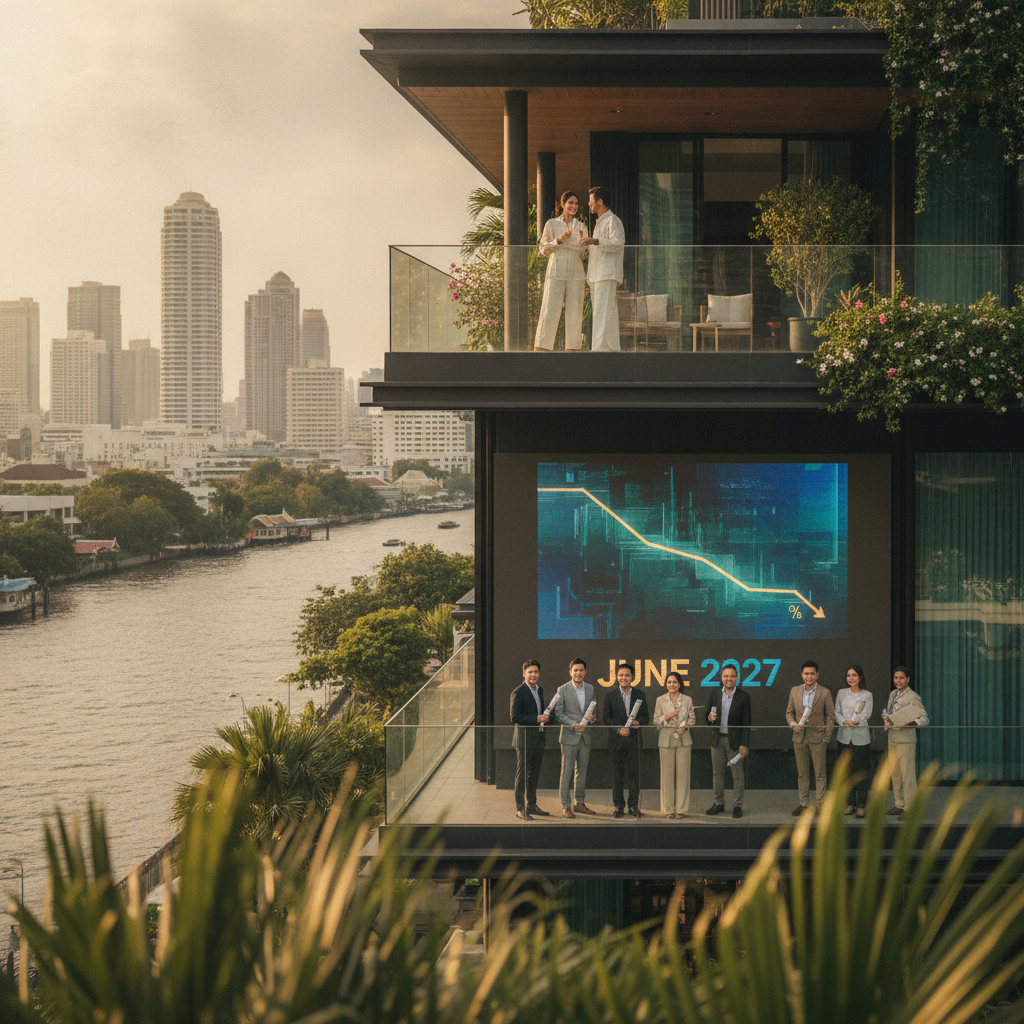
Meanwhile, the Bhumjaithai-led government formed in February 2026 is considering extending the 0.01% property transfer fee reduction beyond its June 2026 expiry — a measure that would primarily benefit Thai national buyers, including those purchasing in NHA schemes. That window is narrow and worth tracking. For a detailed breakdown of the extended fee timeline, see our post on the extended 0.01% property transfer fee and Bangkok's last window to buy below market closing costs.
In the prime rental corridors — Sukhumvit's Phrom Phong, Thong Lo, and Ekkamai zones — gross rental yields remain at 4.5–6.5%, with capital appreciation averaging 4.2% per year over five years. Wireless Road and Langsuan's luxury segment has delivered 6–8% annual capital appreciation historically, with price per sqm ranging from 250,000 to 450,000 THB. The Din Daeng NHA programme is not competing in those corridors, but it does reinforce that quality specification — wherever it sits on the price ladder — is becoming the primary driver of long-term residential value in Bangkok.
Get the Full Picture: Request a Personalised Bangkok Property Briefing
Whether you are tracking Bangkok's sustainable housing policy because you are considering a purchase in an adjacent district, evaluating the long-term value of eco-certified stock in mid-city locations, or simply trying to understand how NHA's Din Daeng overhaul reshapes the competitive landscape for private developers — the detail is in the specifics.
Our team at TheRealtors.net analyses Bangkok property by district, by design specification, and by the regulatory environment that shapes what you actually own and what it costs you to own it. We do not offer generic advice; we offer floor-plan analysis, comparative pricing data, and legal ownership structuring guidance tailored to your exact situation.
Reach out for a private briefing — no obligation, no sales pitch, just a clear-eyed read of the Bangkok market as it actually stands in 2026. Use the contact form below or message us directly to arrange a call at your convenience.