The Jataka School's Biodynamic Farm: How On-Site Agriculture Integrates Into Bangkok Curriculum

Why a Biodynamic Farm Inside a Bangkok School Changes Everything
A biodynamic farm school Bangkok families can actually access opened its doors in August 2026. The Jataka School is not retrofitting a rooftop herb garden onto an existing building — it is launching with on-site agriculture, dedicated cooking spaces, and outdoor play areas designed as core learning infrastructure from day one.
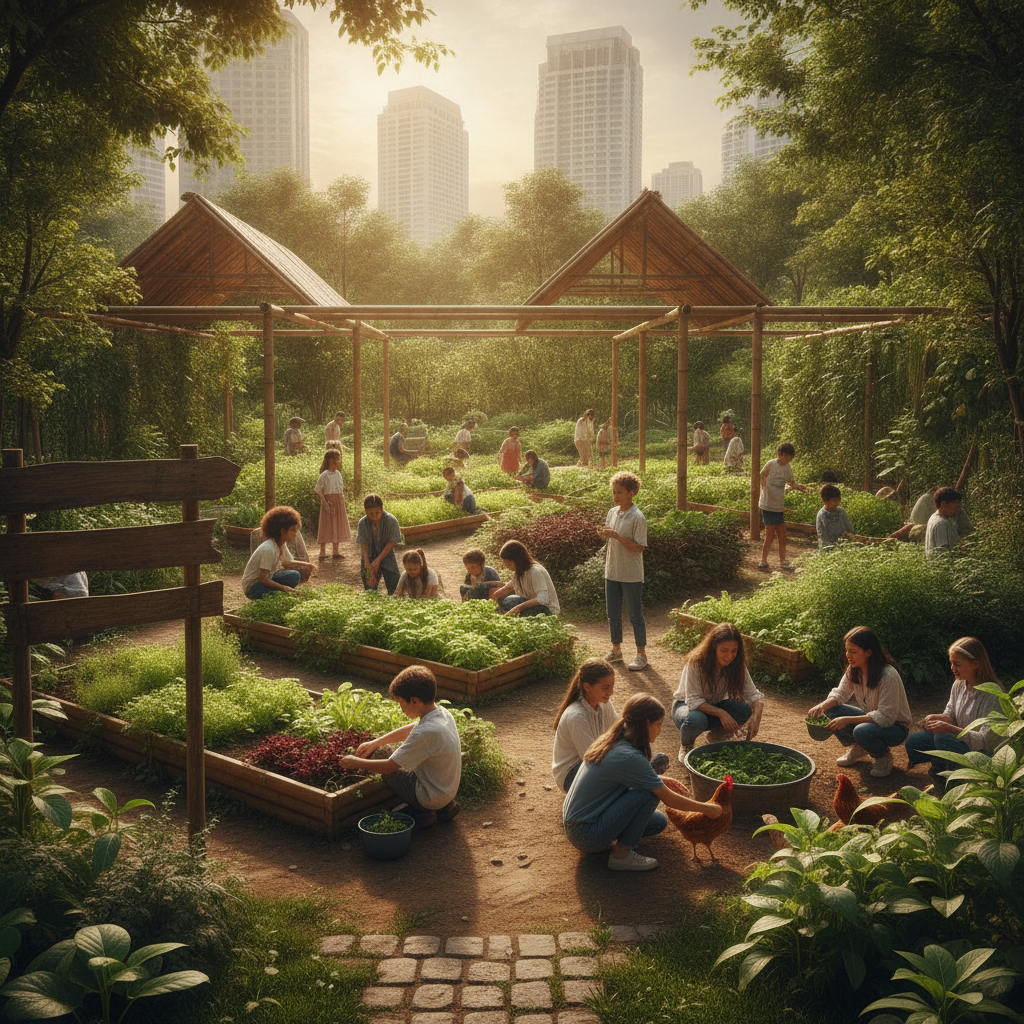
This is not decorative greenery. Biodynamic farming treats the school campus as a living ecosystem: soil health, seasonal planting cycles, composting, and animal welfare are woven into lessons across subjects. Children do not read about food systems — they tend them before class.
For Bangkok parents who have spent years choosing between academic rigour and holistic wellbeing, The Jataka School's model argues that the distinction is a false one. The farm is the curriculum, not an elective add-on.
The Jataka School: What the Biodynamic Campus Actually Delivers
What is a biodynamic farm school in Bangkok, and how does The Jataka School work?
A biodynamic farm school in Bangkok integrates on-site agriculture — soil cultivation, seasonal planting, and composting — directly into daily lessons. The Jataka School, opening August 2026, pairs its working farm with cooking spaces and outdoor play areas, making ecological practice inseparable from academic study.
The school opened in August 2026, aligning its launch with the same academic calendar wave that brought Dulwich College Bangkok's new LEED Gold & WELL-inspired campus and Middleton International School Bangkok — offering Bangkok families an unusually broad set of new choices in a single intake year.
Where Dulwich prioritizes a British curriculum with an indoor 50-metre swimming pool and performing arts facilities, and Middleton leads with a Trilingual Programme in English, Thai, and Mandarin, The Jataka School occupies an entirely different axis: place-based, sustainability-embedded learning in which the biodynamic farm anchors the school's pedagogical identity.
Bangkok's 2026 school intake is the most diverse in a decade. For the first time, families can genuinely choose between a British-curriculum sports complex, a trilingual Singapore-maths programme, and a biodynamic farm campus — all opening in the same August window. The neighborhood you choose to live in now determines which of these you can realistically access without a two-hour commute.
The cooking spaces are not incidental. In a biodynamic model, harvesting leads directly to preparation — students experience the full arc from soil amendment to plate. This closes the abstraction gap that most urban children grow up with, particularly relevant in a megacity where food appears pre-packaged and its origins are invisible.
Outdoor play areas at The Jataka School are designed around the farm's geography, meaning unstructured time and structured agricultural learning share the same physical space. The boundary between recess and science class becomes genuinely porous.
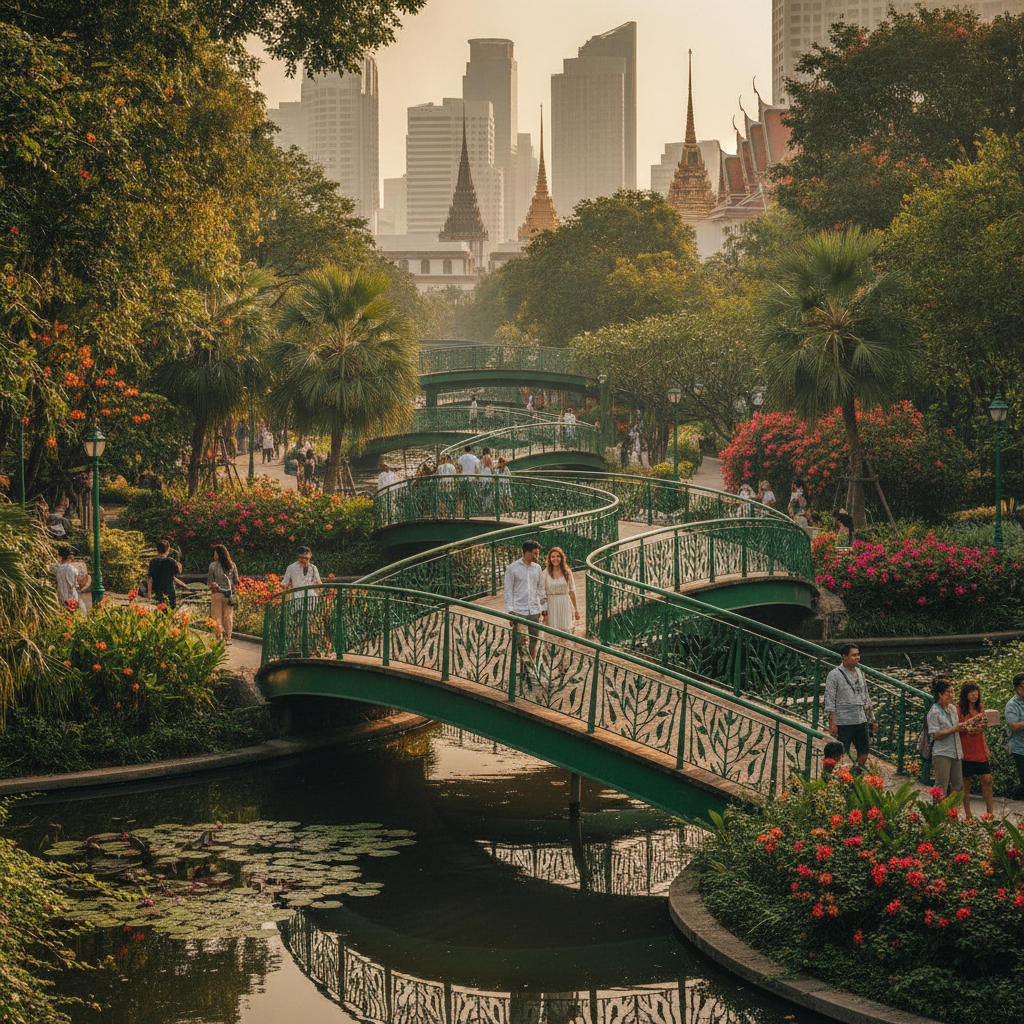
The school's focus on sustainability and wellbeing places it alongside a broader Bangkok trend. The Benjakitti Park and Lumphini Park green corridor — linked by an elevated walkway creating a roughly 10km traffic-free loop — has become the backbone of the city's booming outdoor wellness and social scene. Bangkok's green bridge connecting Lumpini and Benjakitti shows that the city's appetite for integrated green living is not limited to schools — it is reshaping entire neighborhoods. The Jataka School's campus philosophy fits directly inside that cultural moment.
Practical Life Around a Biodynamic School Campus in Bangkok
Choosing a school is inseparable from choosing where to live. The Jataka School's Bangkok location means families need to think clearly about which residential zones put the campus within a manageable daily commute while still delivering the wider lifestyle infrastructure that expat families depend on.
- Phrom Phong remains the benchmark expat family district — established community, Benjasiri Park, Samitivej Sukhumvit Hospital, Emporium and EmQuartier malls, and direct access to NIST, St. Andrews, Bangkok Prep, and Wells International School. Families anchored in Phrom Phong who want The Jataka School's biodynamic model will need to factor commute time honestly.
- Thonglor and Ekkamai offer a slightly more relaxed, creative atmosphere with strong international school coverage including Wells International and NIST. Their proximity to Bangkok's fine-dining and café culture makes them a natural fit for families drawn to The Jataka School's food-literacy philosophy.
- Bangkok's social run club scene operates out of Benjakitti and Lumphini Parks — clubs like Sabai Run Club draw hundreds of runners on Sunday mornings and Friday nights, before 7 AM or after sunset. For parents at a school that treats outdoor movement as pedagogy, living within reach of this green corridor is a lifestyle alignment, not a luxury.
- The Bangkok Art Biennale 2026 (October 29 – February 28, 2027) spans venues including Wat Arun, Wat Pho, Museum Siam, BACC, and One Bangkok. A school that teaches through direct experience with the physical world pairs naturally with a city hosting its largest public art event across historical and contemporary landmarks simultaneously.
- Thailand Cultural Centre hosts Bangkok's 28th International Festival of Dance & Music (September 5 – October 17, 2026) — opera, ballet, and contemporary dance within a commutable distance for families using Bangkok's performing arts as a co-curricular extension of school life.
For families simultaneously evaluating multiple new campuses, our guide to three new British schools opening in Bangkok this August and the neighborhoods that serve them provides a direct district-by-district comparison that complements The Jataka School's distinctly different offering.
Families weighing the full landscape of Bangkok's most liveable family districts — transit, schools, amenities — will find our guide to Bangkok's best family-friendly neighborhoods for expats in 2026 an essential reference alongside this school-specific research.
Property Market Context: What Sustainability-Focused Schools Do to Residential Demand
The Jataka School's arrival is not just an educational story — it is a property demand signal. Internationally, schools with distinctive pedagogical identities (Montessori, IB, biodynamic, forest school) consistently generate micro-clusters of residential demand within their commute radius. Bangkok is not immune to this pattern.
The broader market context matters here. Bangkok condo prices reached an average of 120,364 baht per square metre in H1 2026 — up 9.4% from late 2025 and approaching 2019 pre-pandemic peaks. The growth is concentrated in the premium and well-connected segments, with luxury condos holding steady in both price and sales volume even as overall first-half 2026 foreign transfers dipped 8.8% year-on-year.
Central Bangkok districts — Sukhumvit, Silom, Sathorn — are delivering gross rental yields of approximately 4.5–6.5% annually in 2026, with capital appreciation averaging 3–5% per year over the last five years. These are the districts most likely to overlap with The Jataka School's accessible commute zone, and they remain the most liquid market for property held by international buyers.
Foreign buyers should note that since June 17, 2026, Thailand's Land Department has intensified enforcement against nominee ownership structures. Freehold condominium ownership within the 49% foreign quota remains the cleanest, most legally defensible path for international purchasers — and Q2 2026 showed a 20.2% increase in the value of foreign condo transfers, indicating that serious buyers are transacting despite the tighter regulatory environment.
For a clear-eyed view of what these ownership rules actually cost you at the point of transaction, the reality of foreign buyer property fees in Bangkok is required reading before you sign anything.
For investors specifically interested in yield rather than owner-occupation, areas along BTS and MRT lines outside the immediate centre — On Nut, Bearing, Bang Na — are delivering gross yields of 6–7%, driven by the Yellow Line extension and large-scale retail infrastructure like IKEA and Mega Bangna. These eastern corridors represent a different risk/return profile from the districts surrounding premium schools, but they deserve attention for portfolio diversification.
Arrange a Property Consultation Aligned With Your School Shortlist
If The Jataka School's biodynamic campus is on your family's shortlist for August 2026 or the following academic year, the residential decision needs to be made in parallel — not after enrollment is confirmed.
The best units within comfortable commuting distance of Bangkok's new wave of specialty schools are moving quietly, often before formal listings appear. A private floor-plan analysis of available units in your target zone takes less than 30 minutes and gives you a real picture of what your budget achieves in the neighborhoods that actually work for your family's daily routine.
Contact our team to request a no-obligation consultation. Tell us your school shortlist, your timeline, and your preferred district — we will bring the data, the floor plans, and the honest market context. No pressure, no generic brochures.