How New MRT & SRT Extensions Are Reshaping Bangkok Property Investment in 2026–2030

The Transit Map That's Rewriting Bangkok's Property Values Right Now
Bangkok's property market in 2026 is not being moved by speculation or sentiment alone — it is being moved by concrete civil engineering. Five distinct MRT and SRT expansion projects are under construction or approved, each one creating a new axis of accessibility that investors are already pricing into land values today.
The MRT Orange Line's eastern section from Thailand Cultural Centre to Min Buri is the most immediately transformative. Civil works are substantially complete, with an opening expected around January 2028. The corridor it unlocks — a direct east-west spine connecting eastern suburbs to Bangkok's central business districts — has already seen land price appreciation before a single revenue train has rolled.
The MRT Purple Line South Extension, running 23.6 km from Tao Poon down to Rat Burana across 17 stations, is approximately 65–70% complete and projected to commence operations around 2029–2030. This line achieves something Bangkok's north-south commuters have needed for decades: a direct rail link between Nonthaburi in the north and the southern districts, sidestepping the congested Silom and Sukhumvit interchange entirely.
Further out, the Green Line Extension toward Khu Khot and Lam Luk Ka in northern Bangkok is in advanced study phase, with bidding expected in 2027–2028 and construction running through 2032. Land along this future corridor has already recorded price increases of 17.6%, demonstrating that Bangkok's sophisticated investors are not waiting for ribbon-cutting ceremonies to act.
Line by Line: What Each Extension Actually Means for Property Investors
Which Bangkok transit extension will have the biggest impact on property prices?
The MRT Orange Line (eastern section, Thailand Cultural Centre to Min Buri, opening ~January 2028) will have the broadest near-term impact. It creates Bangkok's first true east-west mass-transit spine, connecting previously underserved eastern suburbs directly to CBD employment and lifestyle nodes, compressing commute times that have historically suppressed eastern corridor land values.
MRT Orange Line: The East-West Spine
The Orange Line's eastern section is the story of 2026–2028 for property investors. Civil works are substantially complete, meaning execution risk is minimal. The station catchments linking eastern suburbs to Thailand Cultural Centre — itself a major BTS interchange — are currently priced at a significant discount to established Sukhumvit corridors, representing the exact type of arbitrage opportunity that transit-led appreciation historically rewards.
Investors who understand Bangkok's track record know the pattern: land values along a confirmed, near-complete transit line appreciate most sharply in the 18–24 months before opening, as renters and end-users begin planning moves in advance.
MRT Purple Line South: Unlocking Rat Burana and the Southern Districts
The Purple Line South Extension's 23.6 km, 17-station reach from Tao Poon to Rat Burana is a slow-burn opportunity. At 65–70% construction completion in 2025–2026 and a projected operational date of 2029–2030, the investment window for station-adjacent assets remains open. Southern Bangkok districts have historically been priced well below equivalent-distance northern counterparts — a structural undervaluation this line is positioned to correct.
SRT Light and Dark Red Lines: Western and Northern Reach
The approved SRT Light Red Line extensions toward Salaya and Taling Chan west of Siriraj Hospital, alongside the Dark Red Line's 8.84 km northward push to Thammasat University Rangsit Campus, extend Bangkok's commuter rail network into territory that has long been car-dependent. With construction start timelines of two to three years out, these corridors are in the earliest — and therefore highest-potential — phase of transit-led price discovery.
"Bangkok's transit expansion is not a future event — it is an active price mechanism. The Orange Line's civil works are substantially complete, which means eastern corridor assets are already repricing. Investors waiting for the opening announcement are buying someone else's upside."
Green Line Extension: The Long-Horizon Play
The northern Green Line Extension toward Khu Khot and Lam Luk Ka represents the longest runway — study completion in 2026, bidding in 2027–2028, construction through 2032. Yet land prices along the corridor have already risen 17.6%. This is Bangkok's most forward-priced transit story, rewarding investors with patience and a five-to-seven year holding horizon.
Living the Corridor: Lifestyle Assets Along Bangkok's New Transit Spine
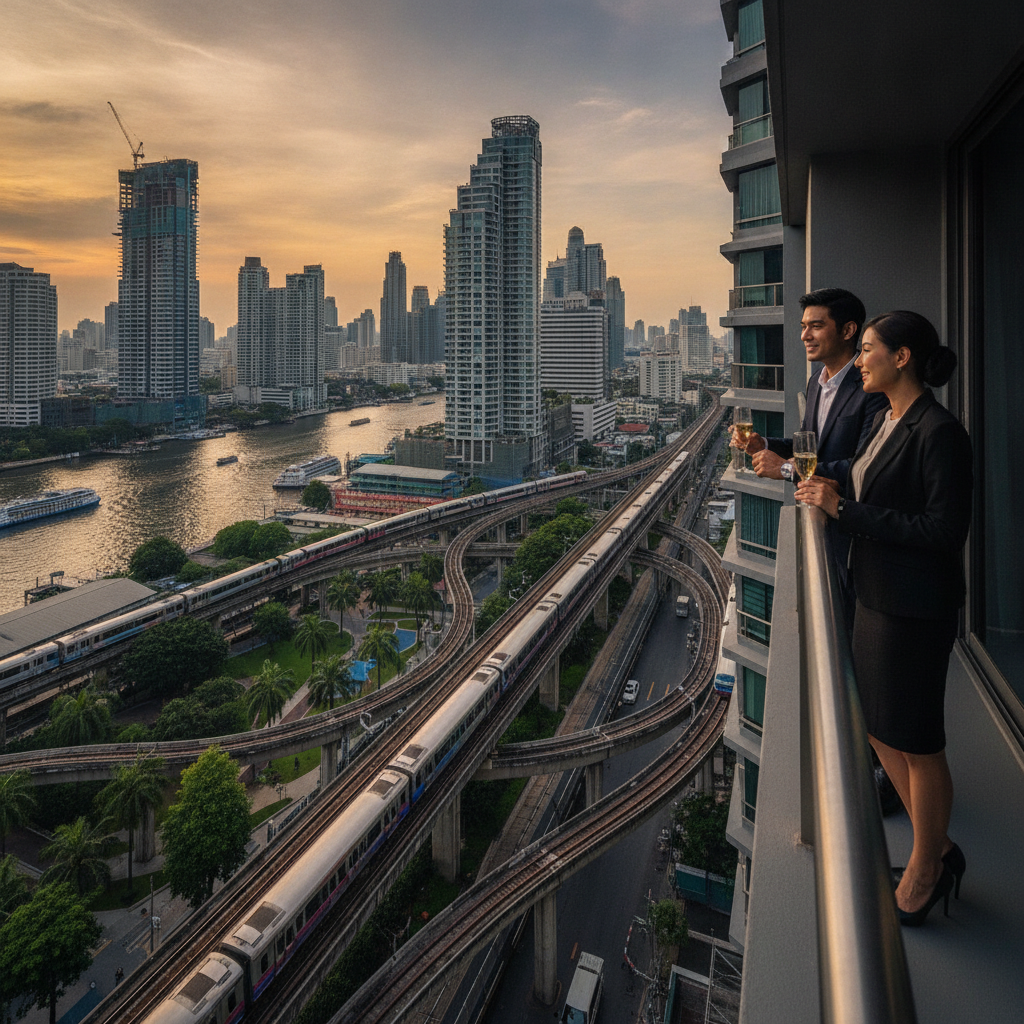
Transit-adjacent property investment is not just a yield calculation — it is a lifestyle proposition. Residents drawn to these emerging corridors want to know what the city looks and feels like from these new nodes. The answer, in 2026 Bangkok, is surprisingly rich.
- Lumphini and Benjakitti Parks (accessible via MRT Blue Line / Silom Line): Bangkok's viral evening aerobics sessions at Lumphini Park — recently upgraded with projector screens and speakers, running Monday to Friday from 6 PM to 8 PM — give residents of central and near-central transit corridors an effortless wellness anchor. Social running clubs including Sabai Run Club, SarDine Run Club, and Meep Meep Run Club operate out of Benjakitti and Lumphini, many free and expat-welcoming.
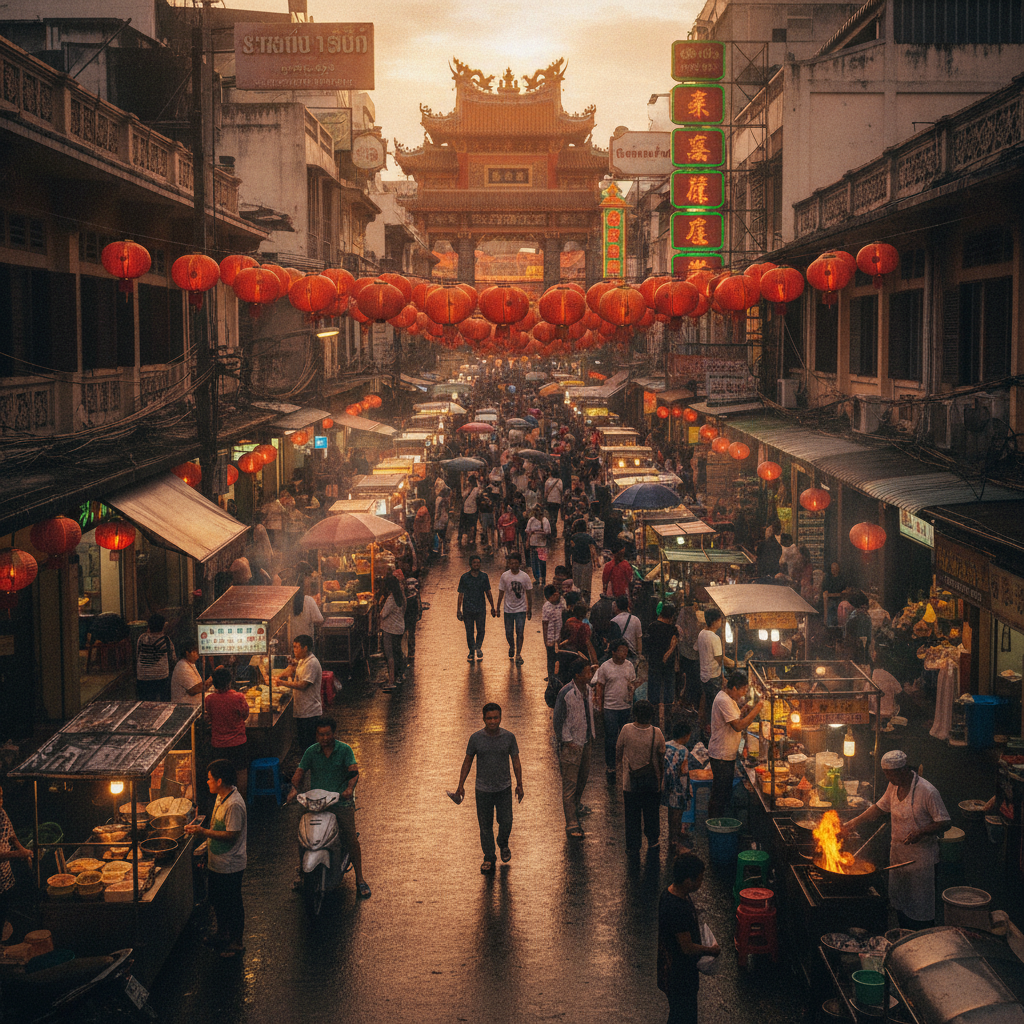
- Night Markets: Jodd Fairs Ratchada, accessible via MRT, remains a current Bangkok favorite for street food, fashion, and evening energy — open daily in the evenings from approximately 5 PM. Asiatique The Riverfront and Yaowarat Chinatown add dining and entertainment nodes for residents along the Silom and Purple Line corridors.
- Rooftop Wellness: Saturday morning rooftop yoga sessions at Amara Bangkok (7:00 AM–11:00 AM) and King Power Mahanakhon (6:30 AM–8:00 AM) have emerged as premium urban wellness rituals, pairing panoramic skyline views with sound healing and brunch — exactly the lifestyle offer that attracts the high-earning tenant profile that transit-corridor landlords want.
- Michelin-Calibre Dining: The 2026 Michelin Guide Thailand added Gaggan at Louis Vuitton (creative fine dining as 'art performance'), Fillets (elegant Japanese omakase), and Anakade (seasonal set menus in a tucked-away alley setting). For residents of central and near-central corridors, Bangkok's culinary density continues to increase. Greydient & Them Coffee Cafe in Asoke (near Sukhumvit 16) provides a minimalist, design-forward daily base for the area's young professional tenant pool.
- Cultural Calendar: The Bangkok Art Biennale 2026 — 'Angels and Mara' — runs across multiple city locations from October 29, 2026 to February 28, 2027, reinforcing Bangkok's position as a genuine international cultural city for the cosmopolitan residents these corridors attract.
District Yield Data: Where Transit Meets Return on Investment
Transit proximity is the structural driver, but yield data tells you where the income case is strongest right now. Matching Bangkok's established yield benchmarks against the new transit corridors reveals several compelling intersections.
Sukhumvit's Phrom Phong, Thong Lo, and Ekkamai corridor — already served by BTS and increasingly integrated with the MRT network — is delivering gross rental yields of approximately 5.5–6% for studios, with occupancy exceeding 90% driven by consistent corporate and expat demand. Capital appreciation has averaged 4.2% per year over the past five years. The Orange Line's integration with this corridor strengthens an already-proven case.
The Ari and Phaya Thai belt — directly BTS-connected and now increasingly transit-dense — is achieving gross rental yields of 5.5–6.5% with extremely low vacancy rates, targeting digital nomads and young professionals at prices of 80,000–110,000 THB per sqm. This is the corridor most directly activated by the type of mobile, transit-reliant tenant that Bangkok's expansion lines are designed to serve.
At the premium end, Wireless Road and Langsuan command prices of 250,000–450,000 THB per sqm with lower rental yields of 3.5–4.5% — but with the highest historical capital appreciation in Bangkok at 6–8% per year. For ultra-high-net-worth investors prioritizing long-term capital growth over near-term income, these CBD-adjacent assets retain unmatched fundamentals.
The Talat Phlu and Wutthakat corridor on the Thonburi side of the river deserves specific attention for yield-maximizers: gross yields of 5–6%, among the best in Bangkok, driven by significantly lower purchase prices than equivalent Sukhumvit addresses, combined with genuine central access via the BTS Silom Line. As the Purple Line South Extension opens this corridor further, the yield-to-entry-price ratio here is set to compress in investors' favor.
Two macro tailwinds compound these district-level fundamentals. The Thai Cabinet's extension of 0.01% property transfer and mortgage registration fees through June 2027 meaningfully reduces transaction costs for buyers entering now. And Bangkok's forthcoming Comprehensive Plan — expected around 2027 — is set to rezone key corridors for larger condominium projects and more diverse residential typologies, a structural supply-side shift that will redirect development energy back toward inner Bangkok precisely as these transit lines open.
Start Your Bangkok Transit-Corridor Investment Analysis Today
The window between a transit line's confirmed construction completion and its operational opening is historically Bangkok's highest-conviction entry point. The MRT Orange Line's civil works are substantially complete. The Purple Line South is 65–70% built. The moment for analysis is now — not after the opening announcements drive headlines and prices.
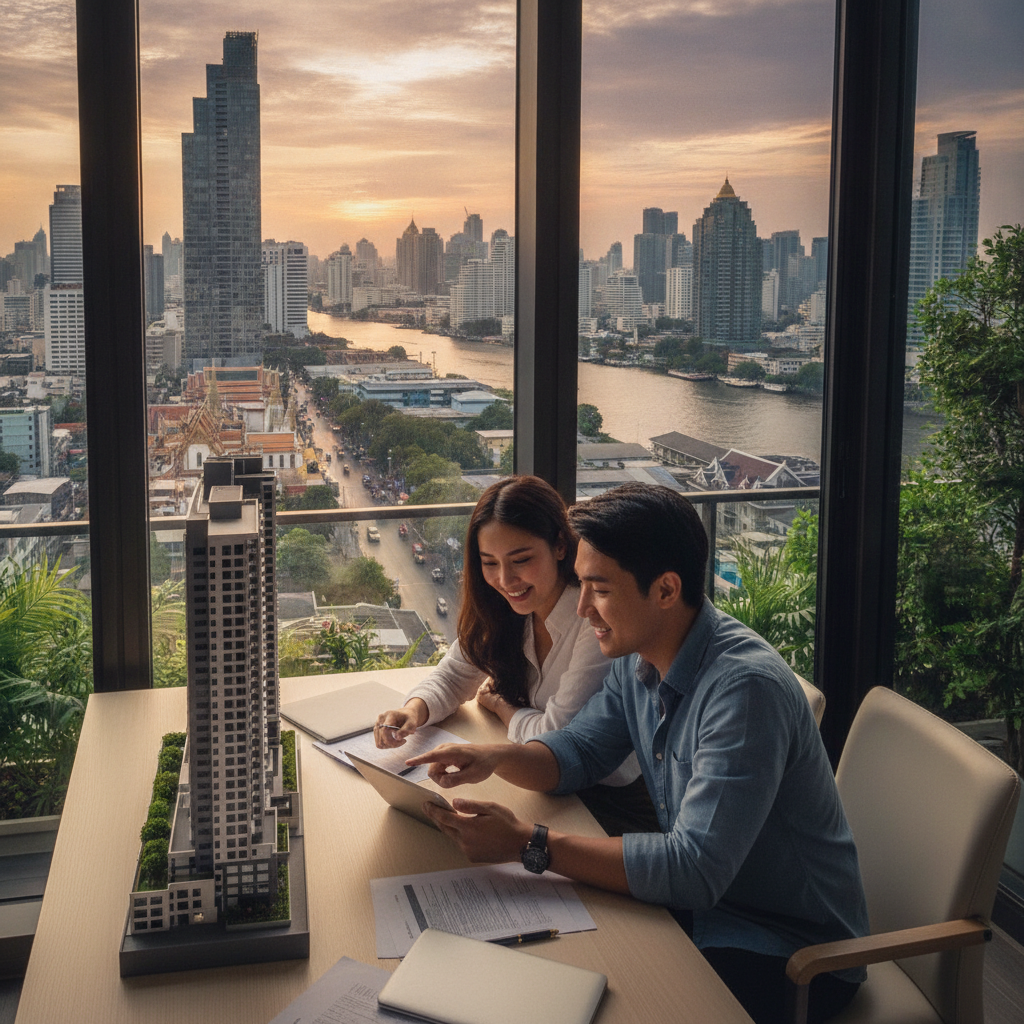
Whether you're stress-testing a specific district's yield profile, comparing floor-plan configurations for maximum rental appeal, or mapping station catchments against your target tenant persona, a conversation grounded in current data moves faster than a search engine.
Request a private investment briefing or floor-plan analysis for any Bangkok transit corridor that matches your timeline and return objectives. Reach out directly — no high-friction forms, no automated responses, no obligation beyond a focused, expert conversation.