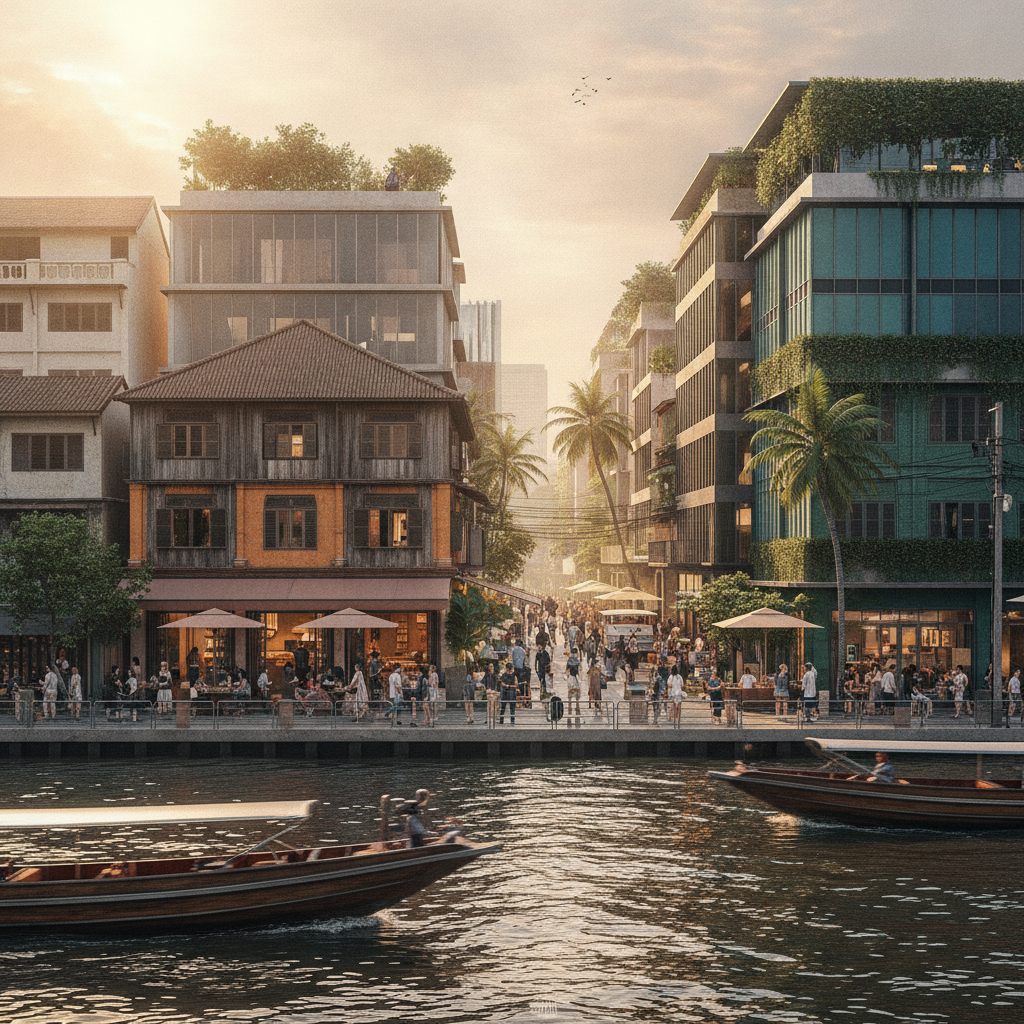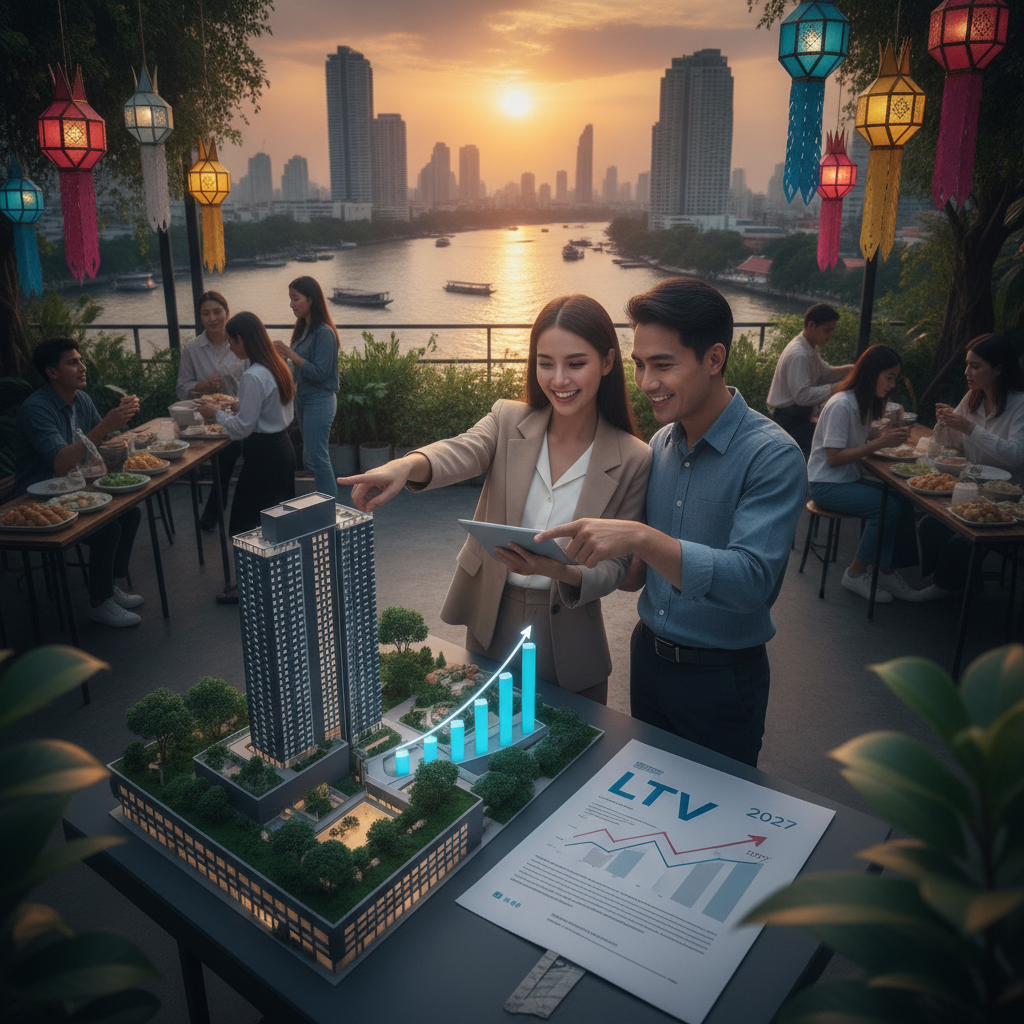

Bangkok's Hidden Yield Champions: Why Eastern Suburbs Beat Sukhumvit for Rental Returns in 2026

The Yield Gap Nobody Is Talking About
If you are underwriting a Bangkok condo investment in 2026 purely on brand recognition, Sukhumvit looks like the obvious play. It is not — at least not for income investors. Central districts like Sukhumvit, Silom, and Sathorn are delivering gross yields of 4.5–6.5% per year, with net yields after management fees, sinking fund contributions, and vacancy falling to a sobering 3.5–5.2%.
Meanwhile, On Nut, Bearing, Bang Na, and Ari — the eastern and inner-suburban BTS corridors — are consistently hitting 6–7% gross per year in 2026. On a THB 3 million unit, that spread means tens of thousands of baht in additional annual rental income. Compounded over a five-year hold, the difference is a fully funded renovation or a meaningful down payment on your next acquisition.
This is not a niche observation. It is a structural shift driven by three converging forces: new rail infrastructure, an affordably priced mid-tier condo supply, and a tenant base of domestic professionals who prize connectivity over a Sukhumvit postcode.
Eastern Bangkok's Rental Yield Advantage — By the Numbers
What is the average rental yield for condos in Bangkok's eastern suburbs in 2026?
Eastern suburb condos in On Nut, Bearing, and Bang Na deliver gross rental yields of 6–7% per year in 2026 — roughly 1–2 percentage points higher than prime central Sukhumvit, Silom, and Sathorn districts, which average 4.5–6.5% gross and 3.5–5.2% net after expenses.
The Infrastructure Catalyst: Three Rail Lines Reshaping the Map
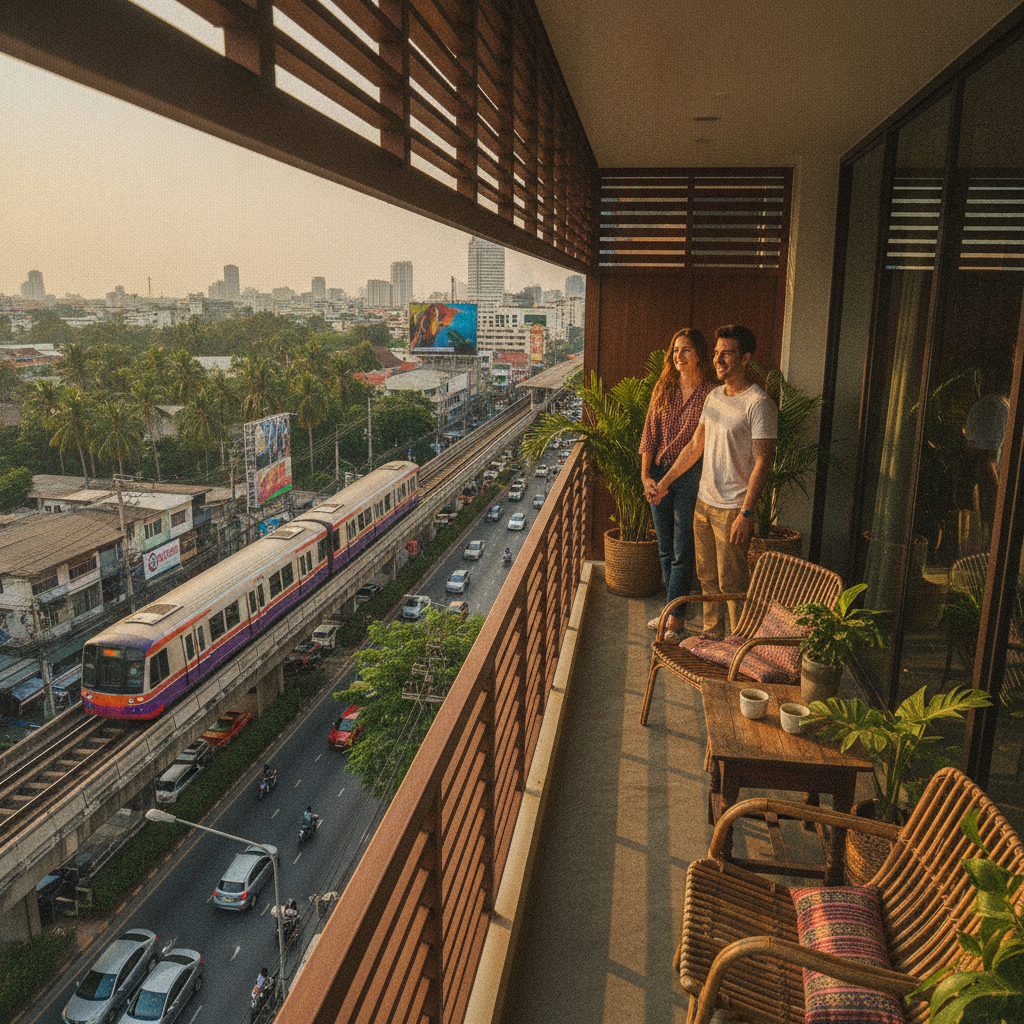
The BTS Green Line extension eastward — serving On Nut, Bearing, and Bang Na — has already normalized long commutes for Bangkok's professional class. Properties within 800 metres of these stations are no longer considered suburban sacrifices; they are transit-optimized investments with a captive tenant pool.
The forthcoming MRT Orange Line eastern section adds a second layer of uplift. Off-plan and recently completed stock near confirmed Orange Line stations is already trading at an 8–12% premium over comparable units further from the route. Investors who positioned early are sitting on built-in capital appreciation before a single train has run.
The recently opened Yellow Line extension — connecting to BTS Bearing — has further rewired the commute calculus for Bang Na. What was once a 45-minute slog to Asoke now involves a straightforward two-leg rail journey. Rental demand in the corridor has responded accordingly.
Insider Insight: The 8–12% price premium already embedded in MRT Orange Line-adjacent stock means the capital appreciation play is partially priced in — but the rental yield arbitrage remains wide open, because rental rates in these corridors lag purchase-price appreciation by 12–18 months. Investors who act now capture both the current income spread and the eventual rental rate catch-up.
Supply That Actually Pencils Out
Bangkok launched approximately 14,800 new condo units in Q1–Q2 2026 alone — a 17% year-on-year increase. A significant 62% of that new inventory sits within 800 metres of a BTS or MRT station, and the dominant product type is the 28–35 sqm one-bedroom unit priced under THB 5 million.
This is precisely the sweet spot for the eastern suburbs. A buyer can acquire a well-specified, transit-adjacent one-bedroom in Bang Na or On Nut for THB 2.5–4 million, rent it for THB 13,000–18,000 per month to a domestic professional or regional expat, and achieve a gross yield well north of 6%. The same budget in Thonglor buys you a fraction of the floor plate and a fraction of the yield.
For context on the lower-mid tier: in the Talat Phlu and Wutthakat corridor along the BTS Silom Line, one-bedroom units priced at THB 2.2–2.8 million are renting for THB 10,000–13,000 per month, delivering gross yields of 5–6%. These numbers validate the broader structural thesis — Bangkok's best income returns sit outside the tourist-facing postcode premium.
Capital Appreciation: Steadier Than You Think
Prime freehold condo prices across Bangkok's central districts recorded a weighted average year-on-year appreciation of 4.2% as of Q2 2026. The mid-tier segment — priced at THB 80,000–120,000 per sqm — outperformed the broader market, driven by first-time domestic buyers and regional investors who have discovered Bangkok's relative value versus Singapore, Hong Kong, and Kuala Lumpur.
Eastern suburb condos in this mid-tier band benefit from both trends: they sit in the price bracket attracting the strongest buyer demand, and they are anchored to transit infrastructure that structurally supports long-term land values. Bangkok's overall CBD appreciation runs 3–5% historically. Eastern transit corridors, buoyed by the Orange and Yellow Line effects, are tracking at the upper end of that range — with further upside as the lines open and mature.
Life in Bangkok's Eastern Corridors: What Your Future Tenants Actually Want
Yield calculations only hold if you can fill the unit. Here is why demand in the eastern suburbs is structurally sound — and what the lifestyle infrastructure looks like for the tenants you are targeting.
- Running and wellness culture: Social running clubs including Sabai Run Club, SarDine Run Club, and Lumpini Running Club operate out of Benjakitti Park and Lumphini Park — both easily accessible from the eastern BTS corridor. Sunday morning runs and Tuesday/Thursday evening sessions draw expats and young Thai professionals who increasingly choose to live close to these communities. A walkable or one-stop commute to a park-based run club is a genuine rental listing asset.
- International school proximity: Bang Na is home to Bangkok Patana School, one of Thailand's top British-curriculum institutions, known for small class sizes and extensive facilities. Families relocating to Bangkok for corporate postings actively seek rentals within a short drive or ride of this campus — and they typically represent longer tenancies and lower vacancy risk. The Bang Na corridor captures this demographic precisely.
- Muay Thai and fitness access: Bangkok's Muay Thai gyms — including F.A. Group Muaythai, Khongsittha Muay Thai, and Tded99 Muaythai Gym — operate daily, often with twice-daily sessions and flexible drop-in options. For the fitness-forward expat tenant increasingly common in Bangkok's eastern suburbs, this is a genuine lifestyle draw.
- Entertainment at scale: The Ploenchit Fair 2026 at Bangkok Patana School on 21 November is a landmark community event for families and expats. EMSPHERE's Sphere Hall — already hosting the FLO Therapy At The Club Tour on 29 August 2026 — provides world-class entertainment infrastructure accessible to eastern Bangkok residents via BTS.
- Expat community infrastructure: Regular meetups, InterNations events, and socials at venues including The Standard Bangkok keep eastern Bangkok tenants socially rooted. Tenants who are socially embedded renew leases; tenants who feel isolated do not.
- Post Malone at Rajamangala National Stadium on 22 September 2026 and The Weeknd's After Hours Til Dawn Tour running 11–13 October 2026 at the same venue underscore Bangkok's position as a genuine global entertainment capital — a quality-of-life signal that draws and retains the international tenant demographic your yield depends on.
Navigating Foreign Ownership Rules in 2026: What Investors Must Know
Strong yields mean nothing if your ownership structure is legally compromised. Thailand's Land Department updated its foreign ownership guidelines in June 2026, implementing tighter controls and increasing data-sharing with the Department of Business Development (DBD).
The crackdown targets nominee ownership structures — Thai spouses, nominee shareholders, and corporate intermediaries historically used to circumvent land ownership restrictions. These arrangements face intensified scrutiny and active investigation in 2026. The risk profile of these structures has risen materially.
The clean path for foreign investors remains unchanged: freehold condominium ownership within the 49% foreign quota per project. This is the most legally secure vehicle available, and it applies directly to the mid-tier eastern suburb condos delivering the 6–7% yields outlined in this analysis. When selecting a project, confirm the remaining foreign quota before committing — popular transit-adjacent projects in On Nut and Bang Na have seen quota fill faster than expected as international investor interest has grown.
Land purchases remain heavily restricted for foreigners. If an advisor is pitching a villa, landed house, or any structure that requires land title ownership via a Thai entity or spouse arrangement, treat the June 2026 guideline update as a direct red flag for that conversation.
Request a Private Yield Analysis for Your Target Eastern Bangkok District
The yield gap between Bangkok's eastern suburbs and Sukhumvit is real, measurable, and widening as new rail lines mature. But the right entry point — the specific project, floor plate, and ownership structure — requires granular analysis that a general market overview cannot provide.
Our team works exclusively with serious investors seeking documented, data-backed acquisition strategies in Bangkok's highest-performing residential corridors. We provide specific unit-level yield modelling, foreign quota verification, and on-the-ground insights that do not appear in developer brochures.
Arrange a private, no-obligation consultation today. Tell us your target district — On Nut, Bearing, Bang Na, or elsewhere along the eastern BTS/MRT grid — your budget range, and your target hold period. We will return a tailored yield analysis and shortlist of qualifying projects within 48 hours.
Send your inquiry directly via our contact form or WhatsApp line. No generic viewings. No sales pressure. Just the numbers your decision deserves.