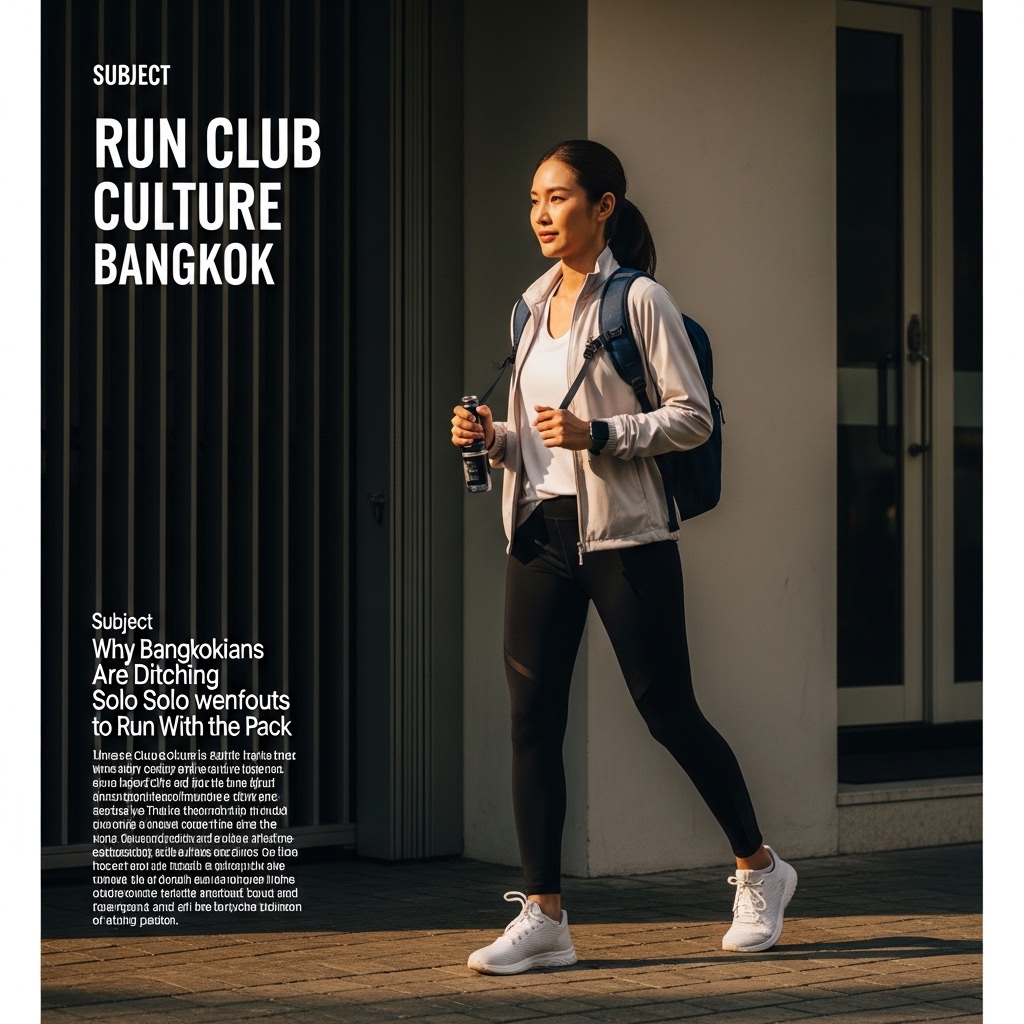
Run Club Culture Bangkok: Why Bangkokians Are Ditching Solo Workouts to Run With the Pack

Bangkok's Streets Have a New Heartbeat—And It Runs in Packs
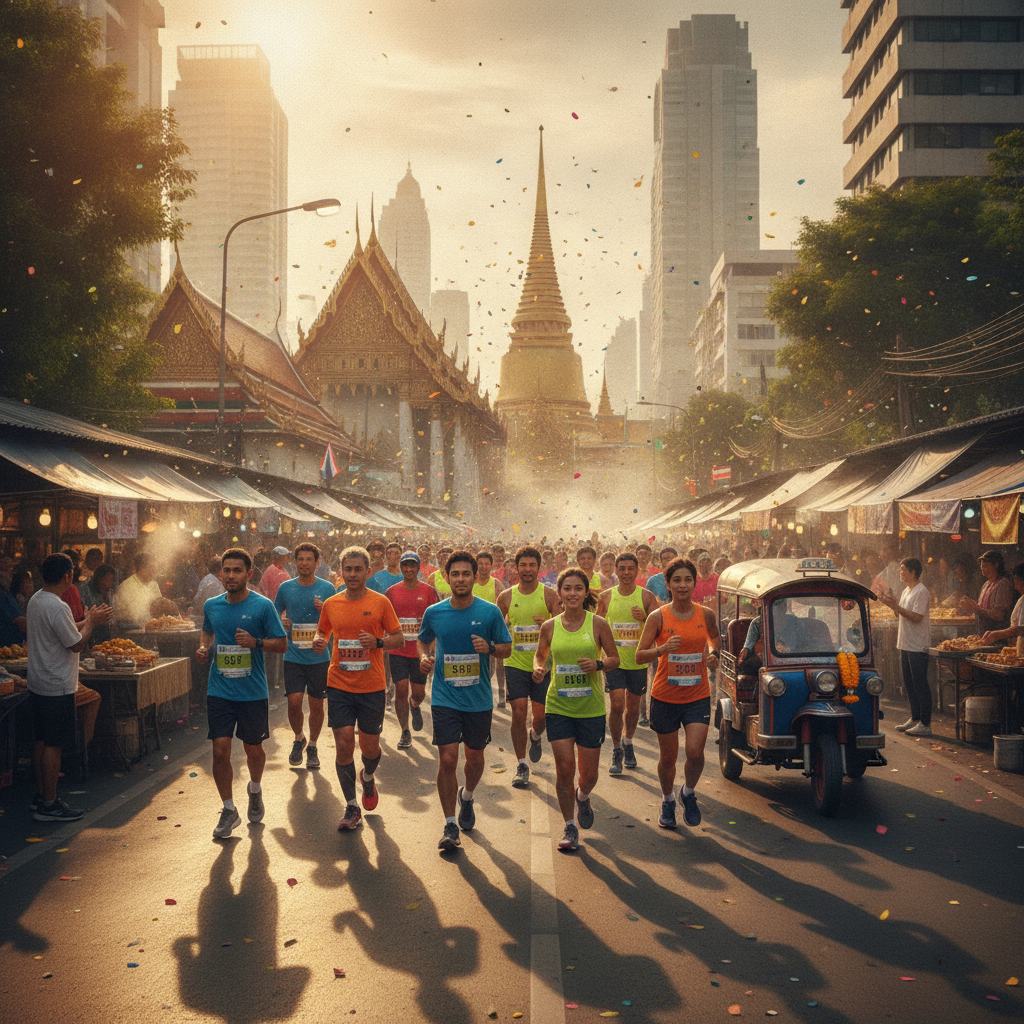
At 5:45 AM on any given Tuesday, roughly 200 people gather at the Benchakitti Forest Park entrance on Ratchadaphisek Road. They are fund managers, architects, digital nomads, and Sukhumvit-based expats. None of them came to work out alone.
Bangkok's run club culture is not a fitness trend. It is a structural shift in how urban professionals in one of Southeast Asia's most anonymous megacities choose to belong somewhere—and to someone.
The numbers back this up. Between 2022 and 2024, the number of registered run clubs operating within the Bangkok Metropolitan Region grew from an estimated 18 to over 140, according to community tracking by Thailand Running Association volunteers. That is a 677% increase in under 30 months.
Insider Insight: Bangkok real estate agents operating in the Phrom Phong, Thonglor, and Ari corridors now routinely field buyer inquiries that specifically reference proximity to a run club meeting point as a non-negotiable lifestyle requirement—ranking alongside BTS access and rooftop pools in priority conversations.
This is not joggers finding friends. This is a generation of Bangkok residents engineering their entire living environment—neighborhood choice, condo selection, morning schedule—around the run club they belong to.
Decoding the True Value of Bangkok's Run Club Movement
What exactly is a run club in Bangkok, and why is it growing so fast?
A Bangkok run club is a recurring, organized group run—typically free or low-cost—that meets at a fixed urban location between 2 and 5 times per week, attracting between 20 and 500 participants per session, functioning simultaneously as a fitness event, networking platform, and social tribe built around a specific Bangkok neighborhood or landmark.
The growth acceleration has three Bangkok-specific drivers that do not apply to run clubs in London or New York. First, Bangkok's density means a 5-kilometer route from Asok BTS passes through six distinct microcultures—office towers, wet markets, temple grounds, luxury malls—creating a sensory experience that treadmill culture fundamentally cannot replicate.
Second, Bangkok's expat population—estimated at 200,000 to 400,000 depending on definition—arrives without inherited social networks. Run clubs are the fastest, lowest-friction entry point into a trusted peer group. A Singaporean finance professional relocating to Sathorn does not cold-call strangers. She shows up at the Thursday Lumpini 6K and has 15 meaningful conversations by 7:30 AM.
Third, Bangkok's air quality anxiety, which peaked during the PM2.5 crisis months of 2023 and early 2024, paradoxically accelerated run club engagement. Groups began publishing real-time AQI alerts, route modifications, and mask protocols—turning the club into an environmental monitoring community, not just a fitness group.
- Most Active Run Club Zones: Lumpini Park (Central), Benchakitti Forest Park (Ratchadaphisek), Chao Phraya Riverside (Bang Rak–Khlong San corridor), Santiphap Park (Ari–Phahonyothin), Rama 9 park circuit (New CBD)
- Average session size (2024): 45–180 runners per meeting
- Dominant demographic: 28–42 years old, bilingual, household income above THB 120,000/month
- Peak session times: 5:30–7:00 AM and 6:00–8:00 PM (post-work)
- Most common post-run ritual: Specialty coffee at a neighborhood café within 400 meters of the finish point
That last data point matters more than it appears. The post-run café stop is where the real community architecture is built—and where Bangkok's café owners, condo developers, and F&B operators are now actively positioning themselves.
Seamless Living: How Run Club Proximity Is Redefining Bangkok's Neighborhood Hierarchy
Which Bangkok neighborhoods offer the best run club access combined with urban infrastructure?
The Phrom Phong–Thonglor–Ekkamai belt on Sukhumvit Road currently represents Bangkok's highest concentration of active run clubs per square kilometer, layered on top of BTS Green Line access, international-standard healthcare at Bumrungrad and Samitivej, and the city's densest clustering of specialty coffee, plant-based dining, and boutique fitness studios.
- Phrom Phong (BTS Phrom Phong): Gateway to Benjakitti Park's 1.8-km perimeter lake loop—the single most photographed run route in Bangkok's social media ecosystem. Emporium and EmQuartier provide pre- and post-run retail infrastructure. Residences within 800 meters command a demonstrable lifestyle premium.
- Thonglor (BTS Thong Lo): Home to Bangkok's highest-profile evening run clubs including the weekly Thonglor Social Run, which regularly attracts 300+ participants. The soi network between Thonglor 1 and 13 is flat, wide, and well-lit—rare attributes in Bangkok's residential grid.
- Ari (BTS Ari): Santiphap Park anchors a morning run culture that skews heavily toward Bangkok's creative professional class. Ari's café density—the highest in the city by some measures—makes it the undisputed post-run social capital of Bangkok.
- Rama 9 / New CBD (MRT Phra Ram 9): Fastest-growing run club zone in 2024. The Fortune Town to Central Rama 9 corridor has seen four new clubs launch since January 2024, feeding off the population influx from new Grade-A office towers and the One Bangkok mega-development pipeline.
- Riverside (BTS Saphan Taksin / Charoen Nakhon): The Chao Phraya riverside path between ICONSIAM and Asiatique offers Bangkok's only continuous waterfront running surface. Evening runs here attract a distinctly international crowd from the Charoen Nakhon luxury residential corridor.
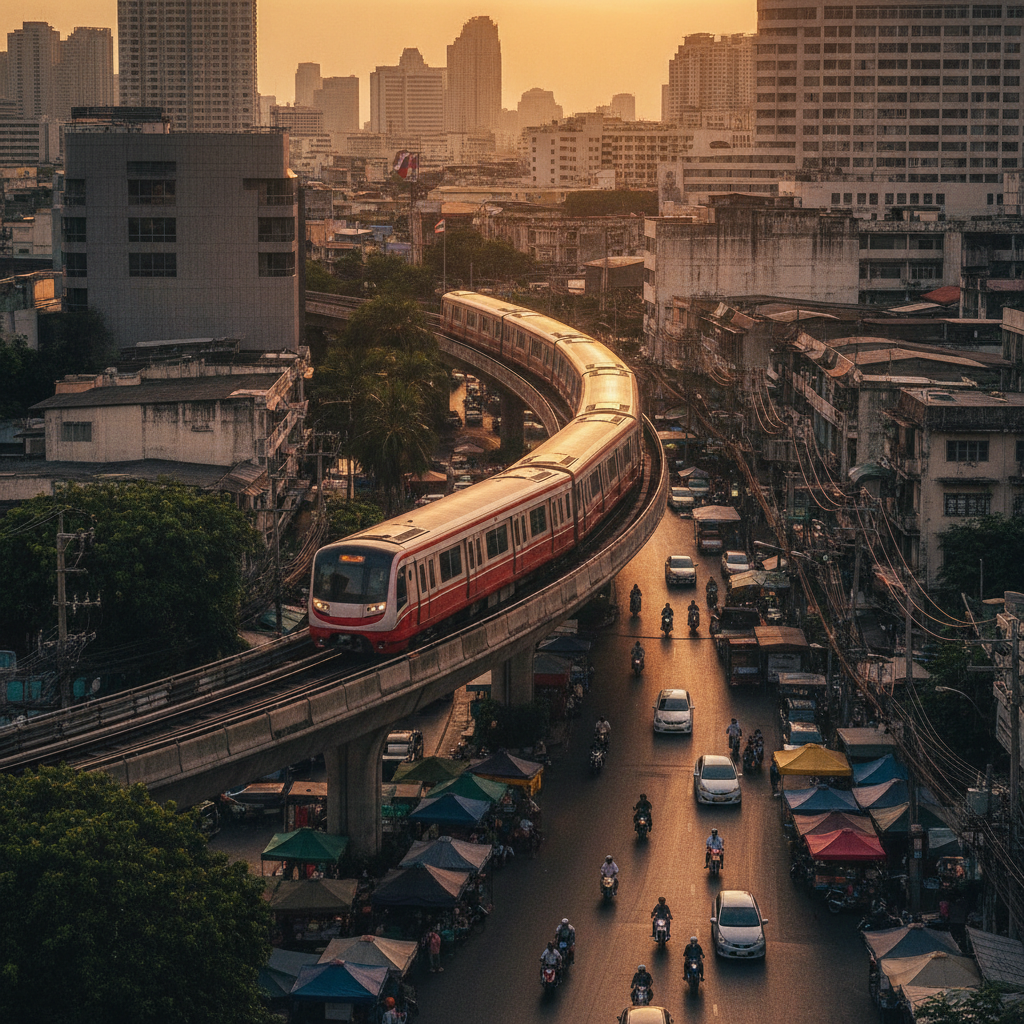
Transit connectivity amplifies every run club's value proposition. A resident at a Phrom Phong address can run the Benjakitti loop, shower, and be seated in a Silom CBD office within 22 minutes via BTS—a commute sequence that competes favorably with any global financial city.
This intersection of run infrastructure and transit proximity is not accidental. Bangkok's most forward-thinking residential developers have begun mapping run club routes the same way they map school districts and hospital access—as a fundamental liveability variable that their target buyer cohort explicitly prices.
Bangkok Fitness Lifestyle Meets Real Estate: The Data Behind the Cultural Shift
How Bangkok's Active Lifestyle Economy Is Reshaping Property Decisions
The fitness lifestyle economy in Bangkok generated an estimated THB 48 billion in 2023, according to Thailand's National Statistical Office fitness sector sub-reporting. Run clubs sit at the zero-cost entry point of that economy—but they are the gateway drug to a high-spending lifestyle stack.
A committed Bangkok run club member's weekly spending pattern typically includes: specialty coffee (4–6 sessions at THB 180–350 per visit), boutique fitness cross-training (1–2 yoga or HIIT sessions at THB 450–900 each), performance nutrition (protein, supplements, electrolytes sourced from Villa Market or Tops), and technical running gear refreshed every 4–6 months from brands including On Running, HOKA, and Salomon—all of which now have Bangkok retail footprints specifically calibrated to this consumer.
- Average annual run-club-adjacent spending per Bangkok participant: THB 85,000–180,000
- Percentage who cited "neighborhood run access" in rental/purchase decision: 34% in a 2024 Bangkok Expat Community Survey (n=1,240)
- Condo premium observed near Benjakitti Park perimeter: 8–14% above comparable units 1.5km away, per Knight Frank Thailand Q1 2024 data
- Run club membership as LinkedIn signal: 61% of Bangkok-based international professionals surveyed list a run club affiliation in their social profiles—higher than gym membership
This last point crystallizes the cultural mechanics at work. A Bangkok run club affiliation is not simply about fitness. It is a public identity marker—a signal of discipline, social openness, neighborhood embeddedness, and income-tier belonging that operates in the same social register as a Thonglor address or a Central Embassy parking sticker.
Market Intelligence: Bangkok property consultants report that listings within demonstrable walking distance of an established run club meeting point—particularly Benjakitti Park and Santiphap Park—are consistently experiencing shorter days-on-market and stronger rental yield retention than comparable Sukhumvit units without that proximity narrative. The run club is becoming a micro-location differentiator with measurable price elasticity.
For Bangkok's international residential market, this has a direct implication. The luxury condo buyer or long-term lessee who runs is not choosing between a 2-bedroom on Phrom Phong and a 2-bedroom on Rama 4 based purely on square meters and finishes. They are choosing between two entirely different morning routines—two different communities—and two different versions of who they will become in this city.
How to Join Bangkok's Run Club World: The Unwritten Rules, the Best Groups, and What to Expect
The Practical Architecture of Bangkok's Run Club Scene
Bangkok's run clubs operate without unified registration, formal membership fees, or governing bodies in most cases. Entry is radically frictionless—which is precisely why the scene has scaled so rapidly among a population conditioned to expect bureaucratic friction in formal fitness contexts.
The standard model: follow the club's Instagram or LINE Open Chat, show up at the stated location five minutes early, and run. That is the entire onboarding process for the majority of Bangkok's active clubs.
- Lumpini Running Club: Meets Tuesday and Thursday at 6:00 AM, Lumpini Park main gate (Rama IV entrance). Mixed pace groups. Dominant language: Thai and English equally. Average 80–150 runners. Post-run coffee at nearby Café Amazon or specialty alternatives on Wireless Road.
- Benchakitti Breakfast Runners: Saturday 5:30 AM, Benchakitti Forest Park (Ratchadaphisek entrance). Trail-adjacent forest loop. Skews toward the Asok–Phetchaburi residential corridor. Strong expat contingent from the Nana–Asok condo belt.
- Thonglor Social Run: Thursday evenings, 6:30 PM, varying Thonglor soi start points announced weekly via Instagram. Bangkok's most photographed run club. Deliberately social pace. Post-run destination rotates between Thonglor's bar and restaurant scene.
- Ari Morning Collective: Wednesday and Friday, 6:00 AM, Santiphap Park north gate. Ari's creative-class run club. Design professionals, media, hospitality. Highest café literacy post-run of any Bangkok group.
- Riverside Runners BKK: Sunday 6:00 AM, ICONSIAM riverside promenade. Bangkok's most scenic route. International crowd from Charoen Nakhon and Sathorn. Occasionally 500+ participants on cool-season Sundays.
Pace is almost never the barrier to entry. Bangkok's run clubs have internalized—faster than their counterparts in most Asian cities—that mixed-pace inclusion is the mechanism that keeps the social fabric intact. Speed groups exist but are subsets, not the identity of the club.
What Bangkok's run clubs do filter for, implicitly, is consistency and social reciprocity. Show up twice, and you will be remembered. Show up five times, and you will be introduced. Show up ten times, and you will be the person introducing the newcomers.
That social architecture—slow-build, high-trust, neighborhood-anchored—is exactly what Bangkok's transient expat population has historically struggled to find. Run clubs are solving a decade-long community deficit in one of Asia's most visited but least socially penetrated cities for long-term foreign residents.
Discover Your Bangkok Run Club Neighborhood: Arrange a Private Lifestyle and Residential Consultation
Your Morning Route Should Start From Your Front Door
The Bangkok residents who extract maximum value from the city's run club culture share one logistical reality: they live within 600 meters of their primary running ground. Not a 15-minute taxi. Not a BTS connection. Walking distance—shoes on, door open, running within three minutes.
If your current Bangkok address does not offer that proximity, or if you are relocating to Bangkok and building your neighborhood shortlist from scratch, the run club question belongs at the center of your residential brief—not as an afterthought.
We work exclusively with Bangkok's international residential market, with deep expertise in the Sukhumvit, Silom, Riverside, and Rama 9 corridors where Bangkok's most active run club culture operates. We can map available residences—for purchase or lease—against specific run club routes, BTS and MRT access nodes, and the café and wellness infrastructure that defines the Bangkok active lifestyle ecosystem.
- Private floor-plan walkthroughs of available units in Phrom Phong, Thonglor, Ari, and Riverside
- Neighborhood lifestyle briefings tailored to your weekly routine and commute requirements
- Run route mapping from specific buildings to Benjakitti, Lumpini, Santiphap, and Chao Phraya paths
- Rental yield analysis for investor clients targeting Bangkok's active-lifestyle tenant demographic
This is a no-obligation conversation. If you are serious about living in Bangkok in a way that makes the city genuinely yours—community included—let us show you exactly where to start.
Contact us directly to arrange your private residential consultation or to request a curated floor-plan analysis of available Bangkok properties matched to your run club lifestyle priorities. Response within 4 business hours guaranteed.