From Khao Tom Stalls to Michelin Stars: Bangkok's Food Renaissance 2026

Bangkok's Culinary Identity Crisis — And Why It's the Best Thing That's Ever Happened
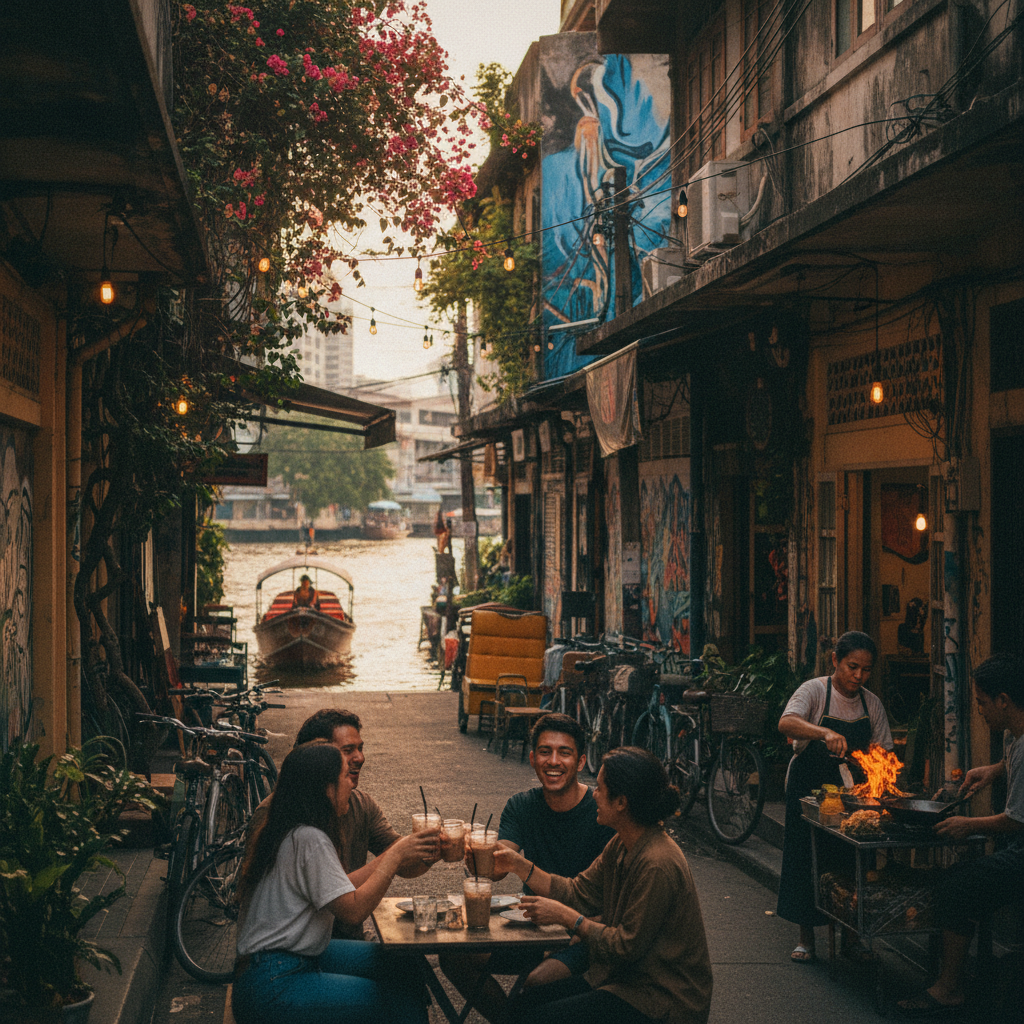
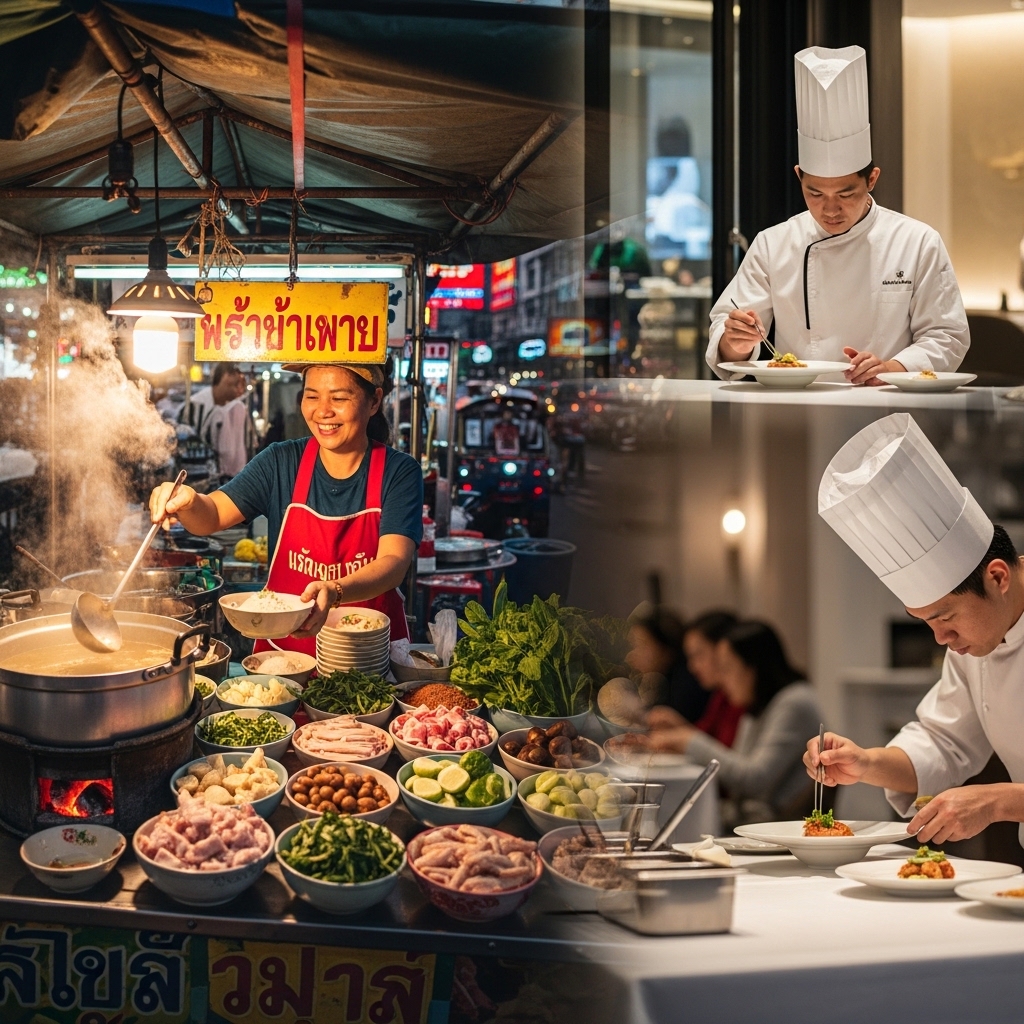
Bangkok has always fed itself extravagantly. But in 2026, the city stopped apologizing for the gap between its street-side plastic stools and its chandelier-lit dining rooms — and started celebrating it. The question is no longer fine dining versus street food. The question is which version of both you can get a reservation for.
Five new khao tom concepts opened in Q3 2026 alone. Two of them charge more per bowl than a business-class airport lounge meal. All five have waitlists. This is not a coincidence — it is the clearest signal yet that Bangkok's food renaissance is structural, not seasonal, and it is reshaping the value of everything around it, including where the city's elite choose to live.
Insider Insight: Bangkok's Michelin inspectors have historically under-indexed street-derived concepts. The 2026 Guide's decision to award recognition to a khao tom-rooted tasting menu marks the first time the Guide has formally acknowledged that Thai comfort food architecture — broth, rice, condiment — can anchor a world-class dining experience. Expect this to trigger a wave of similar formats through 2027.
Decoding Bangkok's 2026 Restaurant Map: Eight Openings That Redefined the City
Which new Bangkok restaurants in 2026 are worth the hype?
Snippet Answer: Eight standout openings define Bangkok's 2026 dining landscape: China House, Potong, Côte, SASA, GUIS, and Ruay Mitr lead the list, spanning reimagined Cantonese heritage, boundary-pushing Thai tasting menus, and French technique applied to local produce — each earning critical recognition within months of opening.
Here is what separates these eight from the noise of Bangkok's perennially crowded F&B market:
- China House — A heritage Cantonese dining room that weaponizes nostalgia without becoming a museum. The dim sum program is the most technically precise in the city, and the private dining suites have already become the preferred venue for deal-closing dinners in Bangkok's finance corridor.
- Potong — Arguably the most talked-about concept of the year. Chef Pichaya Utharntharm's Michelin-starred laboratory sits in a five-generation Chinese pharmacy on Charoen Krung, and every dish is a forensic reconstruction of Bangkok's Sino-Thai memory. The 20-course menu runs approximately four hours. Every seat for the next three months is gone.
- Côte — French technique, Thai latitude. The kitchen sources produce from a network of northern Thai highland farms that the restaurant spent 18 months establishing before service even began. This is not fusion — it is French discipline applied to ingredients that French kitchens have never had access to.
- SASA — The boldest room design of 2026. A converted industrial space in the inner city that serves a menu built entirely around fermentation. The beverage pairing program, anchored by Thai-fermented spirits and low-intervention wines, is the most sophisticated in Bangkok right now.
- GUIS — The city's most important new casual-fine dining hybrid. No tasting menus, no theater — just extraordinarily well-sourced Thai ingredients cooked without ego. The grilled fish program changes daily and is driven entirely by what arrives from the boat market before 6 AM.
- Ruay Mitr — The khao tom flagship that sparked the revival trend. A 74-year-old legacy rice-porridge institution that underwent a conceptual overhaul, retaining its original broth recipe while building a modernist dining room around it. The waiting list for weekend dinner service is currently six weeks.
The common thread across all eight? Every concept is deeply, irreversibly Bangkok-specific. None of them would work in Singapore, Tokyo, or London. They are products of this city's particular overlap of street memory, Chinese heritage, royal culinary tradition, and a new generation of chefs who trained abroad and came home with a point to prove.
The Khao Tom Revival: How a Late-Night Staple Became a Cultural Flashpoint
Why is khao tom suddenly expensive — and is it worth it?
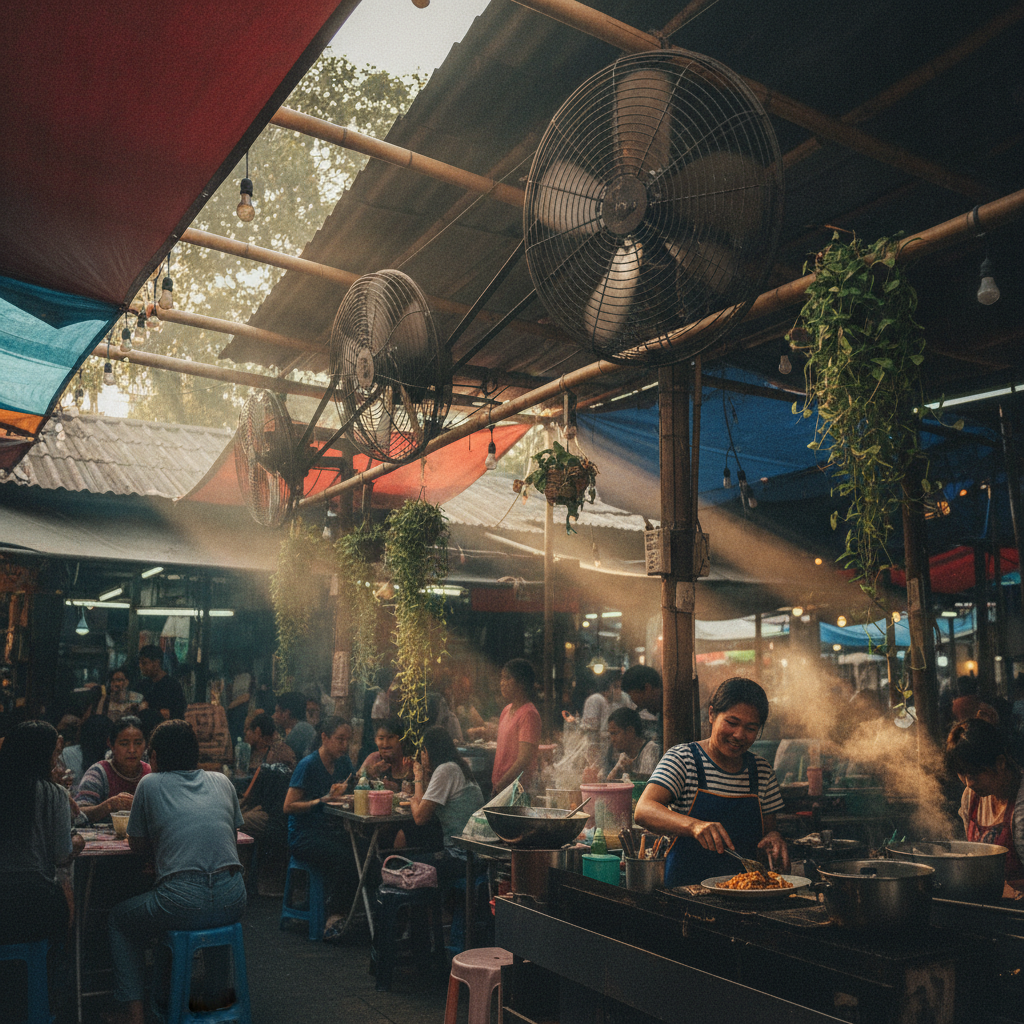
Five khao tom concepts in a single quarter is not a trend. It is a statement. Bangkok's dining intelligentsia has collectively decided that the city's most democratic dish — rice cooked long in stock, served at 2 AM to taxi drivers and CEOs with equal indifference — deserves the same scrutiny and investment as any European tasting menu format.
The economics are striking. Entry-level khao tom at a legacy stall: approximately ฿60–90 per bowl. At the new-wave concepts driving the revival, the same structural dish — broth, rice, condiment — is priced between ฿450 and ฿1,200, depending on protein and room. The markup is not purely aspirational. It reflects aged stock, single-origin jasmine rice sourced from Surin province, and in at least two cases, live seafood flown in daily from the Gulf of Thailand.
- Ruay Mitr (Revised) — The blueprint. Fourth-generation family recipe, modernist room, unchanged broth formula. ฿280–฿680 per bowl depending on protein selection.
- Jok & Co. — Khao tom's sister dish, congee, elevated with black truffle shavings and century egg from a premium Chiang Rai producer. Brutal in concept, extraordinary in execution.
- The Porridge Bar, Ari — The neighborhood version. Smaller, quieter, and more focused on the condiment architecture than the protein. The house-fermented chili paste alone justifies the reservation.
- Khao Tom Lab, Silom — Experimental. A rotating 90-minute tasting format where broth is the through-line and every course riffs on one component of the traditional khao tom structure. Not for purists. Essential for anyone who wants to understand where this trend goes next.
- Midnight Rice, Phrom Phong — The most accessible entry point. Open from 10 PM to 4 AM only, priced at ฿180–฿420, and engineered specifically for the after-dinner crowd emerging from the Sukhumvit 39 restaurant cluster.
Market Intelligence: The concentration of premium khao tom openings within the Ari, Silom, and Phrom Phong corridors is not random. Each of these neighborhoods indexes heavily for long-term resident populations — expat professionals, Thai returnees, and high-income domestic households — rather than tourist traffic. The revival is being built for people who live in Bangkok, not people passing through it. That distinction matters enormously for understanding which neighborhoods are gaining genuine lifestyle gravity in 2026.
Michelin Bangkok 2026: What the Stars Actually Mean This Year
Seamless Living: How Michelin-Density Shapes Bangkok's Most Desirable Residential Corridors
Bangkok's Michelin ecosystem in 2026 is more geographically concentrated than at any previous point in the Guide's presence in Thailand. The two-star tier — the city's highest — clusters within a navigable triangle anchored by Charoen Krung, Silom, and the lower Sukhumvit corridor. This is not coincidental urban planning. It is the result of a decade of incremental investment in the neighborhoods where Bangkok's most internationally mobile residents chose to live.
For any household that treats dining as a primary quality-of-life metric, proximity to this corridor is a practical consideration, not a luxury indulgence. The ability to walk or take a five-minute private car ride to a two-star dining room — rather than committing to a cross-city journey through Bangkok's traffic infrastructure — is a measurable lifestyle advantage.
- Two-Star Anchor, Charoen Krung: Potong currently holds the neighborhood's highest recognition. The surrounding 800-meter radius contains four additional Michelin Bib Gourmand designations and three one-star restaurants, making Charoen Krung the single highest-density Michelin block in Bangkok.
- One-Star Cluster, Silom–Sathorn: Six one-star restaurants within a 1.2-kilometer walkable zone. Côte is the newest addition. Le Normandie at the Mandarin Oriental retains its long-held star. The neighborhood rewards residents who prefer European-influenced fine dining architecture.
- Emerging Recognition, Phrom Phong: Three new Bib Gourmand designations in 2026, reflecting the neighborhood's maturation from expat enclave to genuinely world-class dining destination. GUIS is the anchor concept driving international press coverage.
- The Ari Effect: No Michelin stars — yet. But Ari's concentration of critically regarded independent restaurants, natural wine bars, and the new khao tom revival cluster makes it the neighborhood most likely to generate its first starred recognition in the 2027 Guide. Early-position residents are already benefiting from the lifestyle capital this generates.
The pattern is consistent across every city where Michelin density correlates with residential desirability: neighborhoods that attract serious culinary investment attract serious long-term residents, which attracts further investment, which compresses supply of premium residential inventory. Bangkok in 2026 is mid-cycle in this process. The window for capturing value before it fully prices in is demonstrably open, but it is not indefinitely open.
Bangkok's Food Renaissance and Residential Value: The Correlation Serious Buyers Cannot Ignore
Bangkok New Restaurants 2026: What the Pipeline Tells Us About Neighborhood Trajectories
The restaurant pipeline in any world-class city is one of the most reliable leading indicators of neighborhood residential value acceleration. Developers read it. Institutional investors read it. The question is whether individual buyers and renters are reading it with the same rigor.
In Bangkok's case, the 2026 data is unusually readable. The eight headline openings, the five-concept khao tom revival, and the Michelin Guide's geographic realignment are all pointing at the same neighborhoods — and those neighborhoods have residential inventory that has not yet fully repriced to reflect the lifestyle premium they now offer.
- Charoen Krung–Bang Rak: Rental yields for premium condominiums are currently tracking 4.8–5.4% annually, above the Bangkok prime average of 4.2%. Michelin density is the primary driver of this premium, and the pipeline suggests it widens further through 2027.
- Phrom Phong–Ekkamai: The corridor attracting the highest volume of new F&B investment per square kilometer in 2026. Residential capital values have appreciated 11.3% over 18 months. The dining ecosystem is the primary quality-of-life differentiator cited by buyers in post-purchase surveys.
- Silom–Sathorn: The most established corridor, with the most mature pricing. Premium floor-plan analysis here is less about value capture and more about lifestyle security — this is where Bangkok's culinary infrastructure is most embedded and most resistant to cyclical disruption.
- Ari–Samsen: The highest-risk, highest-potential corridor in the current cycle. Residential pricing has not yet caught up with the F&B and cultural investment the neighborhood is attracting. For buyers with a 3–5 year horizon and a preference for neighborhood character over established prestige, this is Bangkok's most interesting residential opportunity in 2026.
Bangkok's food renaissance is not a lifestyle story dressed up as a market story. It is a market story, full stop. The cities that have navigated similar culinary inflection points — Melbourne in the mid-2000s, Copenhagen through the Noma era, Mexico City post-2015 — all saw measurable residential value concentration in the neighborhoods where serious dining investment landed first. Bangkok is living that moment right now.
Schedule Your Private Residential Analysis: Bangkok's Most Sought-After Addresses in the Culinary Corridor
If you are making a residential decision in Bangkok in 2026 — whether to purchase, lease, or analyze investment positioning — the neighborhoods this article maps are exactly where the conversation should begin. The overlap between Bangkok's culinary renaissance and its most compelling residential opportunities is not approximate. It is precise, it is documented, and it is time-sensitive.
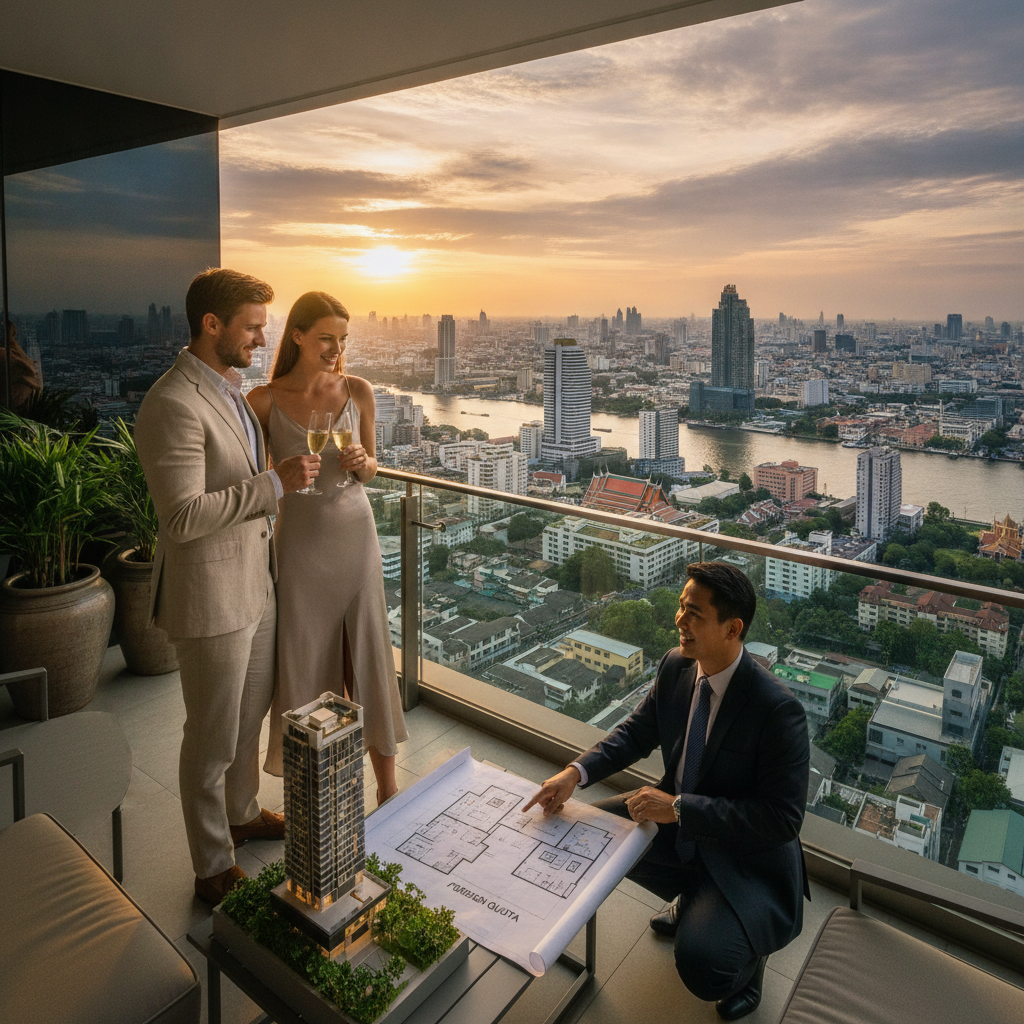
We work exclusively with premium residential inventory in Bangkok's highest-demand corridors. Our floor-plan analysis service is designed for buyers and tenants who want to understand not just what a residence offers today, but what the neighborhood trajectory means for lifestyle quality and asset value over a 3–7 year horizon.
- Private viewings of available residences in the Charoen Krung, Phrom Phong, Silom, and Ari corridors — arranged within 24 hours, conducted on your schedule.
- Floor-plan analysis matched to your specific lifestyle requirements, including proximity mapping to the 2026 Michelin and critically recognized restaurant ecosystem.
- Neighborhood trajectory briefings — a structured 30-minute session with our Bangkok market specialists covering current inventory, pipeline developments, and realistic value scenarios through 2028.
There is no commitment required to request a briefing or arrange a viewing. There is, however, a meaningful cost to waiting in a market that is moving as decisively as Bangkok's premium residential sector in 2026.
Request your private floor-plan analysis or arrange a viewing — contact our Bangkok residential team directly. Response within two business hours, guaranteed.