
Why Bangkok Residents Are Ditching Homeownership and Choosing to Rent in 2026

Bangkok's Property Mindset Has Shifted — And the Numbers Prove It
For decades, owning a condominium or townhouse in Bangkok was treated as a rite of passage — a financial milestone that signaled stability and maturity. That consensus has cracked open in 2026, and the fracture lines run deeper than most people realize.
Thai household debt as a percentage of GDP has remained stubbornly elevated, hovering near 91% according to the Bank of Thailand's Q1 2026 data — one of the highest ratios in Southeast Asia. When a mortgage obligation is layered onto an already-stretched household balance sheet, the mathematics of ownership stop feeling like an investment and start feeling like an anchor.
Meanwhile, Bangkok's condo resale market is absorbing a supply glut that developers built aggressively between 2021 and 2024. Oversupply in mid-range segments along Sukhumvit's outer corridors and Bang Na has compressed capital appreciation to near zero in many sub-districts — stripping away the primary financial argument for buying over renting.
Insider Insight: Bangkok's luxury rental segment — units priced above THB 80,000 per month — actually tightened in occupancy during H1 2026, even as the broader market softened. High-net-worth expatriates and returning Thai professionals are absorbing premium inventory faster than developers can deliver it at that price tier, making quality rentals in Ploenchit, Thonglor, and Sathorn harder to secure than buying headlines suggest.
This bifurcated market — weak mid-range sales, resilient luxury rentals — is the defining structural reality that informed Bangkok residents are navigating in 2026.
Decoding the True Financial Logic of Renting in Bangkok Right Now
The standard rebuttal to renting has always been: 'You are paying someone else's mortgage.' In Bangkok in 2026, that argument collapses under three specific pressure points that are unique to this market at this moment.
First: The True Cost of Ownership Is Systematically Underquoted. When Bangkok buyers calculate affordability, they typically anchor on the developer's headline price and the monthly installment figure. What that number excludes is significant: common area maintenance fees averaging THB 50–80 per square metre per month, sinking fund contributions, property insurance, loan processing fees from Thai commercial banks that routinely add 1–1.5% upfront, and the transfer fee split at 2% of appraised value. On a THB 8 million unit in the Phrom Phong corridor, these hidden entry and carrying costs add THB 400,000–600,000 to your first-year true cost — before a single monthly payment is made.
Second: Thailand's Mortgage Rate Environment Is Working Against Buyers. Thai commercial banks moved their Minimum Retail Rates (MRR) upward through late 2024 and 2025. Promotional fixed rates that developers advertise typically expire after 1–3 years, after which borrowers float at MRR minus a margin — a margin that has narrowed. First-time buyers in 2026 are entering mortgages with a far less favorable rate trajectory than buyers who locked in during 2019–2021.
Third: Rental Yields in Prime Bangkok Are Signaling a Renter's Advantage. In Thonglor and Ekkamai — two of Bangkok's most liquid and lifestyle-rich corridors — gross rental yields for condominiums range between 4.2% and 5.8% of purchase price annually. This means a landlord who bought at THB 10 million is collecting THB 420,000–580,000 per year. The renter paying that rent, however, preserves their THB 10 million in liquid capital — capital that, invested conservatively in Thai government bonds or a diversified REIT portfolio, could generate comparable or superior returns without locking the individual into a 30-year obligation tied to a single asset in a single postcode.
- Household debt-to-GDP near 91% (Bank of Thailand, Q1 2026) constrains new mortgage appetite
- Condo resale capital appreciation near flat in outer Sukhumvit and Bang Na sub-districts
- Luxury rental occupancy tightening in Ploenchit, Thonglor, and Sathorn despite broader market softness
- Hidden ownership costs of THB 400,000–600,000 in Year 1 on an THB 8M unit systematically underestimated
- Gross rental yields of 4.2–5.8% in prime corridors make the renter's opportunity cost argument genuinely competitive
Why Are Young Professionals in Bangkok Choosing to Rent Instead of Buy?
Why are young professionals in Bangkok choosing to rent instead of buy in 2026?
Young Bangkok professionals are choosing to rent in 2026 primarily because elevated household debt, rising true ownership costs, and stagnant mid-market capital appreciation have eroded the financial case for buying — while premium rental supply delivers luxury living without a 30-year mortgage commitment.
Beyond the numbers, there is a values-based dimension to this shift that is specifically Bangkok-specific and generationally distinct.
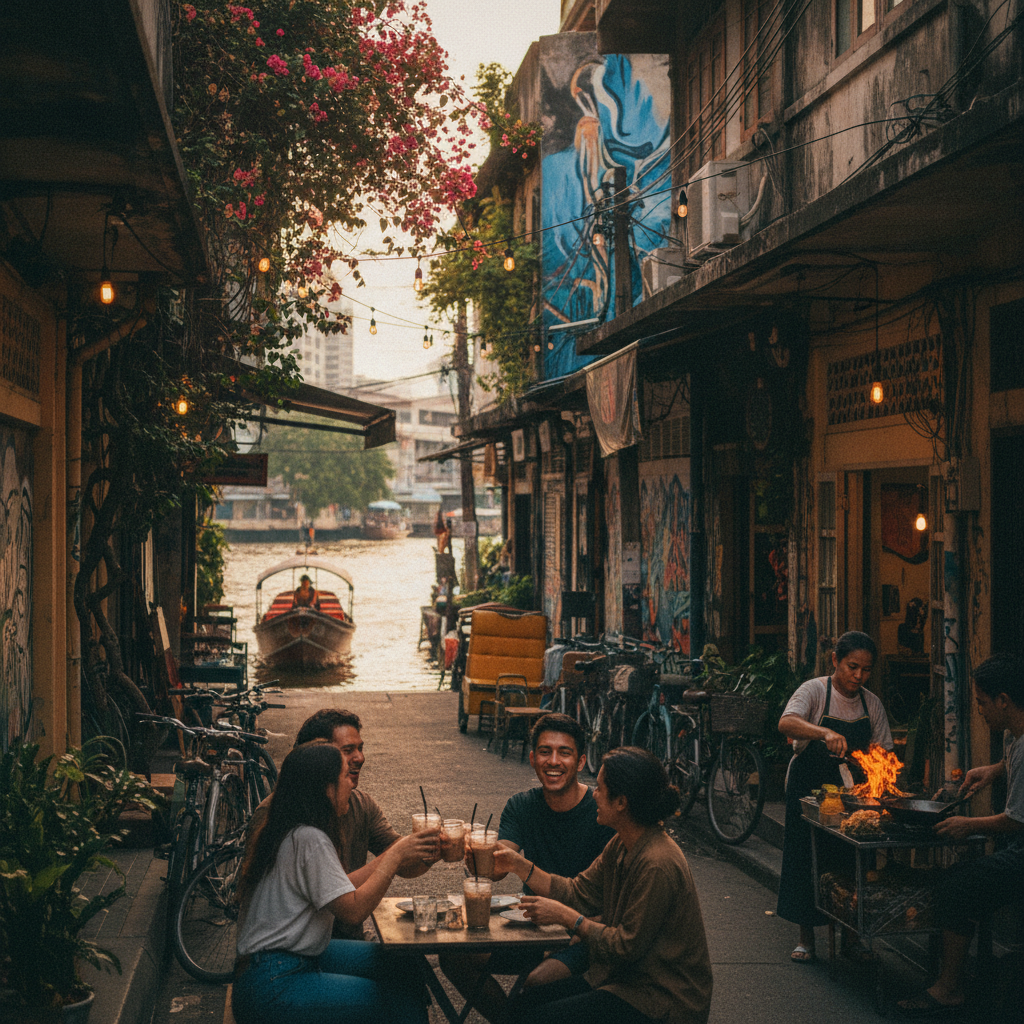
Thai millennials and Gen Z professionals who entered the workforce during COVID-19 developed an acute awareness of financial fragility. They watched parents and older colleagues become trapped in illiquid property assets during economic disruption. Mobility — the ability to relocate for a better job, downsize during a slow season, or upgrade when income grows — is now treated as a form of wealth preservation, not a failure to commit.
Bangkok's BTS Skytrain and MRT expansion has also fundamentally altered the geography of desirable living. Neighbourhoods that required ownership commitments five years ago to access good schools, hospitals, and office clusters are now reachable from rented units in newly accessible corridors like Lat Phrao, Mo Chit, and the Gold Line extension zones. The city's infrastructure investment is, paradoxically, making renting more attractive by widening the addressable map of quality rental neighbourhoods.
The lifestyle amenity arms race among Bangkok's luxury rental developments has also narrowed the experiential gap between renting and owning. Rooftop pools, co-working lounges, concierge services, EV charging infrastructure, and pet-friendly policies — once exclusive to owner-occupied properties — are now standard in rental-positioned developments targeting the THB 60,000–120,000 per month segment.
Seamless Living: How Bangkok's Transit Expansion Is Rewriting the Rental Map
The single most important variable in Bangkok rental decision-making in 2026 is not price per square metre — it is minutes to the nearest mass transit station and the quality of what surrounds it within a 500-metre radius.
Bangkok's transit network has matured significantly. The MRT Blue Line now completes its loop, the Yellow Line connects Lat Phrao to Samrong, and the Pink Line corridor is activating entirely new residential demand clusters in Nonthaburi and Min Buri. These expansions mean that renters — who are not locked into a single asset — can arbitrage transit access in ways that buyers, constrained by mortgage geography, simply cannot.
- Ploenchit / Chit Lom: Zero-transfer access to Siam, Asok, and Silom business districts — commands premium rents but delivers unmatched professional mobility
- Thonglor / Ekkamai (BTS): Bangkok's highest concentration of Michelin-recommended restaurants, international clinics, and boutique fitness studios within walkable distance of the station
- Mo Chit / Chatuchak (BTS + MRT interchange): Emerging rental value corridor with direct access to both the Sukhumvit and Silom lines — 20–30% lower rents than equivalent units in On Nut
- Lat Phrao (MRT Yellow + Blue Line): The 2026 breakout corridor — Thai-family oriented, strong school catchment areas, THB 25,000–45,000 monthly rents for well-specified units
- Riverside / Charoen Nakhon (Gold Line + ferry): Premium lifestyle enclave with ICONSIAM retail access, favoured by expatriate renters in the THB 80,000–150,000 bracket
For renters, each of these corridors is accessible without a permanent capital commitment. The ability to upgrade your transit-adjacent living situation as your career and income evolve is a structural advantage that homeownership cannot replicate — particularly in a city where Bangkok's urban geography is still actively shifting.
Bangkok Luxury Rentals in 2026: What the Market Looks Like at Every Price Tier
Understanding where the rental market is genuinely deep — versus where inventory is thin and landlords hold pricing power — is essential for anyone navigating Bangkok's rental landscape in the second half of 2026.
THB 20,000–40,000 per month (Entry Premium Segment): This band represents the largest pool of available inventory citywide, concentrated in outer Sukhumvit (On Nut to Bearing), Bang Na, and the Rama 9 corridor. Supply here is plentiful enough that tenants are negotiating successfully — 1–2 months free rent on 12-month leases is achievable, particularly in buildings completed between 2021 and 2023 that are still filling up.
THB 40,000–80,000 per month (Established Professional Segment): Mid-Sukhumvit, lower Silom, and Ari are the primary hunting grounds. This is the most contested segment — strong demand from Thai senior executives and junior expatriates competes with genuine supply constraints in well-managed buildings. Tenant negotiating leverage is lower here.
THB 80,000–150,000 per month (Luxury Segment): Ploenchit, Thonglor, Sathorn, and Riverside define this tier. Occupancy rates in this band are running above 88% in H1 2026 according to broker data from CBRE Thailand and Knight Frank Bangkok. This is the segment where renting has become actively competitive — quality units are being let within days of listing, not weeks.
THB 150,000+ per month (Ultra-Luxury / Whole-Floor Segment): Inventory is bespoke and largely off-market. Units in this category — typically 200 sqm and above in branded residences or penthouse configurations — are transacted through private broker networks rather than online portals. Landlords in this segment are overwhelmingly individual Thai investors or family offices who acquired during pre-launch phases at significantly below replacement cost, giving them the margin to maintain pricing discipline.
Market Reality Check: The most common mistake Bangkok renters make in 2026 is spending three weeks browsing online portals and then losing a genuinely exceptional unit to a tenant who moved through a direct broker relationship in 48 hours. The best rental inventory in prime Bangkok rarely appears publicly — it is allocated before it is ever listed.
For investors considering Bangkok as a rental yield market: the arithmetic at the luxury end is more compelling than at the mid-range. A THB 15 million unit in Thonglor renting at THB 85,000 per month delivers a 6.8% gross yield — a figure that compares favourably with net yields available in comparable gateway cities including Singapore, Hong Kong, and Tokyo at current exchange rates.
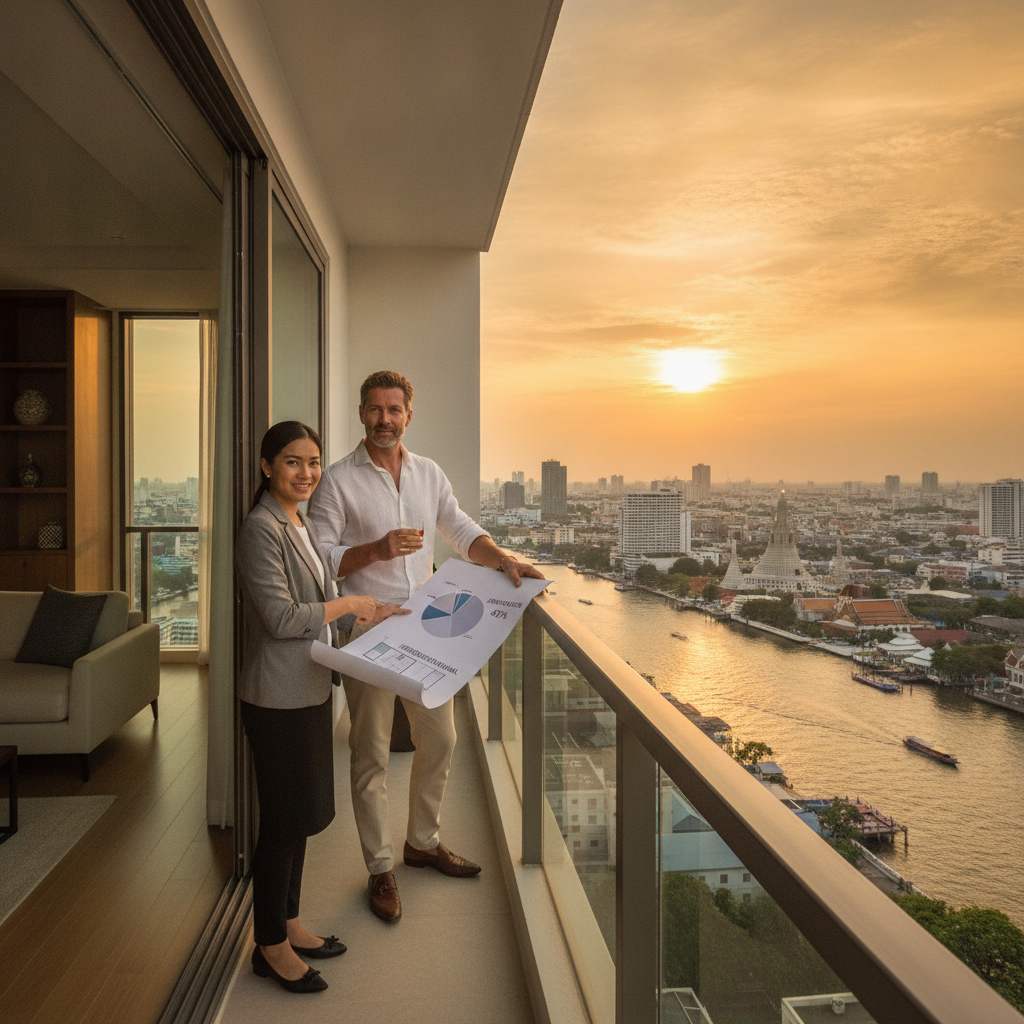
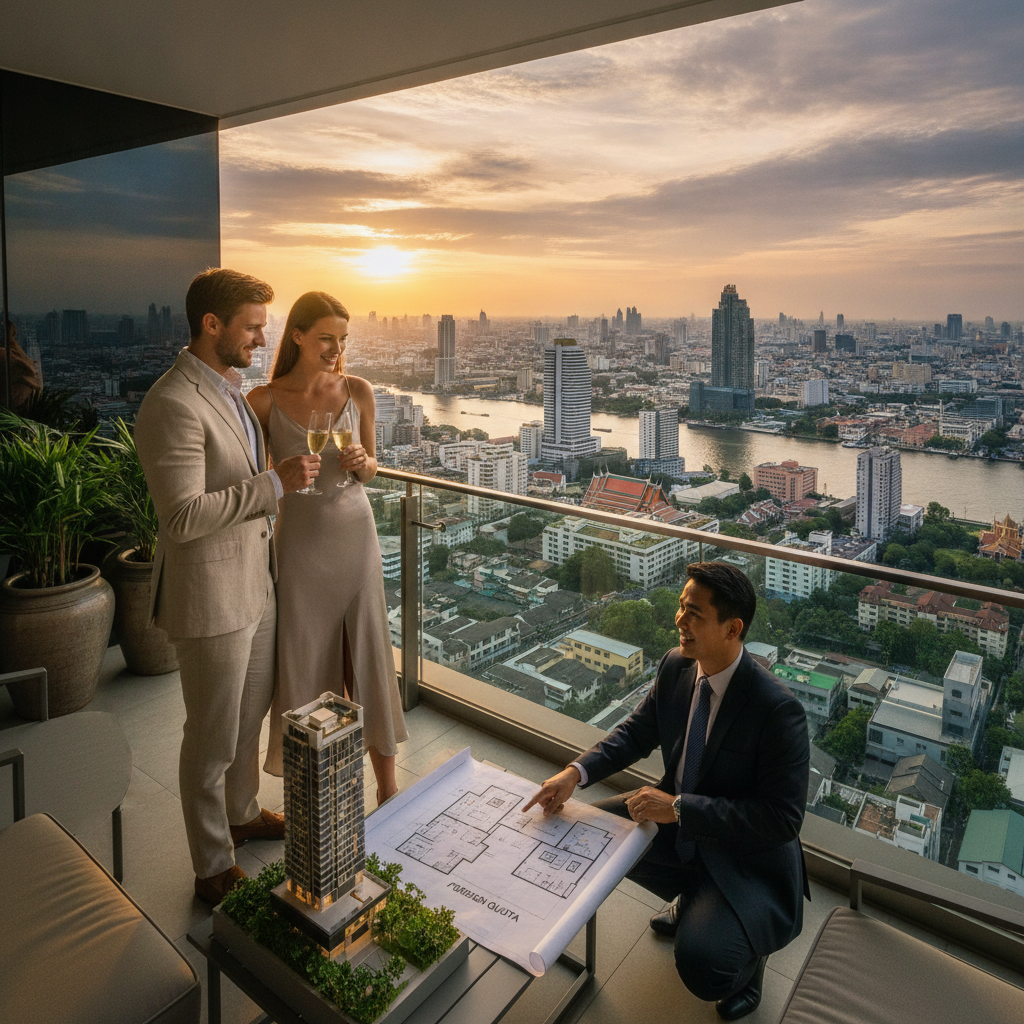
Request a Private Floor Plan Analysis or Rental Shortlist for Your Bangkok Move
If you are relocating to Bangkok, restructuring your living situation, or evaluating whether renting versus buying makes financial sense for your specific income profile and timeline — the answer is almost never found on a property portal.
The units that match a precisely defined brief at the right price, in the right building, with the right landlord flexibility, are sourced through relationships built over years of transacting in this specific market.
Whether your priority is proximity to a particular business district, a school catchment area, a specific lifestyle corridor, or simply the highest quality per baht at your monthly budget — a targeted shortlist built around your criteria will save you weeks of searching and protect you from overpaying in a market where pricing is far from transparent.
- Private viewings arranged at your schedule — including evenings and weekends
- Floor plan and layout analysis across shortlisted units before you view in person
- Honest lease negotiation guidance, including what landlords in each building are currently accepting
- Zero-obligation consultation for relocation packages and corporate rental arrangements
The best rental decisions in Bangkok in 2026 are made with current, off-market intelligence — not with what was listed online last Tuesday.
Reach out directly to arrange a confidential consultation, request a curated shortlist of available residences matching your brief, or ask for a floor plan comparison of specific buildings you are already considering. There is no pitch, no pressure, and no generic brochure — only specific answers to your specific situation in Bangkok's rental market right now.